
Table Manners: How Mobile Tech is Redefining the Family Dining Experience
'Table manners': children's use of mobile technologies in family-friendly restaurants
This paper, titled 'Table Manners', investigates how children and families use mobile technologies in family-friendly restaurants. Through qualitative ethnographic accounts and video analysis of four families, it identifies how digital devices are integrated into social dining rituals rather than just serving as "digital babysitters."
TL;DR
Is giving a child an iPad at a restaurant a sign of "lazy parenting," or is it a modern tool for social navigation? This study moves beyond the "digital babysitter" stereotype to show how families actually use mobile devices to manage public behavior, engage in intergenerational play, and balance the physical chaos of a restaurant table.
Background: Beyond the Domestic Dinner Table
While home-based tech use has been studied extensively, the semi-public space of a restaurant introduces new pressures: social norms, the presence of strangers, and professional staff. This paper positions itself as a critical ethnographic look at how technology helps (or hinders) families in maintaining "table manners" while dining out.
The Problem: The "Bad Manners" Stigma
The prevailing narrative suggests that screens at the table lead to a "digital detox" necessity. Prior work often problematizes technology as a distraction that reduces satiation and stops intergenerational conversation. However, the authors argue that this view ignores the reality of modern parenting where restaurants are functional spaces for homework, social networking, and collective entertainment.
Methodology: Seeing Through the Lens of the Family
The researchers didn't just interview parents; they watched the meals unfold.
- Pre-meal interviews: Understanding home vs. restaurant rules.
- Video Ethnography: Families used tripods to record their interactions, focusing on the "tabletop landscape"—where the juices, forks, and iPads competed for space.
 Figure 1: Contextualizing technology placement within the restaurant setting.
Key Insights: How Technology is "Managed"
1. The Collective Pause
Interestingly, technology use wasn't constant. Families practiced a collective synchronization:
- Pre-meal: Devices out while waiting for food.
- Main Course: Devices were put away or moved to the periphery (laps/chairs) as a group.
- Post-meal: Individual devices reappeared as children finished eating.
2. Intergenerational Play & Learning
The technology wasn't an "island." One child used a laptop to do Italian homework, asking her mother for help with translations—turning a birthday dinner into a collaborative learning event. Another family used a smartphone to "show and tell" photos of new puppies to the entire group.
3. Physical Negotiation
Dining with tech requires high "spatial awareness." Children learned to eat with one hand while interacting with screens, or wiped their hands on jumpers before touching the glass to avoid grease. Staff also played a role, navigating "tug-of-war" scenarios with menus and iPads.
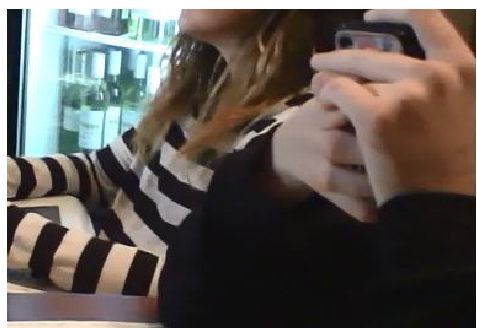 Figure 2: The physical layout of devices often competes with traditional dining artefacts.
Experimental Results & Observations
The study highlighted that technology often acts as a buffer:
- Noise Control: Parents used tech to keep children quiet to respect fellow diners.
- Socialization: Older siblings took on a regulatory role, removing younger siblings' headphones to ensure they heard parental instructions.
- Hybrid Media: Children combined digital and physical worlds—like taking photos of their crayon drawings to post on Instagram (Fig 3).
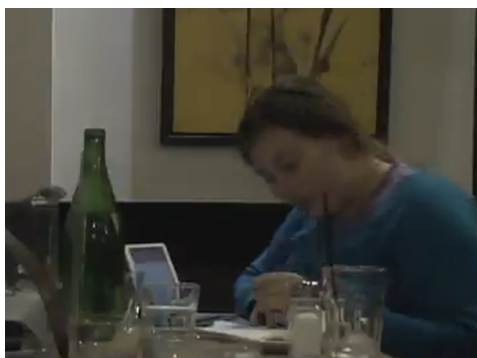 Figure 3: Children bridging the gap between physical crayons and digital social media.
Deep Insight: A Call for Better Design
The authors conclude that children’s technology use is not a "failure" of parenting but a collaborative performance. They suggest:
- For Designers: Create "commensal" games that involve everyone at the table or teach restaurant etiquette.
- For Restaurants: Provide "tech-friendly" infrastructure like table shelves, charging ports, and free Wi-Fi to support the modern family dining ritual.
Conclusion
This paper shifts the focus from "screen time limits" to "interaction quality." By understanding that technology is now part of the furniture of social life, we can stop stigmatizing its use and start designing for a more integrated, "family-friendly" dining future.