
Tableware: Turning Wine Glasses into Instruments for Social Sympathy
Tableware: Social Coordination Through Computationally Augmented Everyday Objects Using Auditory Feedback
The paper introduces Tableware, a system of computationally augmented everyday objects (specifically wine glasses) designed to foster social coordination through real-time auditory feedback. By embedding IMU sensors and mapping gestures to digital synthesizers, the study explores how action-sonic coupling can induce "participatory sense-making" and collaborative behavior in social settings like bars or dining rooms.
Executive Summary
TL;DR: Researchers at Arizona State University have turned the act of "clinking glasses" into a sophisticated data-driven performance. By embedding sensors in wine glasses, they created Tableware—a system that translates physical gestures into real-time digital audio, encouraging strangers to coordinate their movements and find "mutual incorporation" through shared soundscapes.
Background Positioning: This work sits at the intersection of Tangible User Interaction (TUI) and Social Cognition. It moves beyond the "smart home" utility mindset, framing technology as a medium for "conviviality"—the art of living together through shared, meaningful experiences.
Problem & Motivation: The "Empty" Space of Social Physics
Why do we feel "in sync" with some people and "out of tune" with others? Conventional social science often treats interaction as an exchange of information (words). However, the authors argue that social life is "thick"—filled with non-verbal resonance, bodily rhythms, and shared objects.
The problem with current technology is its task-orientation. We use tech to do things (order food, check messages), but rarely to be with others. The authors’ insight was to take "boundary objects"—familiar items like wine glasses that already hold cultural meaning—and augment them to make the invisible "dynamics of coordination" audible and playful.
Methodology: From "Habit" to "Ensemble"
The core of Tableware lies in its transition from individual habit to group harmony.
1. The Hardware Stack
Each glass is equipped with a Feather M0 microcontroller and a BNO055 9-axis fusion sensor. These sensors track linear acceleration, angular velocity, and absolute orientation at 50Hz, sending data via OSC (Open Sound Control) to a central synth engine.
2. Action-Sonic Mapping (The "Physics" of Sound)
The team developed General Mapping Primitives to ensure the sound felt like a physical extension of the object, not a random beep:
- Spin to Dial: Rotating the glass acts like tuning a radio, sweeping the center frequency of a filter.
- The Surprise Drink: Tilting the glass past 90° (drinking) triggers an "effervescent" FM synthesis modulation that gets louder as the "drink" finishes.
- Granular Swirling: Circular motions on the table control the playback rate of time-stretched sounds.
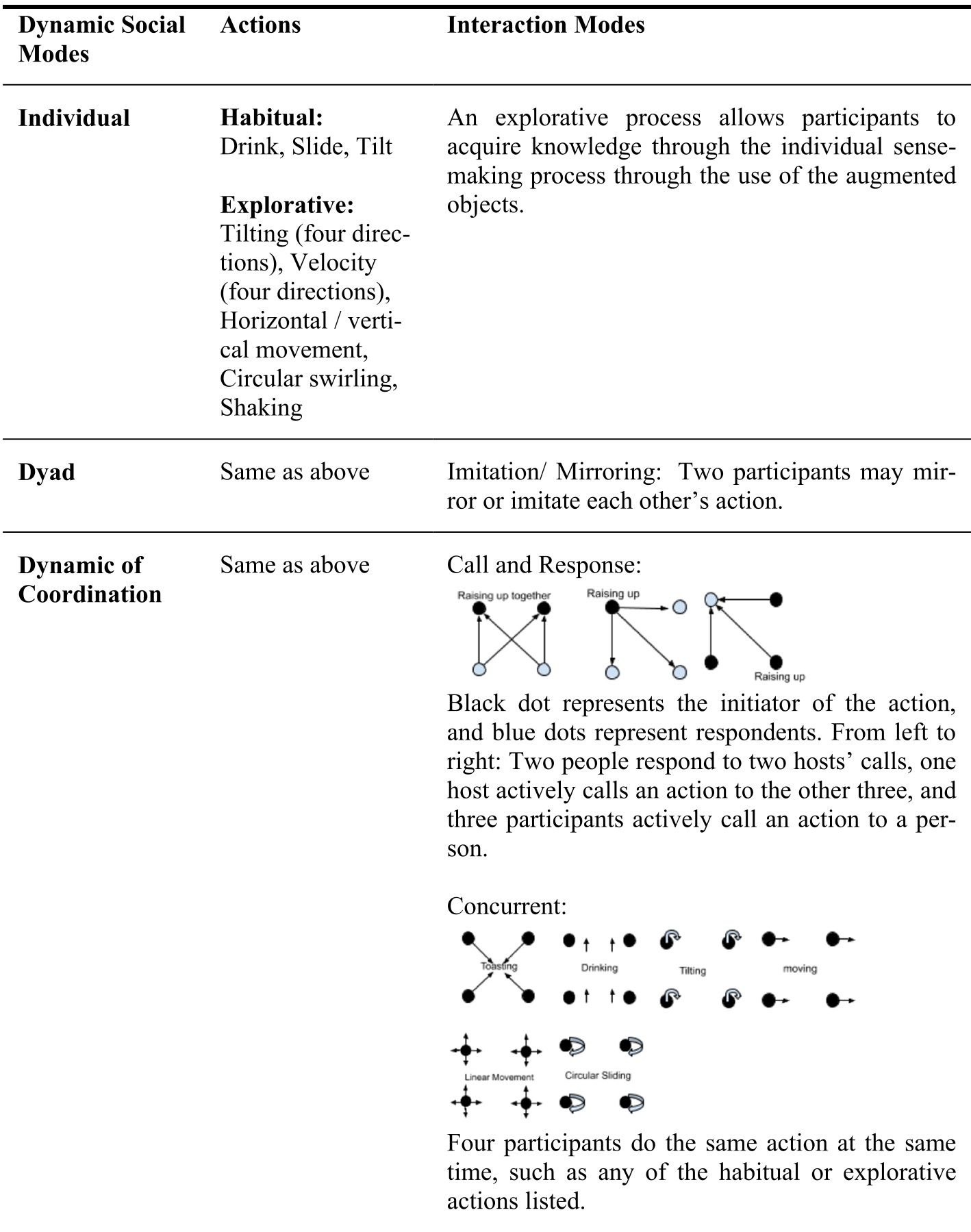 Figure 1: The progression from individual exploration to ensemble coordination.
Experiments & Results: The "Aha!" Moment of Synchrony
The researchers tested various "Modes of Coordination":
- Concurrent Coordination: When four participants toast or raise their glasses simultaneously, the system detects the mathematical intersection of their movement (). This "reward" for perfect synchrony creates a unique ensemble sound that none of them could produce alone.
- Call and Response: One participant "calls" with a sharp movement, and others "respond," creating a rhythmic dialogue that bridges the gap between strangers without a single word being spoken.
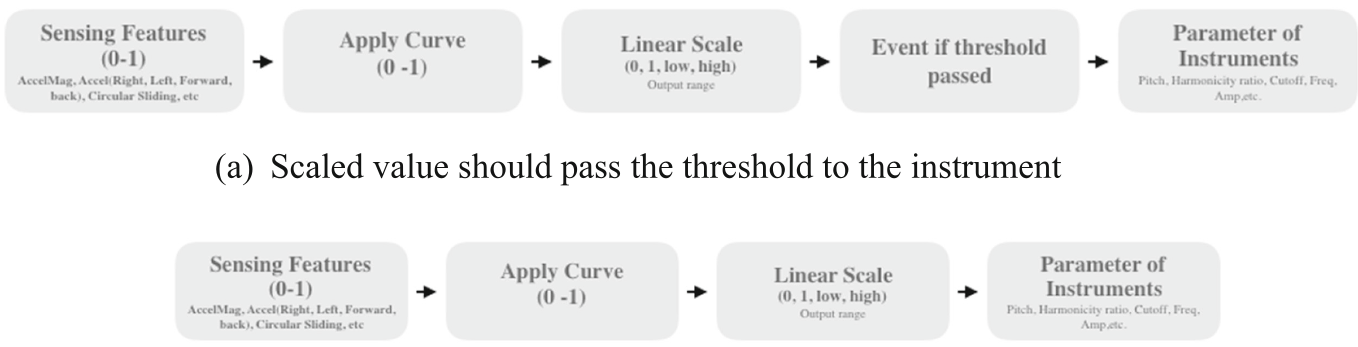 Figure 2: Mapping directional acceleration to FM Synthesizer parameters for expressive control.
Deep Insight: Beyond the Glass
The true value of this paper isn't just "musical glasses." It's the proof of Participatory Sense-Making. By making the connection between people tangible (through sound), the technology helps participants "incorporate" the other person's presence into their own embodied schema.
Critical Analysis & Conclusion
- Takeaway: Everyday objects are powerful social anchors. By adding a digital "voice" to them, we can scaffold empathy and collaboration in public spaces.
- Limitations: The "extra-ordinariness" of the sound might eventually wear off, becoming "noise" if the mappings aren't sufficiently deep.
- Future Work: The authors envision a "Conviviality Cafe," where chairs, tables, and lighting all react to the collective "rhythm" of the room, creating an environment that literally breathes and sings with its inhabitants.
Tableware reminds us that in an age of digital isolation, the most sophisticated "social network" might just be the one happening right now across your dinner table.