
WingContacts: Reimagining Privacy through Context-Aware Social Networking
Tailoring User Visibility and Privacy in a Context-Aware Mobile Social Network
This paper introduces WingContacts, a context-aware mobile social networking system that dynamically manages user visibility and privacy. It utilizes a centralized server and a mobile client to adjust contact information and communication permissions based on real-time user status, roles, and environmental triggers like GPS and NFC.
TL;DR
WingContacts is a research prototype that transforms the static mobile address book into a dynamic, context-aware "Virtual Phone Book." By leveraging sensors like NFC and GPS, it automatically adjusts your visibility and the privacy of your personal data based on your current status (e.g., "Sleeping" or "At Work"), ensuring that only the right people see the right information at the right time.
Context: The Static Privacy Trap
In current mainstream messaging apps like WhatsApp or Telegram, your "Online" status and profile details are often binary or manually toggled. If a colleague has your number, they see the same info as your best friend. The researchers behind WingContacts argue that this leads to a persistent loss of privacy.
The core problem is that current systems are user-guided but not context-sensitive. They don't understand that your social "Role" changes depending on where you are and what you are doing.
Methodology: The Status-Role-Group Triad
The innovation of WingContacts lies in its multi-layered management architecture. It moves away from "one-size-fits-all" settings to a dynamic screening process.
1. The Core Architecture
The system splits the workload between a Smart Server and a Mobile App. The server acts as a gatekeeper, screening messages and contact updates based on the context of both the sender and the receiver.
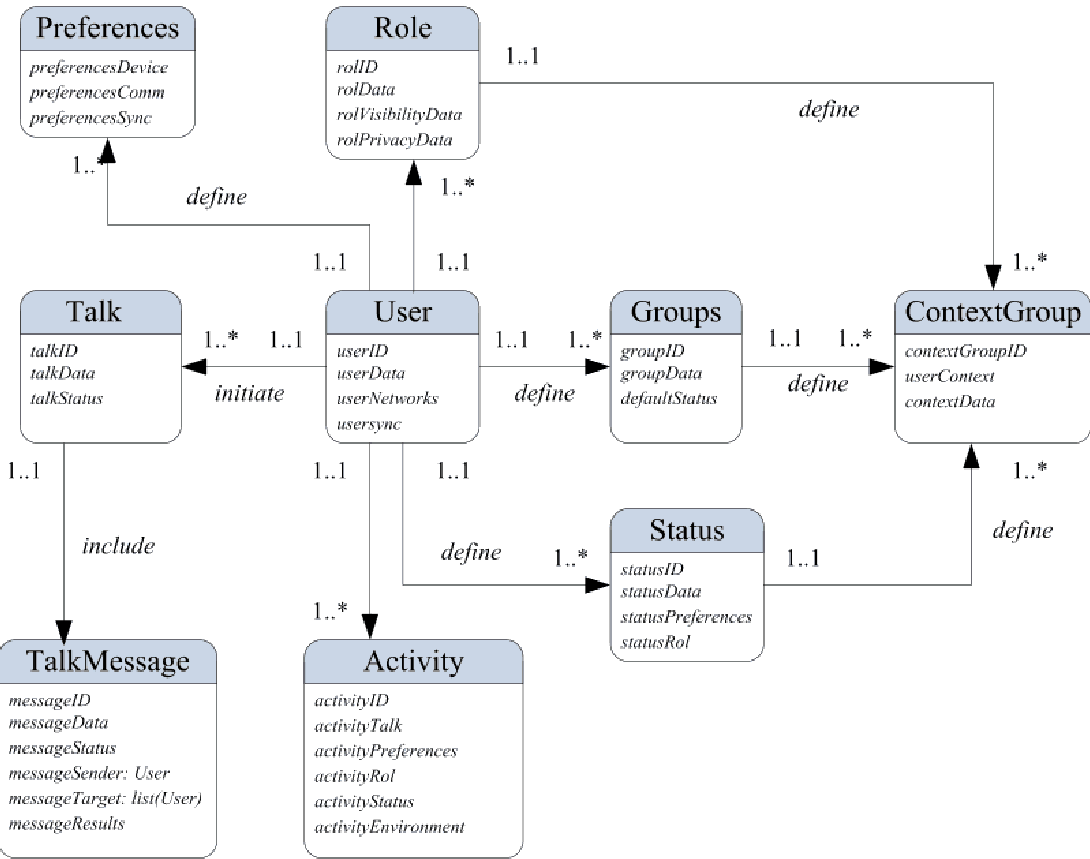 Figure 1: The database schema showing the critical link between Status, Role, and ContextGroups.
2. Physical Triggers (The NFC/GPS Link)
Unlike purely manual apps, WingContacts uses "augmented objects." For example, touching your phone to an NFC tag at a library can automatically trigger a "Library Status." This status might assign a "Quiet Role" to your work group, hiding your precise location or muting incoming alerts.
Experiments and Interface Results
The researchers developed an Android prototype to test the "Virtual Phone Book" concept. In this world, your contact list isn't a static list of numbers; it's a living directory that updates every time your friends change their own context.
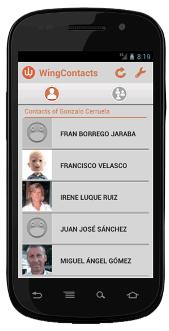 Figure 2: The Android UI demonstrating (a) Main Menu, (b) Address Book updates, and (g) Geolocation-based contact search.
Key Results:
- Dynamic Filtering: The system successfully demonstrated that when a sender broadcasts info, different recipients see different metadata based on their assigned Role.
- Inference Prevention: By localizing synchronization through the server, the app prevents users from "scraping" contact data that is currently hidden by a contact's status.
Critical Insight & Conclusion
WingContacts addresses a fundamental friction in social tech: Social Overlap. We use the same device for work, family, and leisure. By formalizing "Context" through a combination of mobile sensors and hierarchical roles, this work provides a blueprint for "Smart Visibility."
Limitations & Future Work
While the NFC/GPS trigger is elegant, it requires a high degree of infrastructure (tags everywhere). A natural evolution would be using Behavioral AI to predict transitions between statuses without needing physical tags. Furthermore, as social networks become increasingly decentralized, moving this context-aware logic to a distributed ledger could be the next frontier for user-owned privacy.