
Intelligent Personalization: Data Mining the DNA of Taiwan’s Sports Market
Investigating sports behaviors and market in Taiwan for sports leisure and entertainment marketing online recommendations
This study develops a data-driven framework for sports leisure and entertainment marketing in Taiwan, utilizing a database of 1200 participants. It employs K-means clustering and Apriori association rules to create a rule-based recommendation system for personalized sports products and service bundling.
TL;DR
This study bridges the gap between sports science and entertainment computing. By analyzing 1,200 participants in Taiwan through K-means clustering and Apriori association rules, the researchers developed a recommendation system that predicts not just what sports gear you'll buy, but what professional sports courses you'll join and why. They identified three core personas—ranging from fashion-seeking young women to discount-driven "actuarial" families—to optimize marketing ROI.
Perspective: Moving Beyond the Scoreboard
In the modern era, sports are no longer just about competition; they are a multi-billion dollar leisure ecosystem. However, the industry faces a "stagnation crisis": people have no time, or they find exercise boring. The authors suggest the fix isn’t better athletes, but better data. This paper positions itself as a strategic bridge, moving away from "one-size-fits-all" ads to a Rule-Based Recommendation System that treats sports as a bundled service.
The Methodology: Clustering and Association
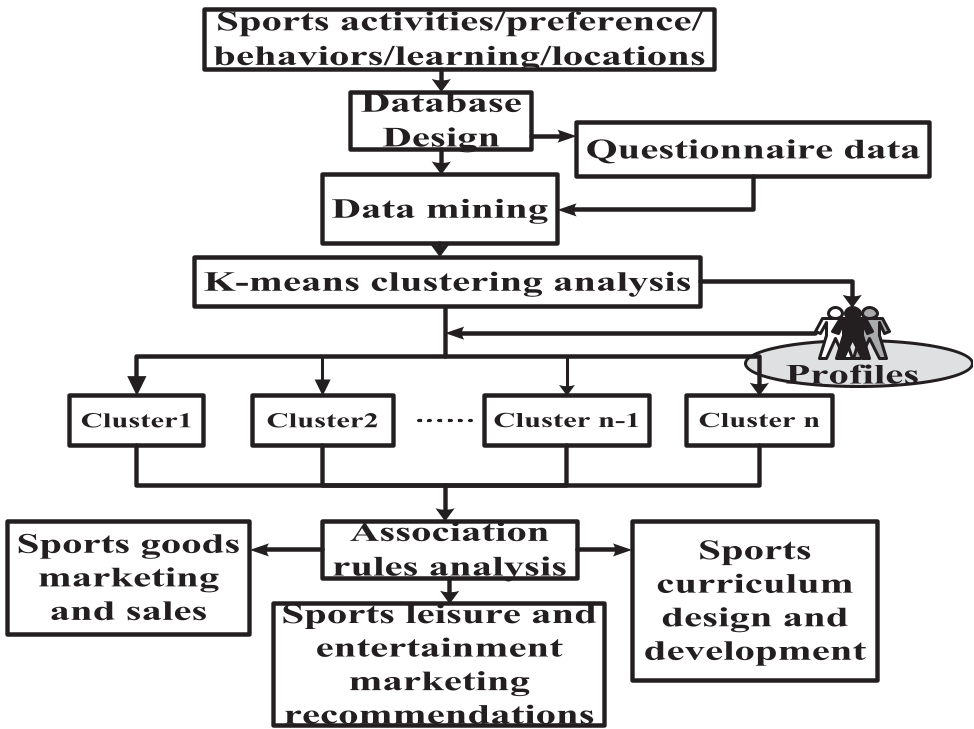
The researchers didn't just look at sales; they looked at the psychology of delivery. Their framework follows a rigorous pipeline:
- Survey & Database Design: Capturing 67 attributes including motivation, venue, and brand preference.
- K-means Clustering: Dividing the market into three "homogenous" groups based on behavioral patterns.
- Apriori Rule Discovery: Finding the "Lift" (correlation) between specific antecedents (e.g., shopping at a mall + seeking fashion) and consequents (e.g., buying a Nike coat).
Deep Dive: The Three "Sporting Personas"
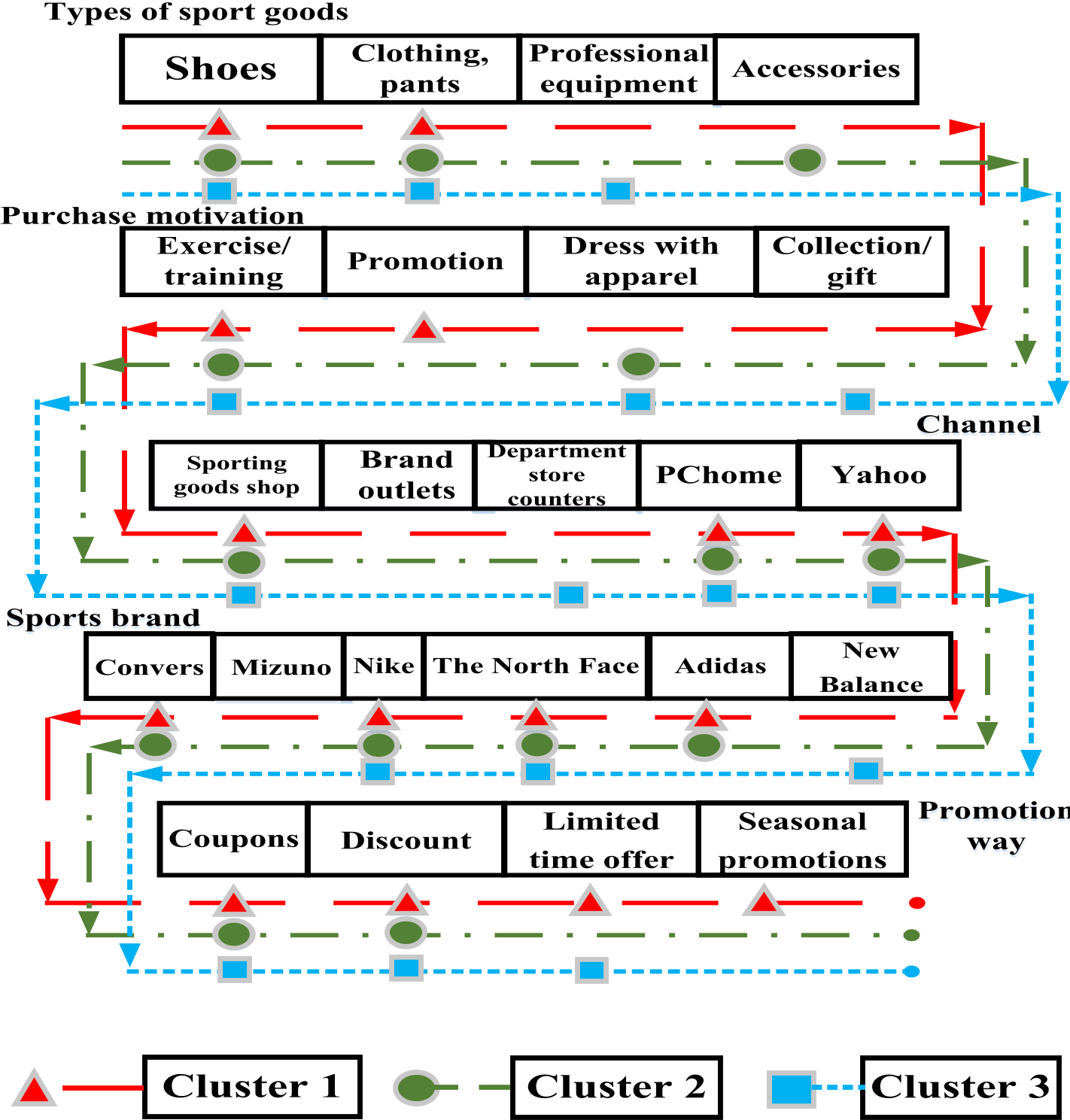
The study’s most actionable insight lies in its segmentation:
- Cluster 1: Sunshine Type (Young Males): Primarily driven by interest and physical fitness. They frequent schools and gyms, preferring volleyball and fitness. Their marketing "trigger"? Coupons for popular footwear brands like Converse.
- Cluster 2: Young Women’s Personality: Driven by stress relief and body toning. They treat sports as a lifestyle statement (yoga, swimming) and are sensitive to "Limited Time Offers" via department store counters.
- Cluster 3: Actuarial Family (Mature/High Income): This group prioritizes health and social pursuits (golf, tennis). They are "Actuaries" because they seek value—discounts and coupons are essential, despite their higher disposable income.
Performance Evidence
The association rules discovered aren't just guesses; they are statistically validated through Lift values (all > 1, indicating a strong positive relationship) and Confidence scores.

The "How" (Service Bundling): Sports Models of Delivery
One of the paper's unique contributions is the concept of "Models of Delivery." They suggest that a gym shouldn't just sell a membership; it should sell a curated experience.
- For Cluster 2, the recommendation is a 31-90 minute swimming course bundled with personalized gear.
- For Cluster 1, the focus is on high-intensity aerobic dance for sessions exceeding 90 minutes.
Critical Analysis & Conclusion
While the paper successfully applies Entertainment Computing to the sports market, it acknowledges its limitations: the sample is restricted to Taiwan, and the static nature of questionnaires can't capture the real-time "drift" in consumer behavior that a live AI system could.
Takeaway for the Future: The next frontier is Internet of Things (IoT) Integration. By feeding real-time data from wearables into these association models, sports brands could provide "just-in-time" recommendations—offering a discount on new running shoes exactly when your current pair hits the 500km mark.
Overall, this research serves as a blueprint for transforming sports from a physical activity into a personalized, data-driven entertainment service.