
Safeguarding Social Networks: A Threshold-Based Approach to Blocking Misinformation
Targeted Misinformation Blocking on Online Social Networks
The paper introduces the Targeted Misinformation Blocking (TMB) problem, aiming to identify the smallest set of social network nodes to remove to reduce misinformation influence by at least a specified threshold γ. Under the Linear Threshold (LT) model, the authors propose an approximation Greedy algorithm and a highly efficient heuristic called Scalable TMB (STMB).
In an era where rumors can travel faster than truth, researchers are shifting from "blocking as much as possible" to "ensuring safety thresholds." A recent paper titled "Targeted Misinformation Blocking on Online Social Networks" addresses this by introducing the TMB problem: finding the minimum number of nodes to remove to guarantee a specific drop in misinformation influence.
Executive Summary
TL;DR: The authors tackle the "Targeted Misinformation Blocking" (TMB) problem, which seeks the smallest subset of nodes whose removal reduces misinformation spread below a safety threshold γ. They prove the problem is #P-hard but provide a Greedy algorithm with a logarithmic approximation guarantee and a scalable heuristic (STMB) that is thousands of times faster than traditional methods.
Academic Context: This work bridges the gap between theoretical influence maximization and practical network immunization. It moves beyond budget-constrained models to goal-oriented models, emphasizing the necessity of meeting reliability thresholds in Online Social Networks (OSNs).
The Core Challenge: Why is Targeted Blocking Hard?
Most existing research focuses on the Influence Maximization (IM) side—how to spread "good" information. However, blocking is fundamentally harder because it involves neutralizing unknown propagation paths.
- Computational Complexity: Determining exact influence in the Linear Threshold (LT) model is #P-hard.
- The "Safety First" Requirement: Unlike traditional immunization where you spend a fixed budget, TMB requires you to prove that the misinformation reduction reaches a specific threshold γ, making it more akin to a set-cover problem than a maximization problem.
Methodology: From Greedy Guarantees to Scalable Heuristics
1. The Greedy Foundation
The authors prove that the influence reduction function is submodular and monotone. This is a critical mathematical insight because it allows for a Greedy approach: repeatedly picking the node that provides the largest marginal gain. This yields a solution within a factor of of the optimal.
2. STMB: The Efficiency Breakthrough
Standard Greedy algorithms rely on heavy Monte-Carlo simulations, which are too slow for networks with thousands of nodes. The authors propose STMB (Scalable Targeted Misinformation Blocking):
- Super-Source Merging: All known misinformation sources are merged into a single virtual "super-node" to simplify the graph structure.
- Live-Edge Sampling: By sampling "live-edges," the graph is converted into a forest of trees rooted at the misinformation source.
- DFS Increments: In a tree structure, the influence of a node is simply the size of its subtree. This allows the algorithm to calculate marginal gains using a simple Depth-First Search in linear time.
 Figure 1: The diffusion model context and the logic of targeted blocking.
Experiments: Speed and Quality
The authors tested their algorithms on real-world datasets like NetHEPT (15k nodes, 32k edges). The results were striking:
- Accuracy: STMB required significantly fewer nodes to reach the threshold compared to PageRank or High-Degree heuristics.
- Efficiency: On the NetHEPT dataset, STMB took roughly 165 seconds, while the standard Greedy algorithm took over 582,566 seconds (nearly 7 days).
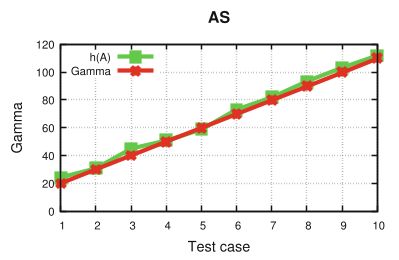 Figure 2: STMB (blue line) consistently hits the target threshold with the smallest set of nodes removed.
Deep Insight & Conclusion
The real value of this research lies in its Heuristic Efficiency. By recognizing that the LT model's propagation can be approximated through tree-based live-edge sampling, the authors transformed a #P-hard problem into a computationally tractable one.
Limitations:
- The model currently assumes misinformation sources are known in advance.
- The node removal strategy, while effective in theory, may be difficult to implement socially (i.e., "removing" a user might mean temporary suspension or shadow-banning).
Future Outlook: This methodology sets the stage for "safety-guaranteed" algorithms in social media moderation. Future work applying these thresholds to the Independent Cascade (IC) model or more complex Multiplex Networks will likely be the next frontier in digital information integrity.