
Precise Hormonal Engineering: Creating the Next-Generation Short Stature Maize
Targeted suppression of gibberellin biosynthetic genes <i>ZmGA20ox3</i> and <i>ZmGA20ox5</i> produces a short stature maize ideotype
The paper introduces a dominant, miRNA-based biotechnology to create a short stature maize ideotype by targeted suppression of gibberellin (GA) biosynthetic genes ZmGA20ox3 and ZmGA20ox5. This approach achieves a ~33.3% reduction in plant height while maintaining reproductive potential and increasing the harvest index, reaching a SOTA-level architectural modification for commercial hybrid maize.
TL;DR
Researchers at Bayer Crop Science have engineered a new "short stature" maize ideotype by using a dominant miRNA to precisely suppress GA biosynthesis in stems. Unlike previous dwarf mutants that suffered from reproductive defects, this method reduces plant height by 33% without sacrificing yield, effectively bringing the Green Revolution's architectural benefits to commercial hybrid maize.
The "Maize Paradox": Why the Green Revolution Stalled for Corn
The Green Revolution transformed wheat and rice by introducing semi-dwarf varieties that could withstand high fertilizer inputs without "lodging" (falling over). However, maize was left behind. The plant hormone responsible for height—Gibberellin (GA)—is a double-edged sword in corn. While reducing GA makes the plant shorter and sturdier, it typically causes "tassel-ear" (anthers growing in the ear) and complete yield collapse.
The challenge was: How do we reduce GA in the stalk to achieve short stature without affecting the delicate reproductive balance?
Methodology: Surgical Precision with miRNA
The authors bypassed the "all-or-nothing" approach of traditional mutations by using a high-precision biotechnology stack:
- Target Selection: They identified ZmGA20ox3 and ZmGA20ox5 as the primary drivers of stem elongation, homologous to the famous SD1 "Green Revolution" gene in rice.
- The Silencer (miRNA): They designed a 21-nucleotide microRNA (GA20ox_SUP) that acts as a dominant trait, meaning it only needs to be present in one parent of a hybrid cross to work.
- The Delivery (RTBV Promoter): They used the Rice Tungro Bacilliform Virus (RTBV) promoter, which targets the vascular bundles of the internodes. This ensures the "silencer" is active in the stalk but largely absent in the kernels and flowers.

Experimental Results: Shorter, Stronger, and More Efficient
Field tests in Illinois (Jerseyville and Monmouth) confirmed that the strategy worked with remarkable consistency across different environments.
1. Architectural Transformation
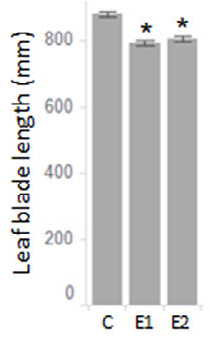
The transgenic plants were consistently ~1/3 shorter than "tall" controls. This wasn't because they had fewer leaves (node number remained the same), but because each individual internode was shorter. Microscopic analysis revealed that the longitudinal cells within the stalk were significantly compressed.
2. The "Free Lunch" in Yield
Crucially, reproductive traits—ear length, kernel count, and flowering time—remained unchanged. By reducing the "stover" (non-grain biomass) while maintaining grain weight, the researchers achieved a Harvest Index (HI) of 0.60, a significant jump from the standard 0.45–0.53 seen in North American hybrids.
Critical Insight: The Cellular Mechanism
The paper proves that the GA reduction inhibits cell elongation, not cell division. By targeting the GA20ox family, the researchers kept the "sensing" machinery (signaling) intact—as evidenced by the fact that exogenous application of GA could "rescue" the height of the short plants—proving the method only limits the "fuel" (GA levels) in specific tissues.
Conclusion & Future Outlook
This "Short Stature Maize" is more than just a shorter plant. It represents a shift toward sustainable intensification:
- Standability: Reduced lodging risk means less crop loss during extreme weather.
- Management: Shorter plants allow standard ground equipment to enter fields later in the season for precise nutrient and pesticide application.
- Density: These ideotypes are perfectly suited for higher-density planting, which is the primary driver of future yield increases.
As climate change makes weather more unpredictable, the ability to "reprogram" crop architecture through precise secondary metabolism intervention will be a cornerstone of global food security.