
Graph-Based Spatial Crowdsourcing: Optimizing the Last Mile via Path Planning
Task Assignment Method in Spatial Crowdsourcing Based on Graph Search
This paper introduces a graph-based optimization framework for spatial crowdsourcing task assignment, mapping real-world road networks into non-connected graph structures. It proposes two novel algorithms, TATL (Task Location-based Assignment) and TAAP (Ant Colony Planning-based Assignment), which outperform traditional "grab" strategies in maximizing task throughput per courier.
TL;DR
To address the inefficiencies in urban delivery, this paper proposes a graph-structured approach to spatial crowdsourcing. By mapping road networks into nodes and edges and employing specialized algorithms like Task Location-based Assignment (TATL) and Ant Colony Planning (TAAP), the authors improved courier efficiency by up to 1 order per person compared to traditional "grab" systems.
Context & Motivation: Why Graphs Matter
In the world of logistics, "Spatial Crowdsourcing" (SC) turns non-specific citizens into couriers. However, most existing platforms use primitive "grab" strategies where couriers pick the closest task without considering the destination or the total delivery path.
The authors identify two fatal flaws in prior work:
- Destination Blindness: Ignoring where the package is going leads to sub-optimal routing.
- Network Ignorance: Treating distances as Euclidean (straight lines) rather than following actual road networks (graphs).
By treating the city as a Crowdsourcing Distribution Network Graph (CDNG), the researchers transform task assignment from a simple matching problem into a complex path-optimization challenge.
Methodology: Beyond the "Grab" Strategy
The paper introduces three distinct strategies for assigning tasks to couriers:
1. The Baseline: Location Service-based Grab Strategy (LSGS)
This mimics real-world apps like Uber or Meituan. Couriers simply "grab" the nearest task. It is "courier-centric" but lacks foresight.
2. The Task-Centric Approach: TATL
TATL focuses on the tasks first. It finds the nearest courier for every task and uses an interpolation (insertion) method. It attempts to fit new task nodes into existing delivery sequences, checking if time constraints are still met after the detour.
3. The Hybrid Powerhouse: TAAP (Ant Colony Planning)
TAAP is the most sophisticated method. It decouples the assignment (choosing which tasks a courier handles) from the planning (deciding the order to visit nodes).
- The Assignment: Based on location aggregation.
- The Planning: Uses Ant Colony Optimization (ACO). Ants leave "pheromones" on shorter, more efficient paths between task start and end points.
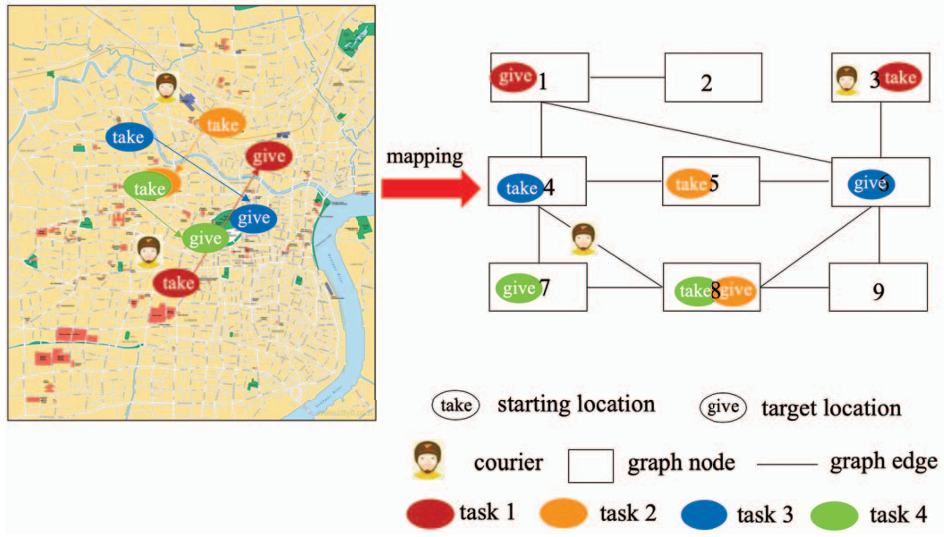 Figure 1: Mapping real-world coordinates to a non-connected graph structure.
Experiments: Measuring Efficiency
The researchers conducted extensive simulations across four groups of experimental data, varying the number of graph nodes (from 10 to 100) and tasks (from 10 to 80).
Key Findings:
- Throughput: TATL and TAAP consistently assigned 0.5 to 1.0 more tasks per courier than the traditional LSGS grab strategy.
- Complexity Paradox: As the graph network became more complex (more nodes/edges), the average order quantity per courier slightly decreased due to the stricter pathing constraints, but the TATL/TAAP advantage remained stable.
- Pathing Quality: While TATL and TAAP were similar in the number of tasks assigned, TAAP (Ant Colony) produced significantly more efficient delivery paths, reducing the total distance traveled.
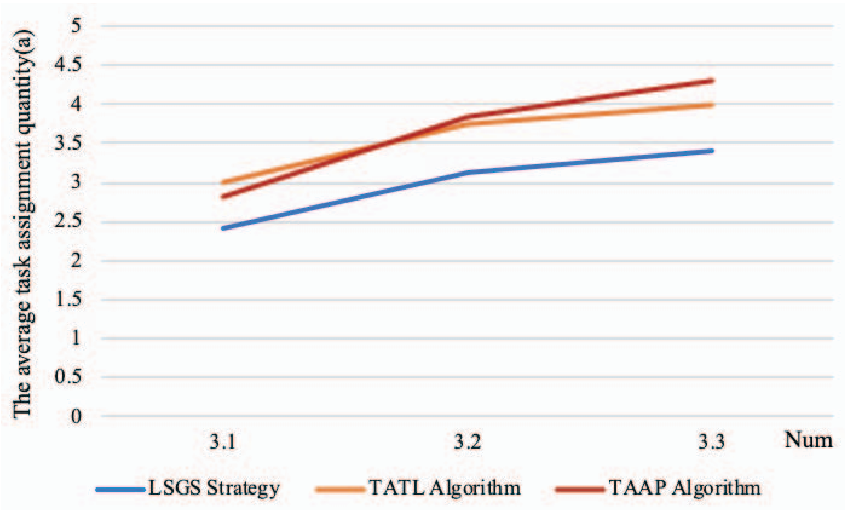 Figure 2: Performance comparison across different experimental groups showing TATL and TAAP superiority.
Critical Insight: The "Interpolation" vs. "Evolution"
The core "Why" behind the success of these methods lies in their handling of Order Constraints. A courier cannot deliver a package before picking it up. TATL handles this via manual insertion rules, while TAAP accommodates this within the "tabu list" of the Ant Colony algorithm, preventing ants from visiting a destination node before its corresponding origin node. This mathematical rigor prevents the logical errors common in simpler heuristic models.
Conclusion & Future Outlook
This work proves that graph-based awareness is non-negotiable for the next generation of crowdsourcing platforms. By moving from "nearness" to "path-efficiency," platforms can significantly boost their capacity.
Limitations: The authors acknowledge that their methods can sometimes fall into local optima—finding a "good" route that isn't the "best" possible one. Future research likely lies in the integration of Deep Reinforcement Learning to navigate these graph structures even more dynamically.