
MS-SC: Mastering Complex Task Assignment in Multi-Skill Spatial Crowdsourcing
Task Assignment on Multi-Skill Oriented Spatial Crowdsourcing
This paper introduces Multi-Skill Spatial Crowdsourcing (MS-SC), a framework for assigning multi-skilled workers to complex, time-constrained spatial tasks under budget constraints. The authors propose three approximation algorithms—Greedy, g-Divide-and-Conquer (g-D&C), and a Cost-Model-Based Adaptive algorithm—to maximize the total flexible budget (benefit) while ensuring all task-required skills are covered.
TL;DR
As spatial crowdsourcing evolves from simple photo-taking to complex services like home renovation or event planning, the "one worker, one task" model breaks down. This paper introduces the MS-SC (Multi-Skill Spatial Crowdsourcing) framework, designed to coordinate teams of multi-skilled workers to satisfy complex task requirements. By proving the problem's NP-hardness and introducing a novel Cost-Model-Based Adaptive algorithm, the authors achieve high-quality task assignments with massive speedups over traditional recursive methods.
Background & Motivation: Beyond the Simple "Gig"
Existing platforms like TaskRabbit or Uber rely on location-based matching. However, these models struggle when a task—such as repairing a house—requires a specific combination of plumbing, electrical, and carpentry skills. The challenge is threefold:
- Skill Coverage: A single worker rarely has all needed skills; a team must be formed.
- Spatiotemporal Constraints: Workers must arrive before a deadline and within their moving range.
- Economic Efficiency: Assignments must maximize the "flexible budget" (total budget minus travel costs) to ensure platform and worker sustainability.
Methodology: The MS-SC Framework
The authors model the problem as a bipartite graph where workers and tasks are nodes, and edges represent "valid" assignment possibilities based on location, time, and skills.
1. The Greedy Strategy with Pruning
The greedy approach selects worker-task pairs that yield the highest score increase (). To prevent a complexity explosion, the authors introduce:
- Worker Pruning: Eliminating "dominated" workers (those with fewer skills and higher costs than others).
- Task Pruning: Identifying tasks that cannot be completed even by the most optimal remaining workers.
2. g-Divide-and-Conquer (g-D&C)
To avoid getting stuck in local optima, the g-D&C algorithm partitions the bipartite graph into subgroups.
- Partitioning: Tasks are grouped by spatial proximity.
- Conquering: Subproblems are solved recursively.
- Reconciliation: A conflict-resolution phase handles workers who are assigned to different tasks across subproblems.
3. The Adaptive Evolution
The "secret sauce" is the Adaptive Algorithm. It uses a mathematical cost model to predict the overhead of both Greedy and g-D&C at each recursion level. If the predicted cost of a greedy local search is lower than the cost of further partitioning, the algorithm switches strategies mid-stream.
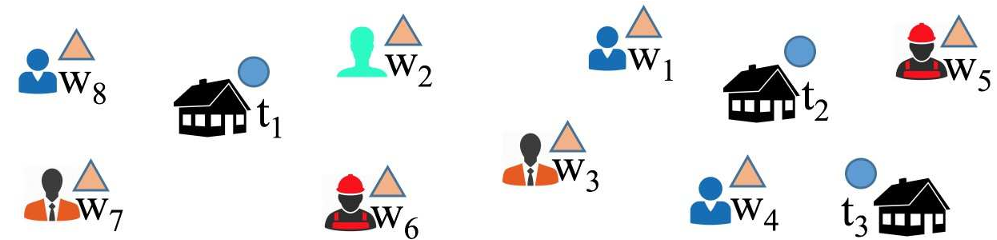 Figure 1: High-level overview of the skill matching process in MS-SC.
Experimental Results
The researchers tested their methods using Meetup data (HK area) and synthetic sets.
- Effectiveness: g-D&C and Adaptive algorithms consistently outperformed simple Greedy and Random baselines in terms of total assignment score.
- Efficiency: While g-D&C yields slightly better scores, the Adaptive Algorithm provides a significant reduction in running time, proving robust as the number of workers () and tasks () scales to .
- Grid Index Impact: The specialized grid index, which uses bitmap synopses for skills, reduced retrieval time by nearly 80%, proving that clever indexing is as vital as the matching algorithm itself.
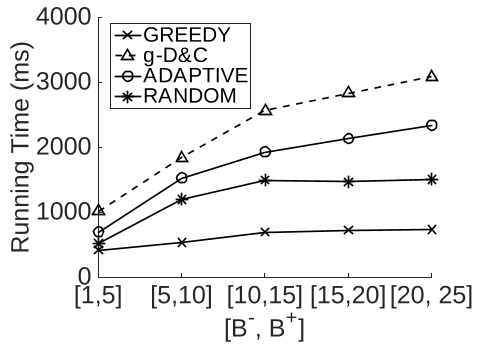 Figure 2: Comparison of assignment scores across different algorithms.
Critical Analysis & Takeaways
The MS-SC paper successfully bridges the gap between theoretical Set Cover Problems and practical spatial database applications.
- Insight: The move from "single-set cover" to "multi-set cover" with spatiotemporal constraints is a significant academic contribution.
- Limitation: The current model assumes Euclidean distance; future iterations will need to incorporate road-network distance and real-time traffic data.
- Future Work: Integrating "Incentive Mechanisms" to distribute the flexible budget fairly among workers is the next logical step to move this from theory to a production-ready system.
In conclusion, the MS-SC framework provides a scalable, mathematically sound solution for the next generation of complex, service-oriented crowdsourcing.