Random Walks in Social Media: Why Tags and Ratings are Better Together
The task-dependent effect of tags and ratings on social media access
The paper introduces a unified retrieval model for social media based on a random walk algorithm across a tripartite graph of users, items, and tags. It investigates the task-dependent influence of tags and ratings, achieving significant improvements in content recommendation, personalized search, and tag suggestion across multiple datasets like LibraryThing and MovieLens.
TL;DR
Social media access isn't just about what you like (ratings) or how you describe it (tags); it's about how these elements interact. This paper demonstrates that a Random Walk model with self-transitions can effectively unify these signals to boost recommendation accuracy by up to 27% and solve the "vocabulary problem" in search.
The Core Intuition: The Power of Latent Connections
In a typical social platform, users inhabit a tripartite world: Users, Items, and Tags. Most algorithms look at these in pairs (e.g., User-Item ratings or Item-Tag descriptions). However, the real value lies in the "transitive" relationships.
If User A tags a book as 'Cyberpunk' and User B rates the same book 5 stars, there is a latent connection between User B and the 'Cyberpunk' tag, even if User B never used that word. The authors use a Random Walk to traverse these paths, effectively "bridging" gaps where data is sparse.

Methodology: Walking the Social Graph
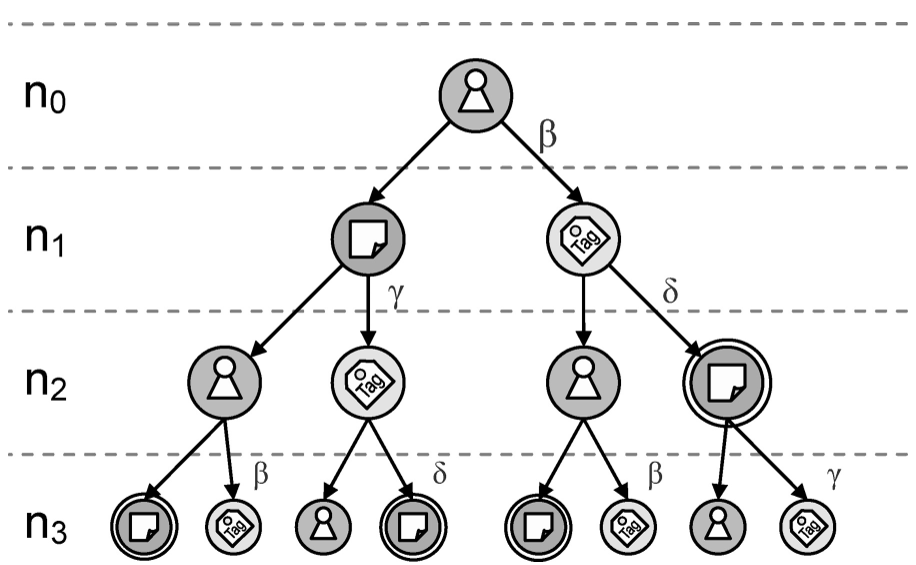
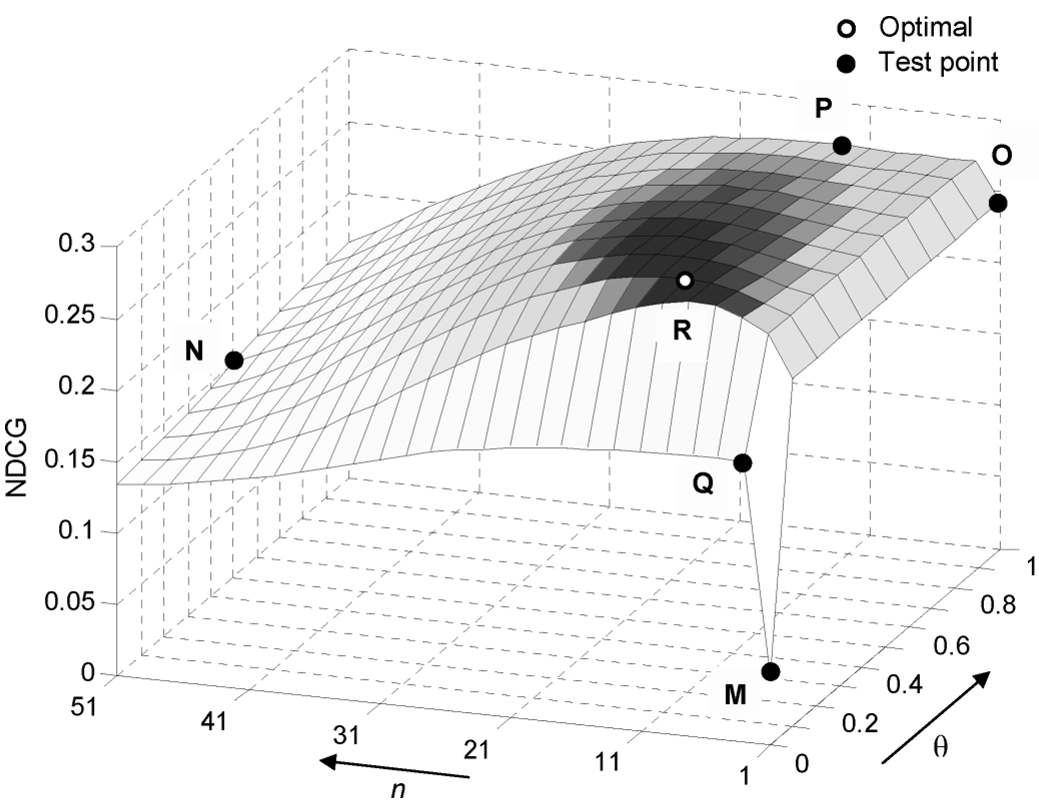
The model operates via a transition matrix . Unlike standard PageRank, which focuses on a stable, long-term state (), this research emphasizes medium-length walks.
- Self-Transitions (): By allowing the "walker" to stay in place, the model maintains a strong focus on the user's initial intent while slowly exploring the neighborhood.
- Task Taxonomy: The authors define 12 distinct tasks—from suggesting friends (User-User) to recommending tags for new content (Item-Tag).
- The Parameters: By tuning (User-Tag influence), (Item-Tag influence), and (Tag-Item influence), the model adapts to different system designs (e.g., Flickr's individual tagging vs. Delicious's collaborative tagging).
Breaking Down the Results
1. Recommendation: Beyond Collaborative Filtering
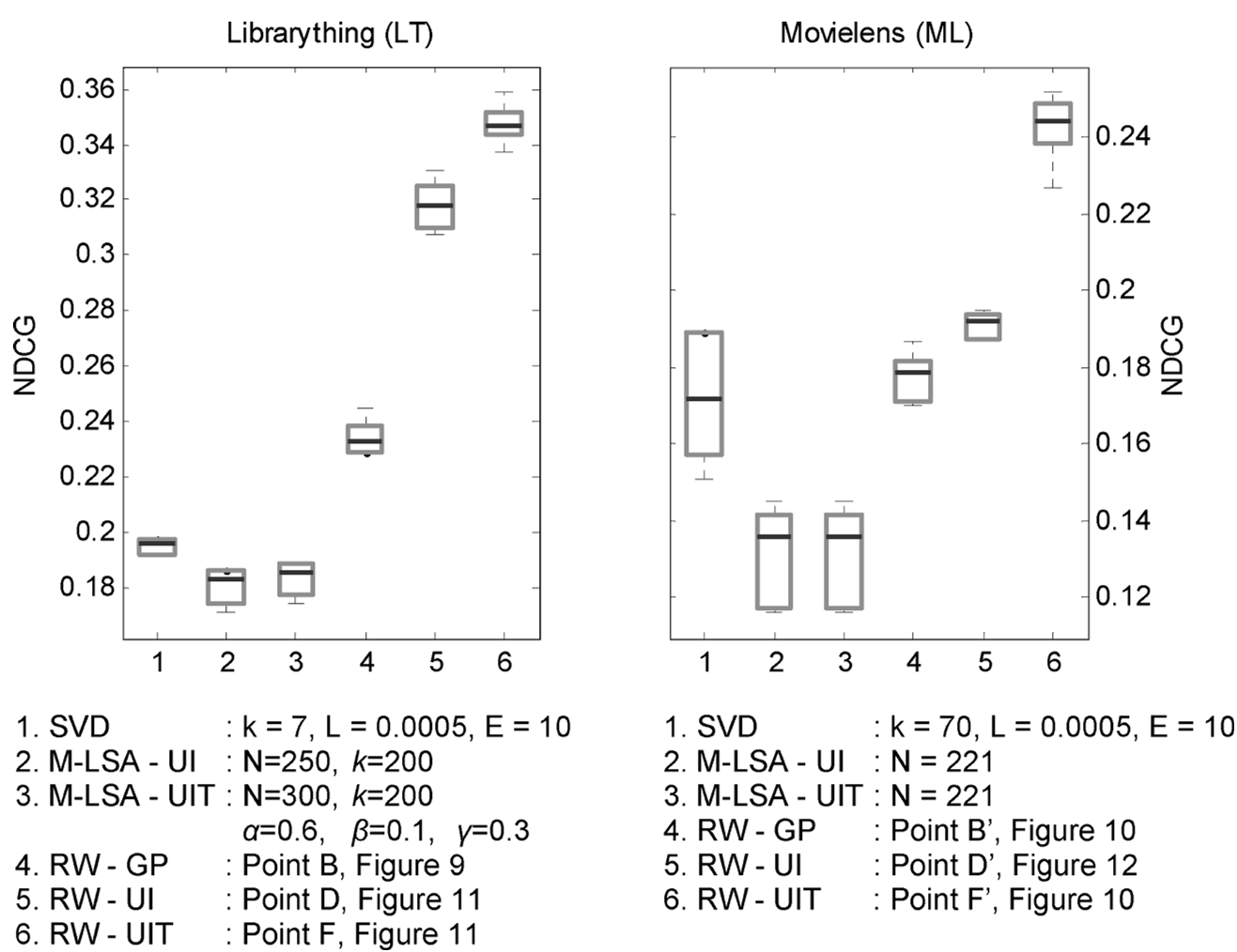
The study found that combining ratings with communal tags (the path: User -> Item -> Tag -> Item) outperformed traditional Collaborative Filtering (User-Item similarity) by 8.8% in LibraryThing and a massive 27% in MovieLens. This suggests that tags provide a "content bridge" that similarity scores alone cannot match.
2. The Search Paradox: Precision via Personalization
In search tasks, the random walk identifies synonyms and related concepts. If you search for "Fantasy," the walk might lead you to items tagged "Sword and Sorcery." In individual tagging systems (where only the uploader tags the file), the random walk increased retrieval performance by 85% compared to simple frequency-based search.
Critical Industry Insights
- System Design Matters: Collaborative tagging (allowing anyone to tag anything) creates a "Broad Folksonomy" that is significantly easier to search than the "Narrow Folksonomies" found on YouTube or Flickr.
- The Sparsity Cure: For "cold-start" users with few ratings, a longer random walk serves as a powerful clustering tool, connecting them to relevant content through shared tag vocabularies.
- Privacy Implications: Interestingly, tag-based ranking (User -> Item -> Tag -> Item) is nearly as effective as rating-based ranking but doesn't require exposing specific user-to-user similarities, offering a potential path for privacy-preserving recommendations.
Conclusion
This work proves that the "social" in social media isn't just a UI feature—it's a structural data advantage. By treating tags and ratings as nodes in a unified graph, we can build retrieval systems that understand not just what we are looking at, but how we think about it.