
Beyond Task Tuning: Re-architecting Privacy in High-Skill Crowdsourcing
From Task Tuning to Task Assignment in Privacy-Preserving Crowdsourcing Platforms
This paper introduces the PKD algorithm and PKD PIR Packing heuristic, a dual-layer framework for privacy-preserving crowdsourcing. It enables multi-dimensional worker skill analysis and efficient task assignment by combining Homomorphic Encryption, Differential Privacy (εκ-SIM-CDP), and Private Information Retrieval (PIR) to protect sensitive worker profiles.
TL;DR
Modern crowdsourcing relies on invasive worker profiles to match tasks. This paper proposes a decentralized framework that uses a Privacy-Perserving KD-Tree (PKD) to partition worker skill-spaces and a PIR-based Packing mechanism for task assignment. By blending Homomorphic Encryption (HE) with Differential Privacy (DP), it achieves SOTA utility for multi-dimensional skills without requiring a trusted central server.
Background: The Privacy-Utility Tug-of-War
In specialized crowdsourcing (e.g., software engineering, medical consultation), worker profiles are goldmines. However, a specific combination of "Python + Privacy Law + French + Tuesday availability" is essentially a fingerprint.
Previous solutions faced a trilemma:
- Centralized DP: Requires a trusted platform (rare in the age of data breaches).
- Pure Encryption: Secure but computationally "glacial" for real-time task matching.
- Local DP (LDP): Fast, but the noise required for high-dimensional data destroys accuracy.
Methodology: The PKD Algorithm
The core innovation is the PKD (Privacy-preserving KD-Tree). It performs recursive space partitioning—similar to a standard KD-tree—but does so in a distributed, zero-knowledge fashion.
1. Private Median Estimation (PrivMed)
Instead of centralizing data to find medians, workers collaborate with an untrusted platform:
- Step 1: Workers add "noise-shares" to their local skill values (based on the infinite divisibility of geometric distributions).
- Step 2: Values are encrypted using Additively-Homomorphic Encryption.
- Step 3: The platform sums the encrypted values and performs a Threshold Decryption with a subset of workers to reveal only the perturbed aggregate (the histogram bin count).
2. The PKD PIR Packing Heuristic
Assigning tasks is an NP-Hard optimization problem. If a worker downloads only the tasks they match, the platform learns their skills (Metadata Leakage). If they download everything, bandwidth explodes.
The authors propose Partitioned Packing:
- Tasks are grouped into "buckets" based on the PKD partitions.
- Each worker uses Private Information Retrieval (PIR) to fetch exactly one bucket.
- Because every worker fetches one bucket of the same size, the platform gains zero information about which skills a worker actually possesses.
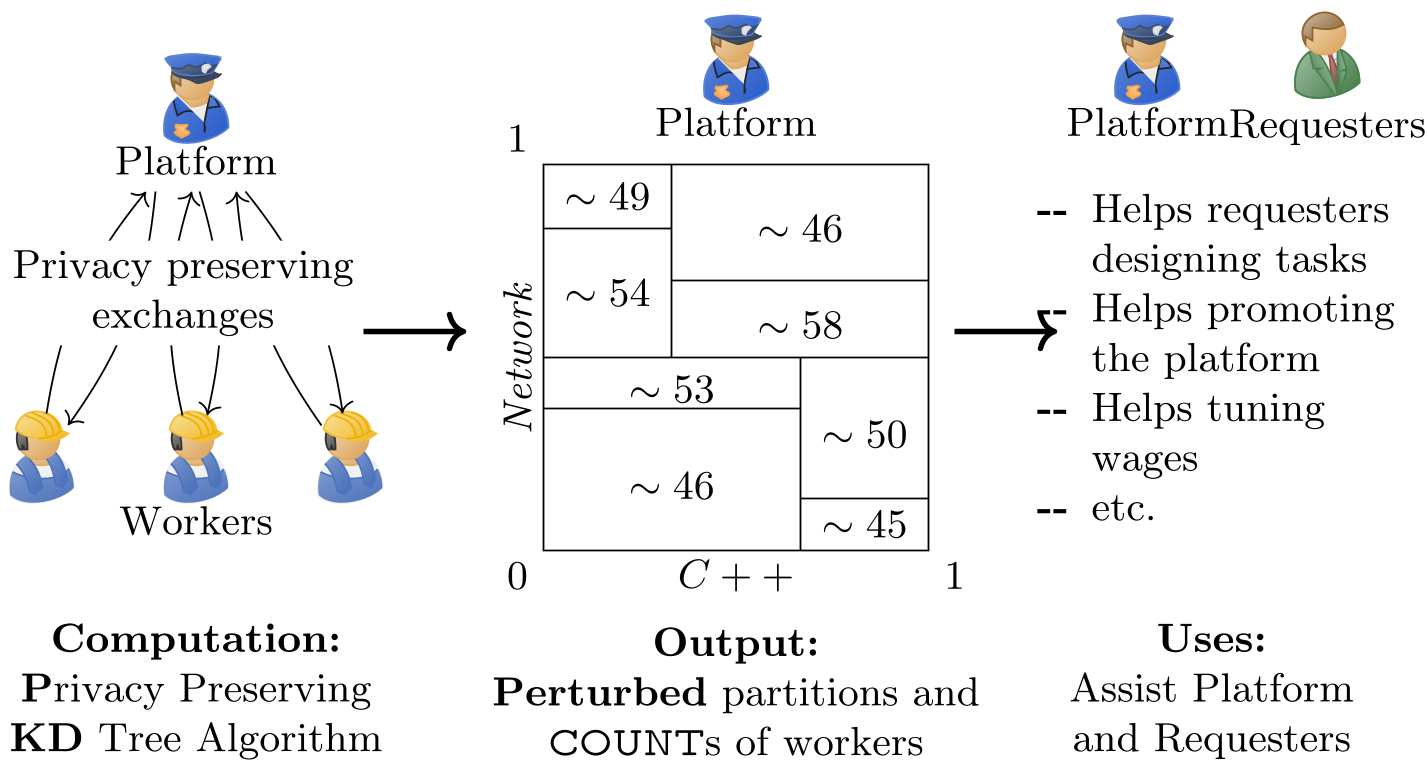 Figure 1: High-level overview of the PKD and PIR flow between workers and the platform.
Experimental Results: Proving Affordability
The authors tested the system against a massive 1.3M profile dataset derived from StackExchange tags.
Performance Highlights:
- Scalability: For 10,000 workers, encryption takes <10s and server-side aggregation <20 minutes—highly practical for background processing.
- Precision: The PIR Packing approach increased precision by 2 orders of magnitude compared to the naive "spamming" approach where all tasks are sent to everyone.
- Robustness: The εκ-SIM-CDP model ensures that even if τ workers collude, the privacy of others remains mathematically intact.
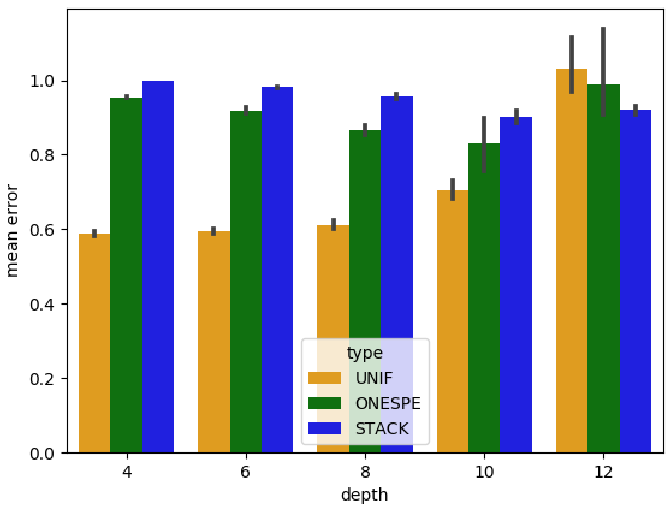 Figure 2: Analysis of PKD quality across different skill distributions (Uniform vs. Specialized).
Critical Insight: Why This Matters
The breakthrough here isn't just "adding noise." It's the post-processing of the KD-tree structure. By using "constrained inference," the authors ensure that child partitions sum up to parent partitions, a technique that significantly recovers the "signal" lost to differential privacy noise.
Furthermore, the transition from Task Tuning (secondary usage) to Task Assignment (primary usage) using the same geometric structure is an elegant example of "structural reuse" in privacy design.
Conclusion & Future Look
The paper effectively solves the "Trusted Platform" bottleneck. While the current model assumes "honest-but-curious" participants, moving toward "Malicious" models using Zero-Knowledge Proofs (ZKPs) is the natural next step. For any developer building a matching engine for sensitive data (gig economy, dating apps, medical trials), the PKD-PIR combo is a compelling architecture to consider.
Takeaway: Privacy doesn't have to mean "less accurate." With the right hierarchical structures and cryptographic primitives, we can have our data-driven cake and eat our privacy too.