
Tastes, Ties, and Time: Decoding the Social DNA of the Facebook Generation
Tastes, ties, and time: A new social network dataset using Facebook.com
This paper introduces a novel, longitudinal social network dataset ("Tastes, Ties, and Time") derived from Facebook.com, mapping the social and cultural lives of a complete cohort of 1,640 college students. It combines digital trace data (friendships, photo tags) with institutional records and cultural preferences to analyze the interplay between social structure and cultural tastes.
TL;DR
This seminal work introduces a comprehensive sociocentric dataset of 1,640 college students, leveraging Facebook to bridge the gap between social network structure and cultural preferences. By analyzing "multiplex" ties—from casual online 'friends' to the physical presence captured in photo tags—the researchers demonstrate how gender, race, and SES shape our digital architecture and how our friends influence what we watch, read, and hear.
Background: Beyond the Survey
For decades, social network analysis (SNA) was trapped in the "survey era." Researchers asked people who their friends were, leading to data marred by forgetting and social desirability bias. The rise of Social Network Sites (SNSs) offered a "natural research instrument." This paper documents the first major effort to harvest this data ethically and systematically, focusing on the freshman class of 2009 at an elite US university.
The Problem: The Missing Cultural Dimension
Traditional SNA follows the "anti-categorical imperative"—the idea that relationships matter more than individual traits. However, this often leaves a "culture-shaped hole" in the data. We didn't just need to know who was connected, but why they were connected. Is it because they share the same skin color, live in the same dorm, or both happen to love The Beatles and Fight Club?
Methodology: The Three Levels of Ties
The researchers didn't just look at the "Friend" button. They categorized social life into three distinct layers:
- Facebook Friends: Low-stakes, high-volume "weak ties."
- Picture Friends: A "stronger" tie requiring physical co-presence and the effort to "tag" someone—a public performance of relationship.
- Housing Ties: Structural proximity (roommates/dormmates) provided by the university.
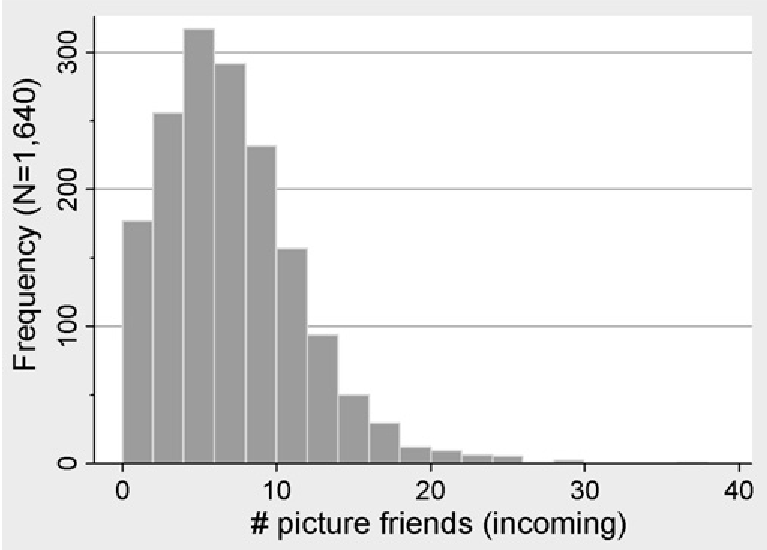 Figure 1: Comparison of network sizes across Facebook friends, picture friends, and housing groups.
Key Insights: Structure and Diversity
The study unearthed fascinating demographic patterns using OLS regression and Quadratic Assignment Procedure (QAP):
- The "Diversity Gap": White students have the least diverse networks. Conversely, students of mixed ethno-racial backgrounds act as "bridges," possessing high network range and popularity in photo tags.
- The Gender Advantage: Contrary to older theories that women's networks are "disadvantaged," this data shows women are more socially active and possess higher "betweenness centrality" in high-intensity picture networks.
- The Black Network Effect: Black students maintain significantly larger Facebook networks (average 43 more friends than Whites), suggesting a different strategic use of the platform for social integration.
Culture: Do Birds of a Feather Really Flock Together?
By analyzing open-ended taste data, the authors calculated "taste overlap." The results challenge simple assumptions of proximity:
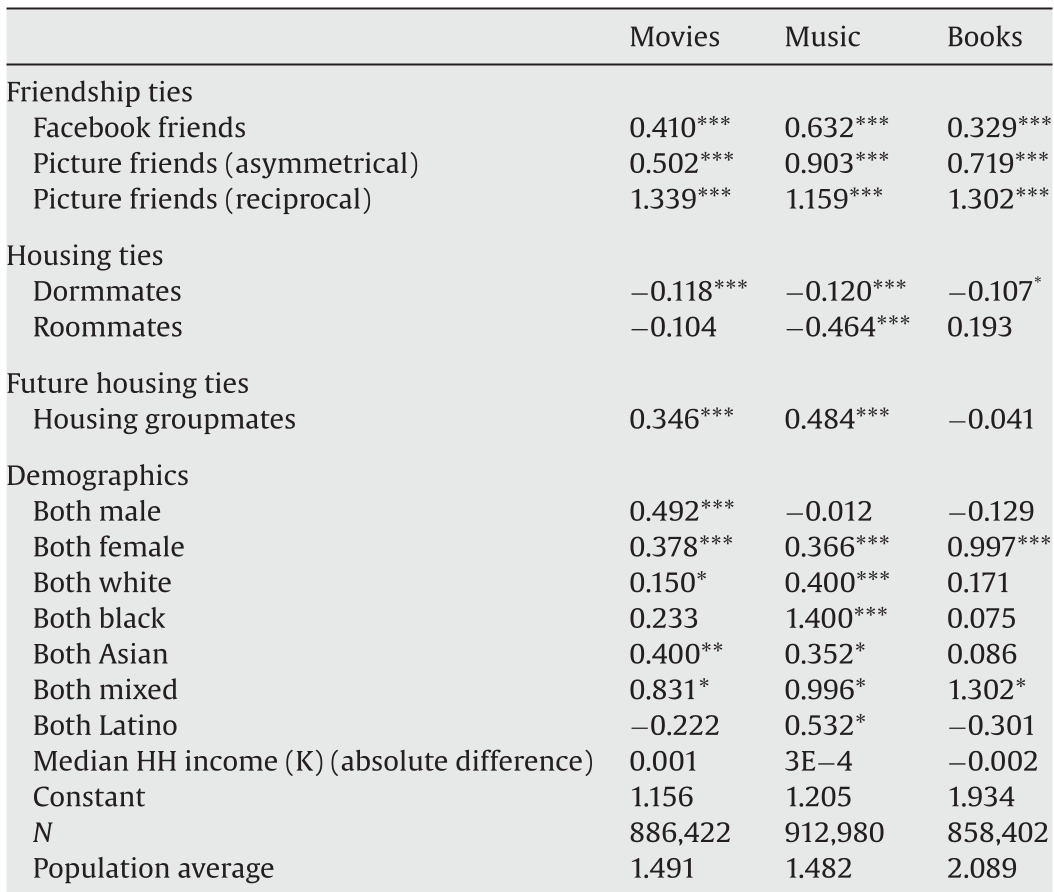 Table 6: Correlation between social ties and taste similarity across media types.
The most provocative finding? Living together doesn't make you like the same music. In fact, dormmates often showed dissimilar tastes, suggesting that when forced into proximity, students might use culture to "distance" themselves and assert a unique identity. True cultural similarity was only found in "reciprocal picture friends"—the people we choose to be with and publicly acknowledge.
Critical Analysis & Conclusion
Takeaway
This study proves that digital footprints are not just "virtual" noise; they are high-resolution mirrors of our "real-life" social hierarchies and cultural boundaries. It emphasizes that social affinity, not just physical proximity, is the engine of cultural homophily.
Limitations
- Elite Bias: The dataset comes from a single private Northeast college, which may not represent broader socioeconomic realities.
- The Privacy Shift: The authors noted a trend of students moving to "private" profiles, highlighting the growing tension between social research and data ethics.
Future Outlook
As we move into an era of AI-driven social discovery, the "Tastes, Ties, and Time" framework remains a foundational template for understanding how algorithms might reinforce or break the cultural silos identified in this 2008 snapshot of the early Facebook era.