
Teaching Differently: Bridging the Divide Between DSP and the Liberal Arts
9971_Teaching Differently The Digital Signal Processing of Multimedia Content Through the Use of Liberal Arts.
The paper introduces a "STEAM" (Science, Technology, Engineering, Arts, and Mathematics) pedagogical methodology to teach undergraduate Digital Signal Processing (DSP). By integrating liberal arts—such as scriptwriting, sonification, and painting analysis—with abstract concepts like entropy and redundancy, the authors achieved significant improvements in student comprehension and engagement.
TL;DR
Engineering education often feels like a dry desert of formulas. This paper presents a refreshing "oasis" methodology: teaching Digital Signal Processing (DSP) through the lens of liberal arts. By using Picasso's paintings to explain Entropy and musical timbres to illustrate Redundancy, researchers at Universidad Carlos III de Madrid have turned abstract math into a multisensorial experience, significantly boosting exam scores and student motivation.
The "History Divide": Why Engineering is Hard
For decades, a wall has stood between the "Literacy-based intellectuals" (Arts) and the "Natural Scientists" (STEM). In DSP, this manifests as a heavy reliance on complex analysis and transform theory. Students often learn the how (the math) but lose sight of the why (the intuition). The authors argue that by ignoring the creative, inductive side of learning, we make engineering unnecessarily difficult and less inclusive.
Methodology: The Core Intuition
The researchers didn't just add "fun" activities; they redesigned the learning flow based on neuroscientific principles. The core of their approach is the element of surprise. When a student expects a dry histogram but instead hears a musical chord or sees a "Pollock-Picasso hybrid" image, the brain triggers a prediction-error response, which is a powerful driver for deep learning and long-term memory.
The Three Pillars of Artistic DSP:
- Textual Entropy: Students write essays on entropy, record them (audio), and then "compress" their own writing by removing redundant words—manually performing the work of a codec.
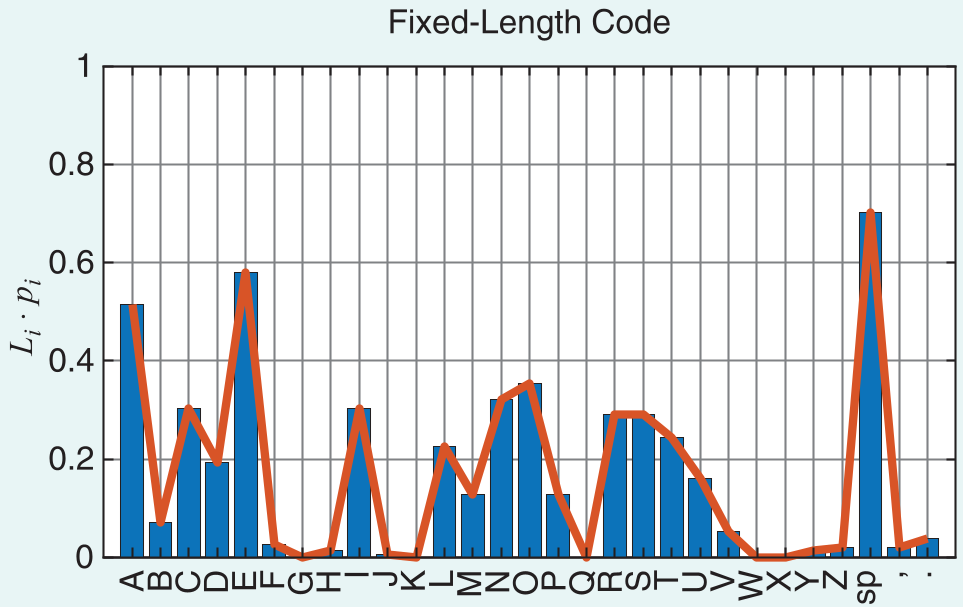
- Sonification of Redundancy: Comparing Fixed-length vs. Huffman coding by turning histograms into musical timbres. A redundant text sounds like a specific instrument, while a compressed one sounds completely different.
- Visual Information Theory: Using a block-based Discrete Cosine Transform (DCT) to swap the high-frequency components of a Picasso painting with the chaotic "entropy" of a Jackson Pollock work.

Deep Dive: Meeting Pollock and Picasso via DCT
One of the most striking experiments involves Exercise 3. Students take Picasso’s The Blue Cup and use the 2D-DCT (the math behind JPEG) to analyze its frequency domain. They then take the high-frequency "chaos" from a Pollock painting and inject it into Picasso's frame.
Why this works: It forces students to realize that "Entropy" isn't just a variable (); it's the "busyness" of a signal. By manipulating the frequency components to mix two distinct artistic styles, the mathematical properties of the DCT become tangible and visual.
 Left (a): Picasso's balanced composition. Right (b): Pollock's high-entropy patterns. Bottom (c): The synthesized result.
Results: Proof in the Pedagogy
The intervention was not just "arts and crafts"—it led to hard data:
- Quantitative Performance: The class mean rose from 47.54 to 56.64.
- Engagement: Despite the complexity, 92.86% of students felt "challenged"—a key indicator of active learning.
- Perception: 80% of students explicitly stated that the artistic activities helped them understand "key engineering concepts" better than traditional lectures.
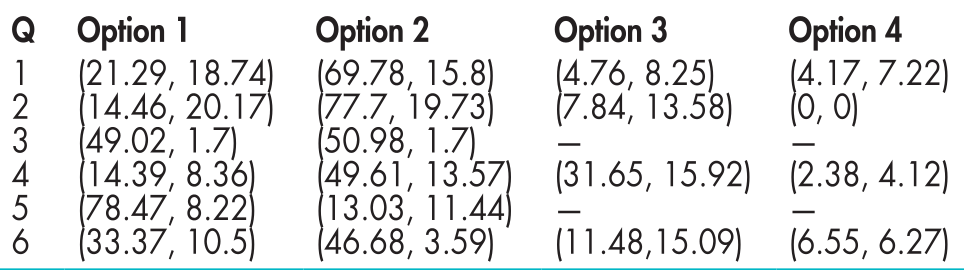 Table 1: Student feedback indicating high interest (Q1) and perceived help in understanding (Q6).
Critical Insight & Future Outlook
The beauty of this work lies in its Duality. It treats "Coding" and "Artistic Synthesis" as two sides of the same coin. Just as a Huffman encoder removes redundancy, an editor removes redundant sentences in a script.
However, the authors admit a limitation: Ad-hoc resource development. Creating these artistic-technical hybrids requires significant effort from professors. To scale this, we need a shared framework where engineering and non-engineering departments (like Music or Art History) co-create content.
Takeaway: The future of engineering isn't just about faster algorithms; it's about better thinkers. By "Teaching Differently," we can build a generation of engineers who are as comfortable with a Fourier Transform as they are with a brushstroke.