
Engineering the Entrepreneur: Bridging the Gap Between Lab and Market
8258_Teaching techies to become entrepreneurs.
The article "Teaching Techies to Become Entrepreneurs" explores the emerging trend of integrating entrepreneurship education within university engineering and science departments. It highlights pioneering programs at Stanford, Rice, Maryland, and UC Santa Barbara designed to equip technical students with business acumen to drive innovation-based economies.
TL;DR
Higher education is undergoing a paradigm shift where engineering schools are no longer just teaching "how things work," but "how things sell." By integrating entrepreneurship into technical curricula through incubators, mentorship, and living-learning programs, universities like Stanford and Maryland are de-risking the startup path for the next generation of tech leaders.
The "Techie" Paradox: High Skill, High Risk
For decades, the path for a scientist or engineer was linear: research, publish, or join a large corporation. The entrepreneurial world was seen as a separate, risky realm reserved for MBA graduates. However, as mature businesses increasingly cannibalize each other through mergers, the real engine of the economy has shifted toward knowledge-based innovation.
The article argues that while universities are the source of new knowledge, they historically lacked the infrastructure to transfer that knowledge to business. The core problem was a lack of "integrative skills"—the ability to combine technical problem formulation with economic advocacy and societal needs.
Methodology: The University as an Incubator
The transformation of "techies" into entrepreneurs is being achieved through several distinct programmatic models:
1. The Living-Learning Ecosystem
The Hinman CEOs Program at the University of Maryland represents a unique approach where students from diverse fields live together in a dedicated environment. This fosters an organic exchange of ideas, turning a dormitory into a pre-seed incubator.
2. The Mayfield Fellows Model
Stanford’s Mayfield Fellows Program focuses on a high-intensity, nine-month sequence. It combines:
- Academic Rigor: Specialized courses on entrepreneurship.
- Practical Exposure: Paid summer internships at active startups.
- Tripartite Mentorship: Guidance from a venture capitalist, an alumnus, and an entrepreneur.
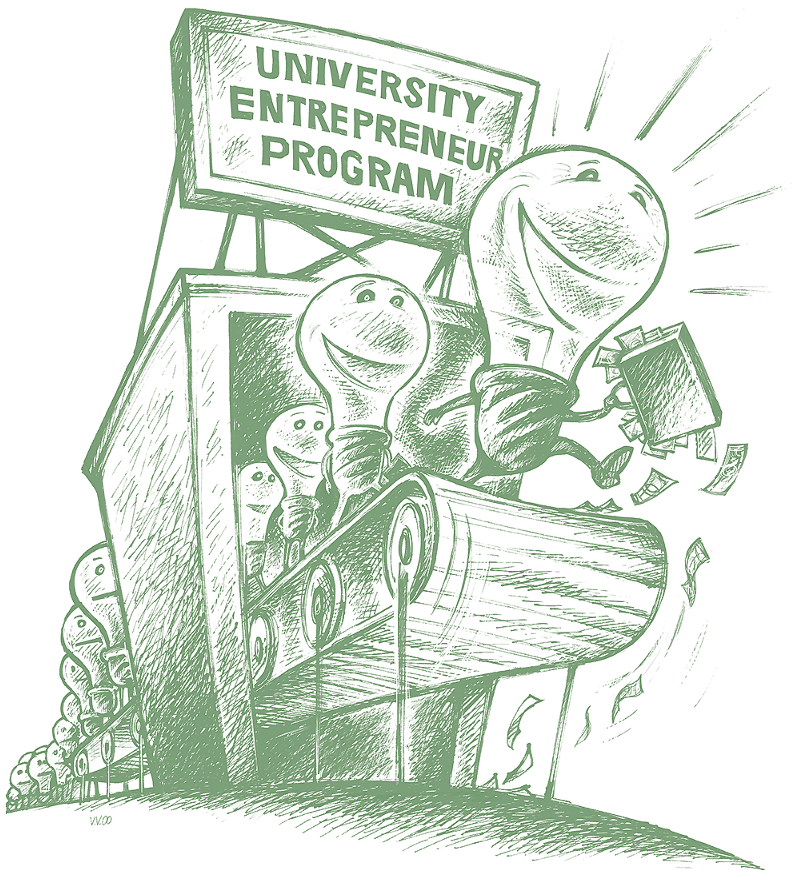 Figure 1: Conceptual illustration of the technical-entrepreneurial journey.
Real-World Impact: From Physics to Pulsed-Lasers
The story of T. "Venky" Venkatesan serves as a primary case study. A physicist from Bellcore, Venkatesan sought a university environment that wouldn't just tolerate his startup, Neocera, but actively support it. Maryland's willingness to lobby for state conflict-of-interest law changes allowed him to use campus resources to develop pulsed-laser deposition systems and magnetic microscopes.
This shift has moved from individual success stories to institutional frameworks. Schools like Rice University have established "Business Plan Forums" to connect innovators with venture capitalists before they even have a formal company.
 Figure 2: The interconnected nature of university-based technology programs.
Critical Insight: It’s Not About Creating "Vocational" Engineering
A vital takeaway from Tom Byers (Stanford) is that these programs aren't trying to replace engineering degrees with business degrees. Instead, they provide Entrepreneurial Inductive Bias—the mindset that allows an engineer to see a technical failure or a new discovery through the lens of market application.
Conclusion & Future Outlook
As Joseph Bordogna of the NSF points out, 60% of modern exports are now complex products requiring complex manufacturing. These are no longer simple commodities; they are the result of deep technical expertise meeting market demand.
The Takeaway: The "Entrepreneur is King" in the digital age, but the King needs a toolkit. By providing techies with the "right skills"—problem formulation, advocacy, and economic context—universities are ensuring that the next big idea doesn't languish in a lab notebook, but reaches the hands of the people who need it.
Limitations: The article acknowledges that these programs are still in their "infancy" and that regional ecosystems (like Silicon Valley vs. Houston) significantly dictate the success of these programs. The challenge for the future lies in whether this model can be replicated in areas without existing venture capital density.