
Team Dating: Can the Crowd Self-Organize into Dream Teams?
Team Dating: A Self-Organized Team Formation Strategy for Collaborative Crowdsourcing
This paper introduces "Team Dating," a decentralized, self-organized team formation strategy for collaborative crowdsourcing. The method enables workers to evaluate potential partners through short, synchronous interaction rounds, allowing the crowd to self-select effective teams for complex tasks.
TL;DR
Collaborative crowdsourcing is often hampered by the "stranger danger" of digital labor—how do you build a winning team when no one knows each other? This paper proposes Team Dating, a decentralized strategy where workers engage in "speed dating" rounds to test interpersonal chemistry and skills before committing to a project. The result: workers trust their own "gut feelings" from these interactions far more than any automated score or collective average.
The "Black Box" of Crowd Dynamics
In a corporate setting, HR departments and managers spend weeks vetting cultural fit and technical synergy. In the world of crowdsourcing, we don't have that luxury. We usually rely on static profiles or historical task data, which are "sterile" metrics. They tell us if a worker can write code or design a logo, but they don't tell us if they will clash with a teammate, ignore feedback, or lack "team spirit."
The authors argue that for complex, creative work (like product design or brainstorming), these interpersonal dynamics are the invisible engine of success. Without a way to measure them on-the-fly, crowd teams remain a collection of individuals rather than a cohesive unit.
Methodology: The "Try-and-Evaluate" Loop
The researchers implemented a three-phase workflow to bridge this gap:
- Preparation & Individual Task: Workers are hired in a batch and perform a sample task (e.g., creating a slogan for a fictional coffee brand) to establish a baseline of their "work style."
- Team Dating (The Core): Workers are randomly paired for 3-minute chat sessions. They discuss their slogans and "test" their collaboration potential.
- Selection: After several rounds, workers view a list of candidates and select their preferred partners based on their "dates."
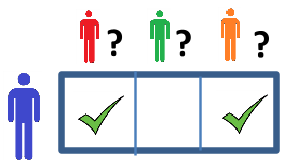 Figure 1: The cyclic process of individual work, social evaluation, and final team selection.
Key Insights: Do Internal Vibes Matter?
The study yielded several high-signal findings that challenge the way we think about "reputation" systems in AI and crowdsourcing:
1. External Reviews vs. Internal Experience
Perhaps the most striking finding was that external evaluators (who only saw the work output) rated individuals very differently than their dating partners (who interacted with them). The correlation was remarkably low (rs = 0.03 to 0.18). This proves that "Team Dating" surfaces a dimension of worker quality—communication, adaptability, and enthusiasm—that is completely invisible to a standard review process.
2. The Power of Personal Judgment
When it came time to pick a team, workers were largely indifferent to Collective Ratings (the average score a person got from everyone else). Instead, they overwhelmingly chose people they had a positive Personal Interaction with. In Batch 1, a positive personal experience increased the odds of selecting a teammate by a massive factor, suggesting that interpersonal "chemistry" is a primary driver of trust in digital teams.
 Figure 2: Workers' evaluations are consistent across different partners, yet they remain deeply personal.
Critical Analysis & Future Outlook
Strengths: This work moves beyond the "worker-as-a-commodity" model and treats crowd labor as a social system. By delegating the management overhead to the workers themselves, it provides a scalable way to handle high-complexity tasks.
Limitations:
- Cost: Team dating is synchronous and time-consuming. Workers must be online at the same time and are paid for the "dating" period, which increases the total project budget.
- Skill vs. Likability: The study found that workers often struggle to distinguish between a partner's "skill" and their "compatibility"—they tend to rate a person high on both if they just liked talking to them (a potential Halo Effect).
Future Prospect: As we move toward Human-AI Teaming, could we use "dating" phases between humans and LLM agents? Finding the right "AI partner" who matches a user's specific prompt style and feedback loop might benefit from the same decentralized, self-organized approach proposed here.
Takeaway for Researchers
If you want to build a crowd team for a creative project, stop looking strictly at the resume (the history). Start looking at the chemistry (the "date").