
Intelligent Team Formation: Leveraging Bayesian Learning and Coalition Theory for Better Classrooms
A Team Formation Tool for Educational Environments
This paper introduces a web-based team formation tool for educational settings that automates the creation of near-optimal student groups. It combines Belbin’s role taxonomy with Bayesian learning and Coalition Structure Generation (CSG) to iteratively refine team compositions based on peer evaluations.
TL;DR
The challenge of grouping students into effective teams is more than just a logistical headache—it's a complex optimization problem. This paper presents a tool that uses Bayesian learning to filter out biased self-perceptions and Coalition Structure Generation (CSG) to programmatically assemble teams that balance behavioral roles (Belbin’s Taxonomy), leading to higher student satisfaction and better grades.
Background: The "Self-Perception" Trap
In educational and professional management, we often rely on individuals to describe their own strengths. However, as this research reveals, there is a staggering 70% mismatch between how students see themselves and how their teammates perceive them. A student might aspire to be a "Coordinator" but actually function as a "Plant" (creative thinker) in practice.
If the input data (the student's role) is wrong, the resulting teams will be dysfunctional. This work treats role identification not as a one-time survey, but as a dynamic estimation problem solved through collective intelligence.
Methodology: The Engine Under the Hood
The tool functions through a feedback loop involving three core AI concepts:
1. Belbin’s Role Taxonomy
The system aims for heterogeneity. According to Belbin, a team excels when it has a diverse mix of roles (e.g., Shaper, Implementer, Completer Finisher). The tool calculates a "Team Value" based on how well these roles are balanced.
2. Bayesian Role Estimation
Instead of taking a student's word for it, the system collects peer evaluations after every project. Using Bayesian Learning, it updates the probability of a student belonging to a specific role:
This allows the system to become more "certain" about a student's true behavioral pattern as the semester progresses.
3. Coalition Structure Generation (CSG)
With 60 students, there are over 50 million ways to form teams of six. The authors frame this as a Linear Programming problem, solved using ILOG CPLEX, to find the partition of the class that maximizes the global expected value of all teams.
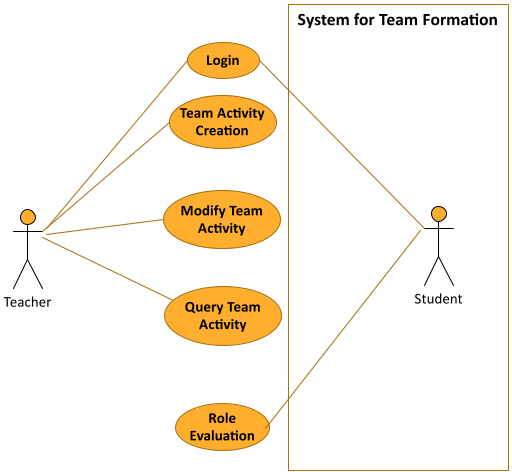 Figure 1: The system architecture showing the interaction between Teacher/Student roles and the underlying Bayesian/Coalition engines.
Experimental Insights
The researchers conducted a case study with 60 Tourism Management students. The results were telling:
- Convergence: Even with "weakly defined" roles, the system significantly increased team heterogeneity over just 5 iterations.
- Performance Correlation: Teams with higher role-based "satisfaction" scores (calculated by the tool) tended to achieve higher grades in their projects.
- The "Friendship" Factor: Interestingly, students initially resisted the tool because it didn't group them with friends, yet the resulting "optimal" teams performed efficiently regardless of prior social ties.
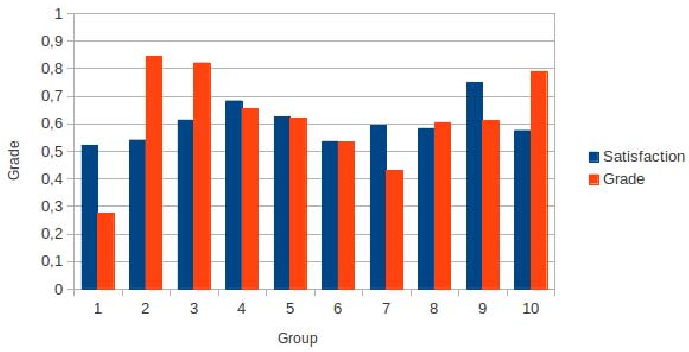 Figure 2: Simulation results showing the increase in team heterogeneity across projects (iterations) for both strongly and weakly defined roles.
Critical Analysis & Takeaways
The brilliance of this approach lies in its Iterative Refinement. Most team-building software is "one-and-done." By treating team formation as a learning process, the authors account for the fact that people's behaviors are only revealed through action.
Limitations:
- The model assumes a student’s role is static throughout the course. In reality, students might adapt their roles to fill gaps in a specific group.
- The current CSG optimization focuses entirely on role balance, potentially ignoring other vital factors like technical skill level or schedule availability.
Future Outlook: This framework is a precursor to "Algorithmic Management" in the workplace. As remote work and short-term "gig" teams become common, using Bayesian filters to match people based on proven behavioral history rather than curated LinkedIn profiles could revolutionize HR tech.