
ANN and CSS: Tackling the "Double Crisis" of Massive Missing Data and Class Imbalance
2535_Techniques for Missing Value Recovering in Imbalanced Databases Application in a Marketing Database with Massive Missing Data.
This paper investigates missing value recovery in imbalanced marketing databases using a comparative framework of machine learning techniques. It introduces a pre-processing pipeline involving Propositional Logic for feature selection and the Consistent Sub-Set (CSS) algorithm for balancing, identifying Artificial Neural Networks (ANN) as the most robust architecture for massive missing data recovery.
TL;DR
In real-world marketing databases, data is rarely "clean." This paper tackles a worst-case scenario: a database with 23.5% missing values and 0% complete records. By combining Consistent Sub-Set (CSS) balancing with Artificial Neural Networks (ANN), the authors achieved an impressive 98.05% recovery rate for missing income data, significantly outperforming traditional Bayesian and clustering approaches.
The "Double Crisis" in Real-World KDD
Most academic studies on missing value imputation rely on "sanitized" datasets like the UCI repository. However, real-world data faces a double crisis:
- Massive Data Absence: When nearly a quarter of all data points are missing, simple mean imputation introduces toxic noise.
- Class Imbalance: Marketing data often features skewed distributions (e.g., store income levels), where the majority class overwhelms the learner.
The authors' core insight is that recovery is a classification problem, but one that requires a rigorous "Ontological Analysis"—using formal logic to understand why and how variables relate before feeding them into a model.
Methodology: Logic-Driven Engineering
The workflow transcends simple "plug-and-play" machine learning:
1. Attribute Selection via Propositional Logic
Instead of blind feature selection, the authors used Computation Tree Logic (CTL) to define properties. By establishing logical relations (e.g., AG((Appeal & -Difficulty) -> AF(Income))), they filtered out "Judgments" (low-value attributes) and retained "Facts" (high-value attributes).
2. The Balancing Act (CSS)
To fix the imbalanced distribution, they used the Consistent Sub-Set (CSS) algorithm. This removes "well-defined" examples to allow the classifier to focus on the nuances of minority classes.
3. Model Architecture
The primary engine was a Multi-Layer Perceptron (MLP) with 81 inputs, a 60-neuron hidden layer, and a sigmoid activation function.
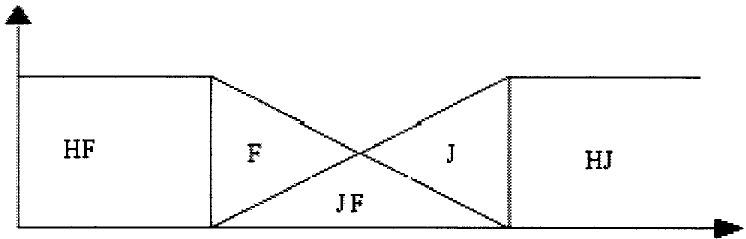 Fig 1: The taxonomy of attribute importance used to filter the marketing database.
Experiments & Results
The study compared four major algorithms across four test conditions (Random vs. CSS selection, 2 vs. 4 income intervals).
| Method | Random Selection (T1 - 2 Class) | Balanced CSS (T3 - 2 Class) |
|---|---|---|
| ANN (MLP) | 89.88% | 98.05% |
| Decision Tree (C4.5) | 89.10% | 91.05% |
| K-Means (Clustering) | 91.43% | 91.82% |
| Naive Bayes | 86.38% | 72.09% |
Key Insights:
- ANN Superiority: The ANN showed the highest stability and generalization. Even when the training record count was reduced to only 20 samples, ANN maintained significantly higher accuracy than C4.5 or Bayes.
- The Failure of Naive Bayes: Interestingly, Naive Bayes performed worse after balancing. This "instability" occurs because Bayes requires a large variety of field values in the training set; the CSS algorithm's reduction of data points restricted the Bayesian probability calculus.
- Imbalance Sensitivity: K-Means clustering was found to be highly susceptible to "major class" bias, rendering it nearly useless in 4-class imbalanced scenarios (30% accuracy) compared to its performance after CSS balancing (91%).
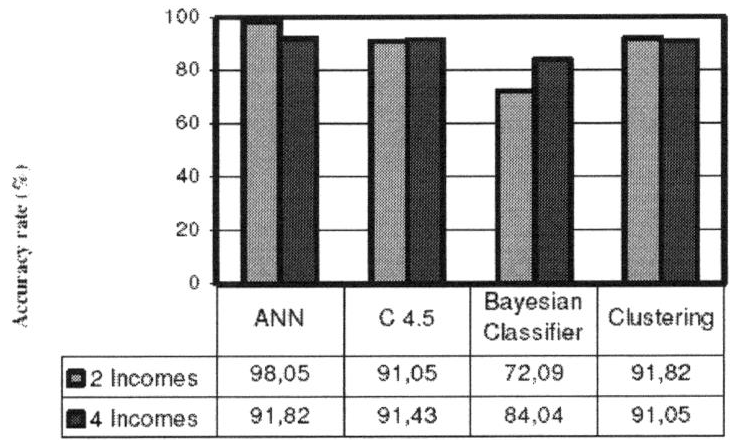 Fig 2: Performance gains achieved through the Balanced Training Set (CSS).
Critical Analysis & Conclusion
Takeaway
The paper proves that a "Neural Network is an interesting alternative" for industrial problems because of its generalization capacity. It doesn't just memorize the data; it learns the underlying manifold, making it robust enough to handle 23%+ missingness.
Limitations
- Expert Dependency: The method relies heavily on a "domain expert" to define the logic and importance of attributes. This makes the pipeline difficult to automate fully.
- Computational Cost: While MLP is efficient in 2026, the 1,800,000 iterations mentioned for 4-interval convergence suggests that training complexity scales poorly compared to Decision Trees.
Future Work
The shift toward "Self-Supervised Learning" (SSL) might eventually replace manually defined CTL logic. However, this paper remains a benchmark for how symbolic logic and connectionist models (ANN) can be combined to solve messy, real-world data scarcity.