
Standard-Dependent User Blindness: Why Your Users Might Be Lying to Your Surveys
Between the Profiles: Another such Bias. Technology Acceptance Studies on Social Network Services
This paper identifies a critical cognitive bias in Information Systems evaluation called "Standard-Dependent User Blindness" (SDUB). By comparing Facebook and Vkontakte users in Germany and Russia, it demonstrates that market dominance (the "Standard") significantly inflates user perceptions of quality, ease of use, and trust across common Technology Acceptance Models (TAM).
TL;DR
In the world of Social Network Services (SNS), the "winner-takes-it-all" mentality doesn't just apply to market share—it hijacks the user's brain. This paper introduces Standard-Dependent User Blindness (SDUB): a phenomenon where users of a dominant platform (the "Standard") are statistically incapable of providing an unbiased quality assessment of competing platforms.
Academic Positioning: This is a critical methodological critique of the ubiquitous Technology Acceptance Model (TAM). It suggests that decades of IS research might be skewed by the unacknowledged influence of network effects on human perception.
Problem & Motivation: The Flaw in the Survey Logic
For decades, researchers have used models like TAM, TAM2, and UTAUT to measure why people use technology. These models look at "Perceived Ease of Use" and "Perceived Usefulness" as factors leading to adoption.
The authors of this paper noticed a logical oversight. In markets driven by network effects—where a service becomes more valuable as more people use it—the system quality isn't just an input; it's a social byproduct. If Facebook is the "standard" in your country, your brain may be conditioned to see it as "better" simply because everyone you know is on it. Does a user actually find the UI intuitive, or are they just familiar with the standard?
Methodology: A Tale of Two Countries
To isolate this bias, the researchers exploited a perfect geographical mirror:
- Germany: Where Facebook is the standard.
- Russia: Where Vkontakte (VK) is the standard.
By asking German students (familiar with Facebook) and Russian students (familiar with VK) to evaluate both platforms using identical questions, they could see if the "Standard" status changed the perception of the exact same interface.
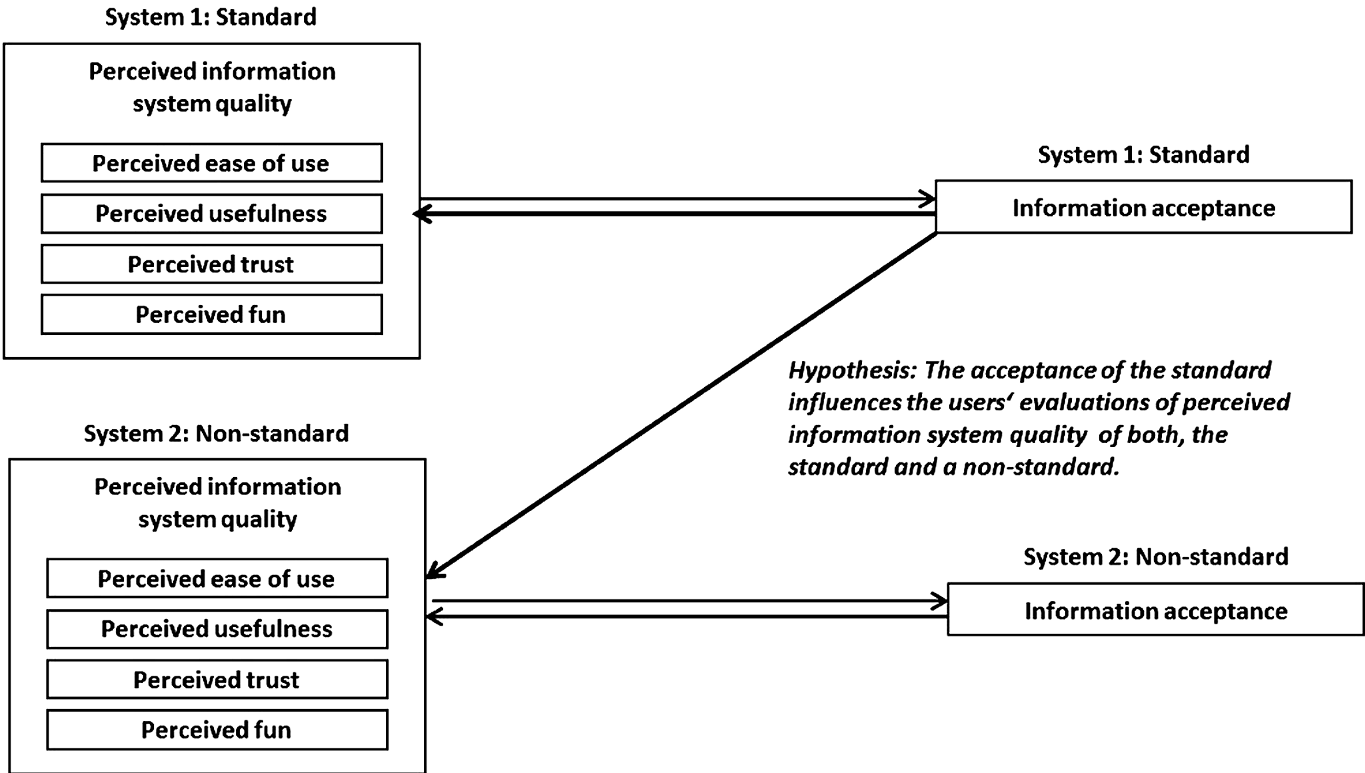 Figure 1: The research logic reverses the typical TAM flow, exploring how existing acceptance influences quality perception.
The Core Discovery: Standard-Dependent User Blindness (SDUB)
The results were stark. Despite the systems having objective features, users effectively lived in two different realities based on their local market leader.
1. The Trust Gap
Perceived trust showed the most extreme bias. Users in both countries trusted "their" standard significantly more than the alternative. In Russia, VK was the trusted haven; in Germany, it was Facebook. The difference was statistically massive (up to 3.44 points difference).
2. The Illusion of Ease of Use
Even though both groups were instructed to use both systems, they found their local standard much "easier" to navigate. Familiarity breeds the illusion of superior design.
3. The "Fun" Factor
Users reported having significantly more fun on the standard platform. This suggests that the social value of a network bleeds into the perceived technical quality of the software itself.
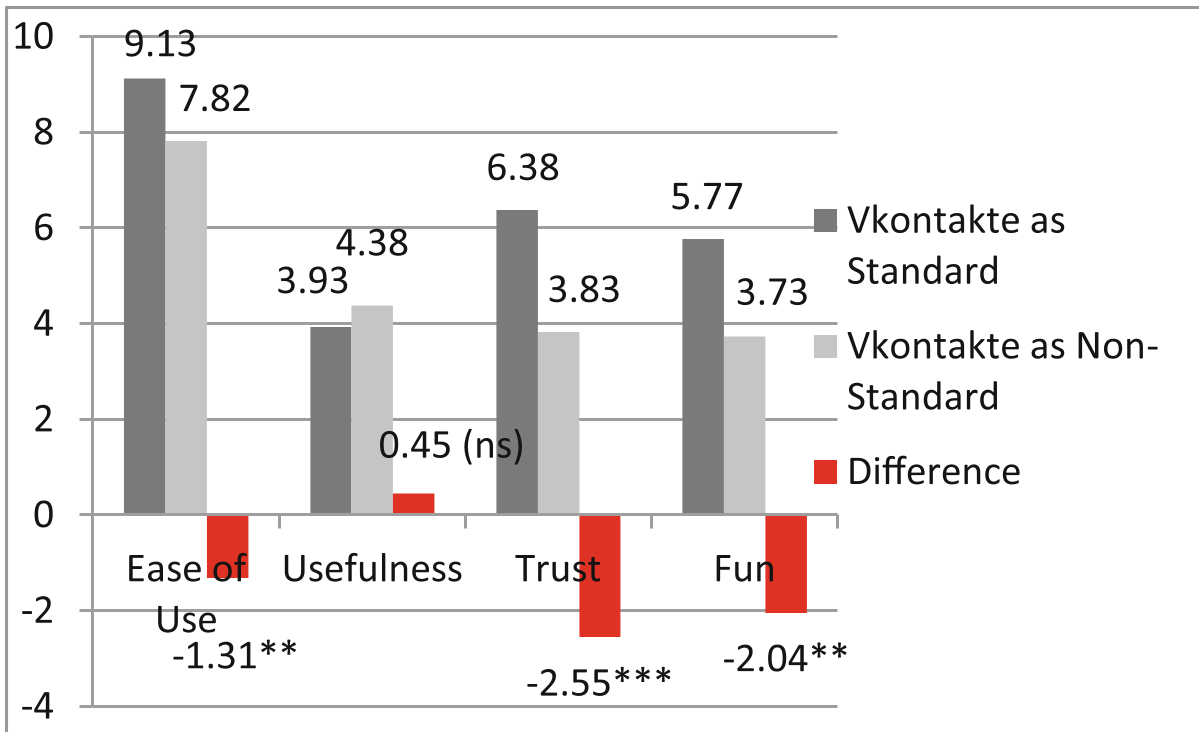 Figure 2: Quality perceptions of Vkontakte as a Standard (Russia) vs. Non-Standard (Germany).
Critical Analysis & Conclusion
The implications of SDUB are profound for both academia and product management.
Takeaway for Researchers: If you are conducting a survey on technology adoption in a market with a clear leader (e.g., WhatsApp in Europe vs. WeChat in China), your data is likely "poisoned" by the SDUB bias. You aren't measuring UI/UX quality; you're measuring market dominance.
Takeaway for Product Managers: Be wary of competitive benchmarking surveys. Users of a dominant competitor will naturally rate their current platform higher on "Ease of Use" and "Usefulness" regardless of the actual feature set. Breaking into a market requires overcoming not just a feature gap, but a perceptual "blindness" that favors the incumbent.
Limitations: The study utilized a relatively small sample size (N=81) of students. Future work should investigate if this blindness persists across different age demographics and in non-social markets (like Enterprise SaaS vs. Consumer Apps).
Closing Thought: In the network economy, the winner doesn't just take the market; they take the user's objectivity.