
In Technology We Trust? Why Human Intermediaries are the "Soft Infrastructure" of Digital Banking
In Technology We Trust? Human Skills & Intermediaries in Digital Retail Banking
This paper presents an ethnographic study on the role of Front-End Executives (FDEs) in Indian retail banking, specifically focusing on how human intermediation sustains "trust" amid digital transformation. Using a case study of public sector banks, it demonstrates that human skills remain essential for bridging the "social endowment gap" and providing "soft infrastructure" for ICT adoption.
TL;DR
As banks aggressively push for automation, a critical question arises: can digital tools alone sustain customer trust? This research by Soumyo and Bidisha Chaudhuri Das reveals that in the complex landscape of retail banking—especially in developing regions like India—Front-End Executives (FDEs) are not being replaced by technology. Instead, they serve as essential intermediaries whose Technical and Functional skills provide the "soft infrastructure" required to make digital banking usable and trustworthy for the masses.
The Paradox of Automation Anxiety
The prevailing narrative in the digital era is one of "automation anxiety"—the fear that AI and ICTs (Information and Communication Technologies) will inevitably lead to mass deskilling and job loss. In banking, the rise of apps and self-service kiosks has led many to question the viability of brick-and-mortar branches.
However, the authors argue that this view is reductive. In reality, automated systems often require more human intervention for supervision, adjustment, and maintenance. Specifically, in countries with significant "social endowment gaps" (inequalities in literacy, digital skills, and infrastructure), technology doesn't just work on its own—it needs a human face to be "trusted."
Methodology: An Ethnographic Deep-Dive
To understand this dynamic, the researchers spent months inside the branches of major Indian Public Sector Banks.
- Demographics: They observed FDEs, managers, and a diverse clientele ranging from construction laborers to white-collar professionals.
- Context: The study focused on the everyday "work practices" of FDEs—the Tellers, Account Managers, and Passbook Executives who deal with the public.
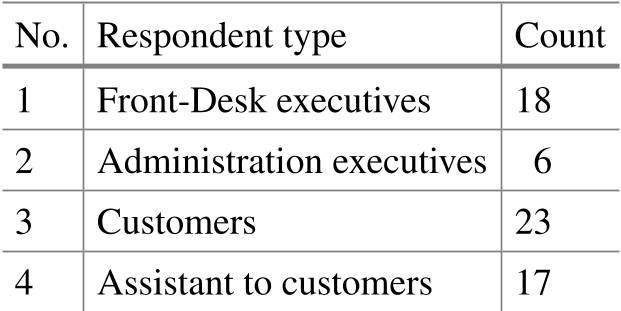 Table 1: The diverse range of actors interviewed during the ethnographic fieldwork.
The Anatomy of Trust: Technical and Functional Skills
The paper breaks down the necessity of human skill into two specialized categories that current ICTs simply cannot replicate:
1. Technical Skill (Beyond Just UI)
This isn't just about knowing which button to press; it's the combination of Technology Skills and Domain Expertise.
- The Case of the Failed ATM: When a customer (Raghav) experienced a failed ATM withdrawal where money was debited but not dispensed, the FDE didn't just point to a screen. She explained the seven-day reimbursement process, updated the physical passbook to provide "proof," and reassured the customer.
- Insight: The human expertise "stabilizes" the anxiety caused by technology failure.
2. Functional Skill (The "Soft" Advantage)
Functional skills include communication, creative thinking, and problem-solving.
- The "Translator" Role: Passbook updating is technically automated. Yet, queues for the Passbook Executive are the longest. Why? Because customers aren't there for the printing; they are there for the interpretation. FDEs explain why a balance changed or confirm if a son sent money to his mother.
- Language Barriers: In a multi-lingual society, FDEs often use hand gestures and mixed dialects to help laborers (like Aman, the construction worker) navigate English-only digital interfaces.
Experiments & Results: Human vs. Interface
The study highlights two distinct customer archetypes that keep bank branches bustling:
- Low Social Endowment Users: Those who lack the literacy or digital comfort to use kiosks. For them, the FDE is the only way to access the bank.
- The "Assurance" Seekers: Tech-savvy users who can use the app but choose the branch because they trust a human expert's advice more than an algorithm.
 FDEs acting as intermediaries within the physical retail environment.
Critical Insight: Trust is a Spectrum, Not a Binary
The paper concludes that trust isn't just a property of a "secure" system; it is "enacted" through social interaction.
- Institutional vs. Interpersonal: While customers trust the "Bank" (Institution), that trust is maintained daily through the "FDE" (Interpersonal).
- Dynamic Intermediation: FDEs reduce organizational barriers by being flexible and informal, which helps digital laggards eventually adopt tech.
Conclusion & Future Outlook
This work serves as a powerful reminder for tech developers and policymakers: The goal of financial technology should not be the removal of the human, but the empowerment of the intermediary.
Future Implications:
- Digital tools must be designed with "intermediation-first" in mind.
- Automation should focus on offloading repetitive tasks so FDEs can focus on high-value "Functional" problem-solving.
- The branch is not dead; it is evolving into a training and trust-building hub.
Takeaway: In technology we might believe, but in people, we trust.