
Decoding Telegram: A Behavior-Based Approach to Measuring Group Quality
Telegram group quality measurement by user behavior analysis
This paper presents a novel method for measuring the quality of Telegram groups by analyzing user behavior patterns. Utilizing data from the IdeKav search engine—which crawled over 900,000 Persian channels and 300,000 groups—the authors extract 23 distinct features to distinguish between high-quality (professional/business) and low-quality (chit-chat/dating) environments.
TL;DR
As Telegram transitions from a simple messenger to a complex social ecosystem with over 200 million users, the "noise" of spam and low-quality groups has become a major hurdle for marketers. Researchers Ali Hashemi and Mohammad Ali Zare Chahooki have developed a behavioral analysis framework that separates professional business groups from "chit-chat" noise by looking at how users actually interact—rather than just how many members a group has.
The "Black Box" Problem of Telegram
Unlike platforms with mature ad managers (like Meta or LinkedIn), Telegram is a "black box." It offers no native search for group contents and minimal filtering options. Marketers often pay for placements in groups with 100,000 members, only to find the group is populated by bots and high-frequency "junk" messages.
The researchers identified a critical gap: Prior work often focused on sentiment or network topology, ignoring the raw behavioral statistics that reveal a group's true nature.
Methodology: The IdeKav Architecture
To solve this, the authors built IdeKav, a third-party search engine that indexes the Telegram universe. They treated groups as documents in an inverted index, but with a twist—attaching 23 numerical behavioral features to each group.
 Figure 1: The IdeKav system utilizes a cluster of MTPROTO-based crawlers and an inverted index to enable deep search functionality.
The core of their methodology lies in specific ratios. For example:
- Engagement Ratio: (Unique users divided by total messages).
- CA & CV: The average and variance of messages forwarded from unique channels, identifying if a group is a diverse information hub or just a spam relay.
Key Results: Professionalism vs. Noise
The study compared 30 high-quality (business/pro) groups against 30 low-quality (chit-chat) groups. The differences were stark:
- Message Substance: High-quality groups have an average message length of 136 characters (detailed articles/requests), whereas low-quality groups hover around 48 characters (greetings/single-word replies).
- Administrative Control: High-quality groups have more administrators relative to message volume, ensuring that duplicates and spam are purged.
- Phone Numbers: Interestingly, the presence of phone numbers (PC) is a strong proxy for "Business Quality," as service providers frequently share contact info in professional settings.
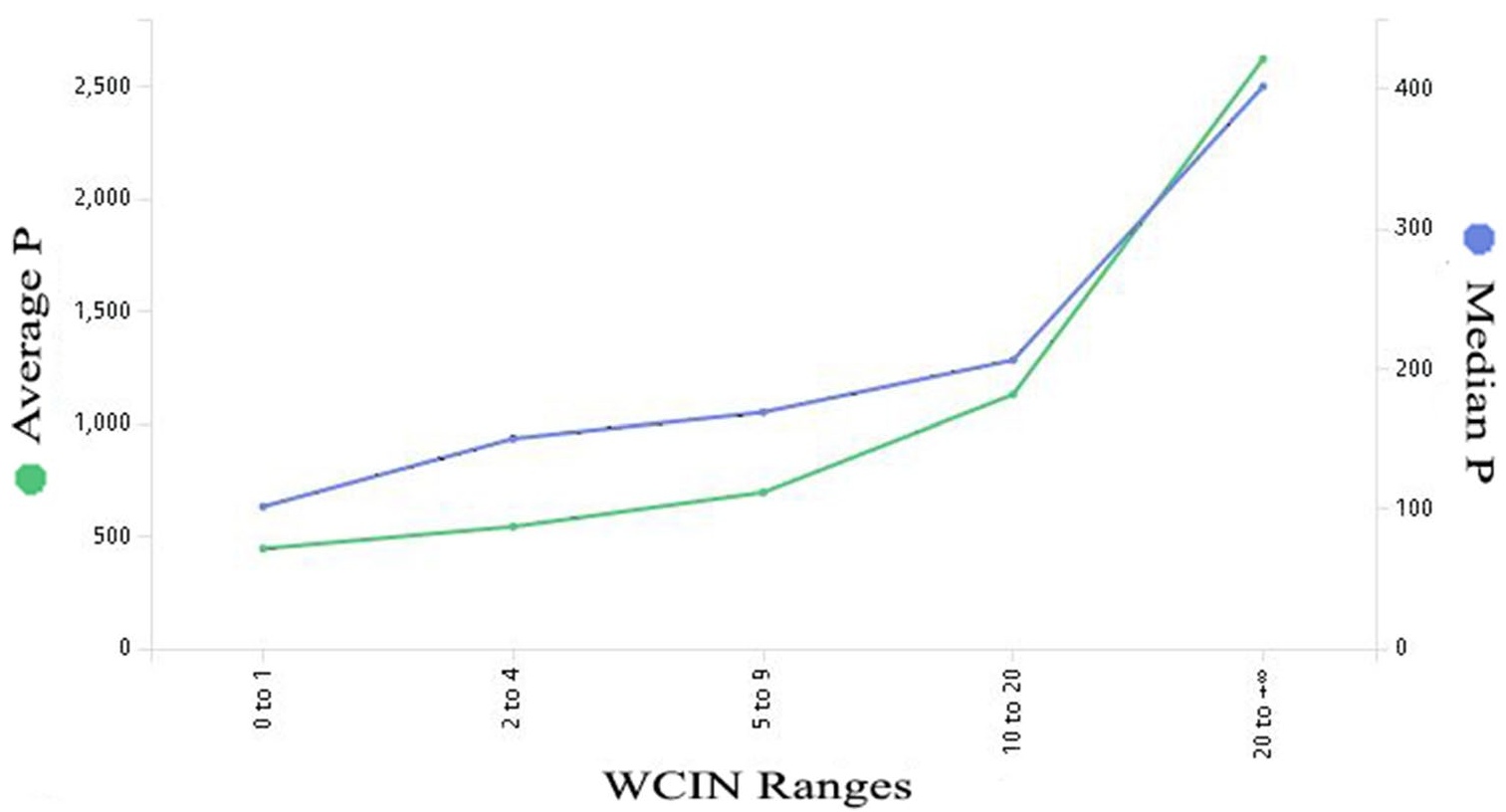 Figure 2: Analysis shows that while flashy names with non-alphanumeric characters attract more members, they rarely correlate with high-quality content.
The "Engagement" Paradox
One of the most profound insights is the Engagement Ratio. Low-quality groups are "hyperactive" but "shallow." A few users send thousands of messages (high reply ratio, low engagement per user). High-quality groups are "quiet" but "deep"—fewer total messages, but a much higher percentage of the group's members participate in each discussion.
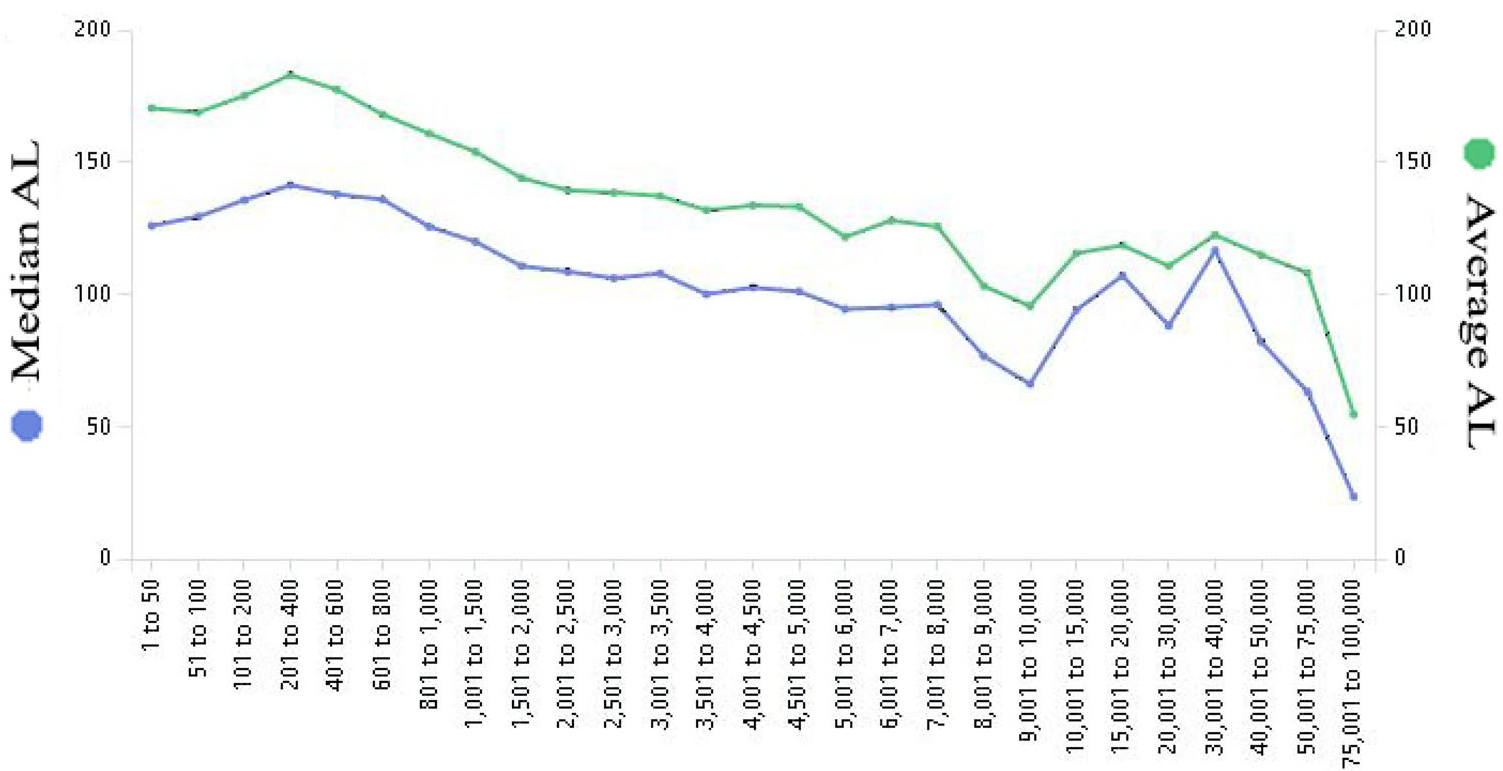 Figure 3: As member counts skyrocket, message length generally plummets, indicating that massive supergroups often devolve into low-substance chatter.
Critical Analysis & Conclusion
Takeaway
The paper proves that metadata (member counts, titles) is deceptive. For a search engine or a marketer to find value on Telegram, they must hook into the behavioral stream—measuring things like message length variance and user engagement ratios.
Limitations
The study is focused on the Persian Telegram ecosystem. While behavioral patterns likely translate, the linguistic nuances of "quality" might vary in other cultures. Furthermore, as spammers become aware of these metrics, they may begin using LLMs to generate "long articles," potentially gaming the "Message Length" metric.
Future Work
The authors suggest that the next step is combining these behavioral measures with text mining (TF-IDF) to cluster groups not just by quality, but by specific professional topics, creating a fully categorized "Yellow Pages" of the Telegram world.