
Maximizing Healthcare in the Slow Lane: Ubiquitous Computing for Bandwidth-Constrained Regions
Telehealth and ubiquitous computing for bandwidth-constrained rural and remote areas
This review article examines the potential of "ubiquitous computing" to overcome bandwidth constraints in rural and remote telehealth. It identifies specific low-to-medium bandwidth applications—such as social media, mobile platforms, and wearable sensors—that can bypass the need for high-speed fiber-optic infrastructure while delivering critical healthcare services.
TL;DR
While the tech world obsesses over high-speed 5G and fiber-optic surgery, millions in rural areas remain trapped behind a "digital divide." This paper argues that Ubiquitous Computing (smartphones, social media, and wearable sensors) offers a pragmatic, low-bandwidth alternative to traditional, resource-heavy telehealth. By focusing on asynchronous data and mobile platforms, we can provide life-saving care over dial-up or basic wireless connections today.
The "100 Mbps" Myth: Why Remote Telehealth is Stalling
For over a decade, the vision of telehealth has been dominated by high-definition video conferencing and robotic telesurgery. However, as the authors point out, these "flagship" applications require massive bandwidth—often up to 100 Mbps.
In rural Australia or Canada, broadband penetration in "very remote" areas can be as low as 24%. Waiting for the completion of multi-billion dollar national fiber projects (like Australia's NBN) leaves a decade-long gap in care. The authors suggest a radical pivot: if the bandwidth won't come to the patient, the medical data must be tailored to the bandwidth that already exists.
Methodology: The Taxonomy of Connectivity
The core of this research lies in its classification of medical data against infrastructure capacity. The authors provide a strategic roadmap for healthcare providers:
- Asynchronous (Store-and-Forward): Ideal for radiology or text-based records where immediate "live" presence isn't required.
- Ubiquitous Platforms: Utilizing the internal sensors of smartphones (GPS, accelerometers) to detect falls or car accidents, requiring minimal data bursts.
- Social Support: Leveraging "low-bit" social networks for chronic disease peer support and public health messaging.
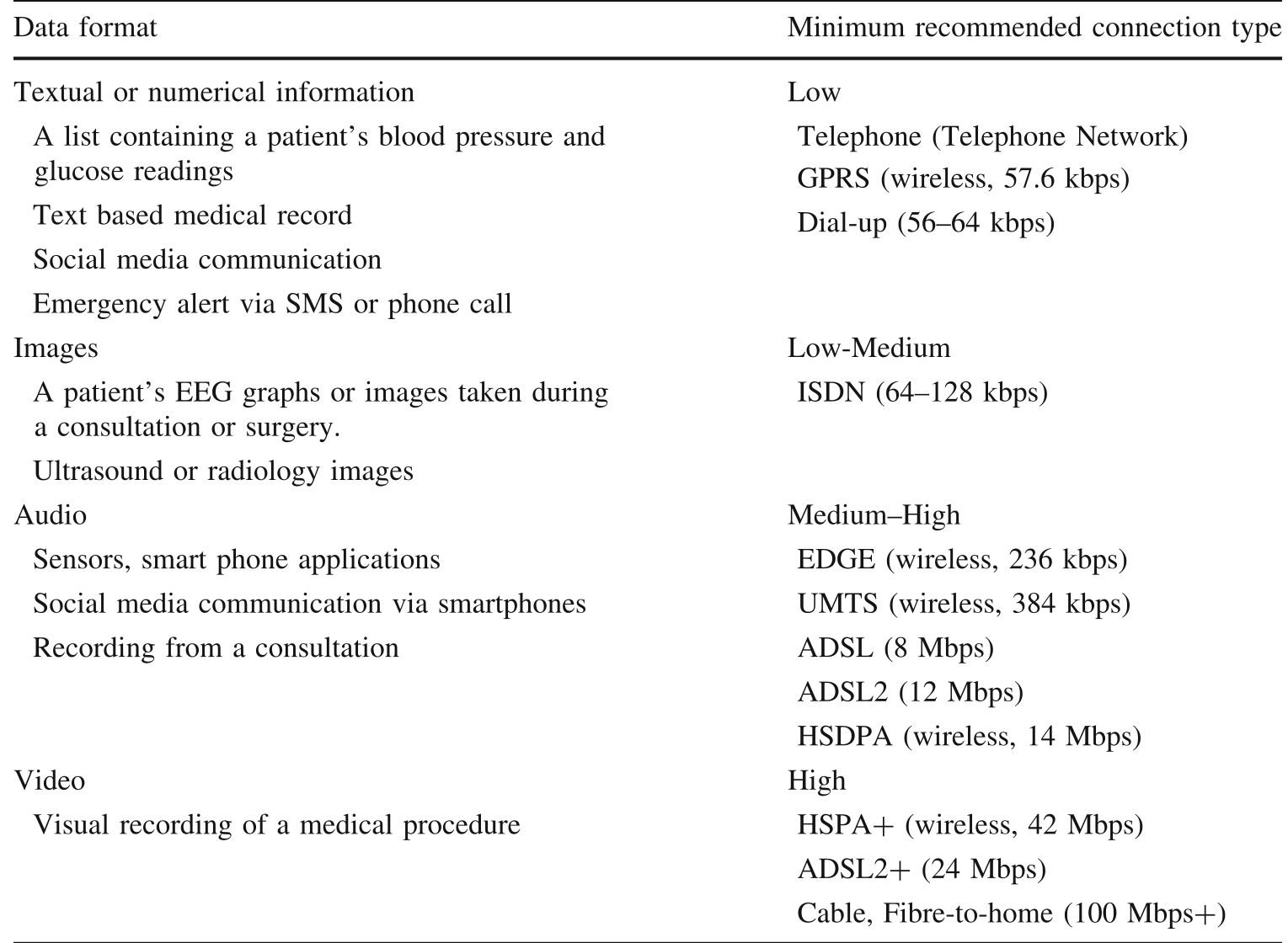
The table above illustrates the hierarchy: while video demands "High" bandwidth, critical textual medical records and social media interaction can thrive in "Low" bandwidth environments, even via GPRS or Dial-up.
Key Enablers: Smartphones and Sensors
The paper identifies the Smartphone as the ultimate gateway for rural care. It serves two roles:
- Direct Sensor: Using internal gyroscopes for fall detection.
- Short-range Hub: Communicating via Bluetooth with external biosensors (ECG, Pulse Oximeters) and then relaying that data to a clinic over a standard mobile network.
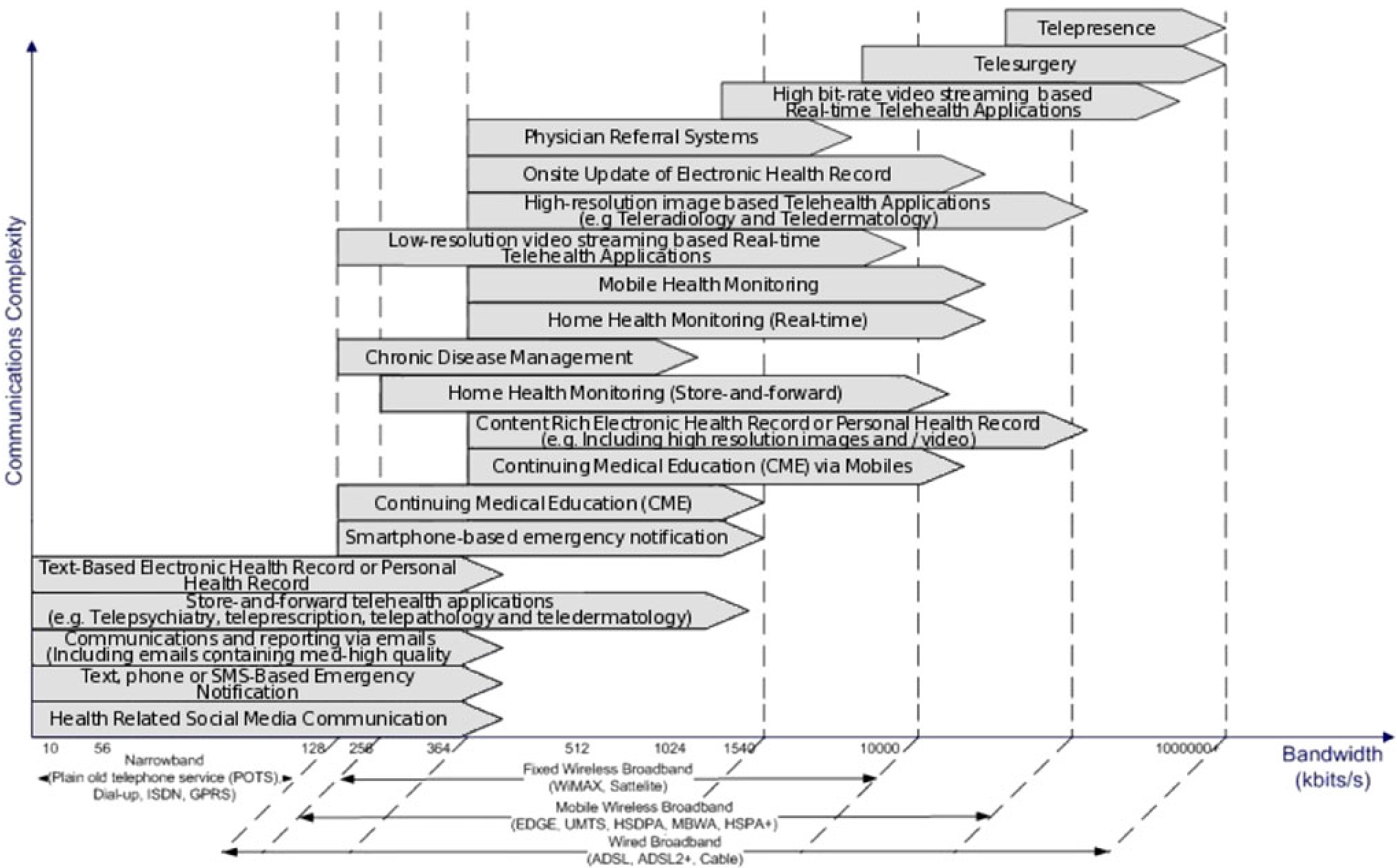
This decentralized "Hub" model allows for Chronic Condition Care (which accounts for 70% of health costs) to happen in the home environment, reducing the burden of travel for elderly residents.
Critical Insight: Asynchronicity over Real-Time
The "Academic Professionalism" takeaway here is the focus on Asynchronous Systems. By moving away from the requirement of a 24/7 "always-on" high-speed link, medical systems can use "push" technology—compressing data locally and uploading it when a connection becomes available. This makes the system resilient to the atmospheric interference often found in rural satellite or WiMAX links.
Conclusion & Future Outlook
The authors conclude that the primary barriers to this vision are no longer technological—the sensors and smartphones are already in pockets—but regulatory. Until governments reform reimbursement models to pay doctors for "asynchronous consultation" or "SMS-based chronic care," these low-bandwidth innovations will remain pilot projects.
Takeaway: In the context of global health equity, a 10kbps text-based intervention delivered today is vastly superior to a 100Mbps telesurgical suite that arrives in 2030.