
The Native Ad Paradox: Why Integration Can Sometimes Lead to Higher Avoidance
Telematics and informatics
This experimental study investigates the impact of Facebook ad placement (Sidebar vs. Message Stream) on user ad avoidance. Utilizing a 2x2 between-subjects design, it establishes how product involvement and user motives (surfing vs. searching) moderate the effectiveness of native advertising.
TL;DR
"Native advertising"—ads that look like regular posts—is often hailed as the gold standard for modern marketing. However, this study reveals a critical flip side: because these ads are interwoven with personal content, they can be perceived as significantly more intrusive. The research proves that Facebook's Message Stream ads actually trigger more avoidance intent than traditional Sidebar ads, unless the user is highly interested in the product or in a relaxed "surfing" mood.
Problem & Motivation: The Friction of "Fitting In"
Media companies rely on advertising, but users don't visit Facebook to see ads. Current industry wisdom suggests that making ads look like organic content (Native Ads) bypasses human "ad filters."
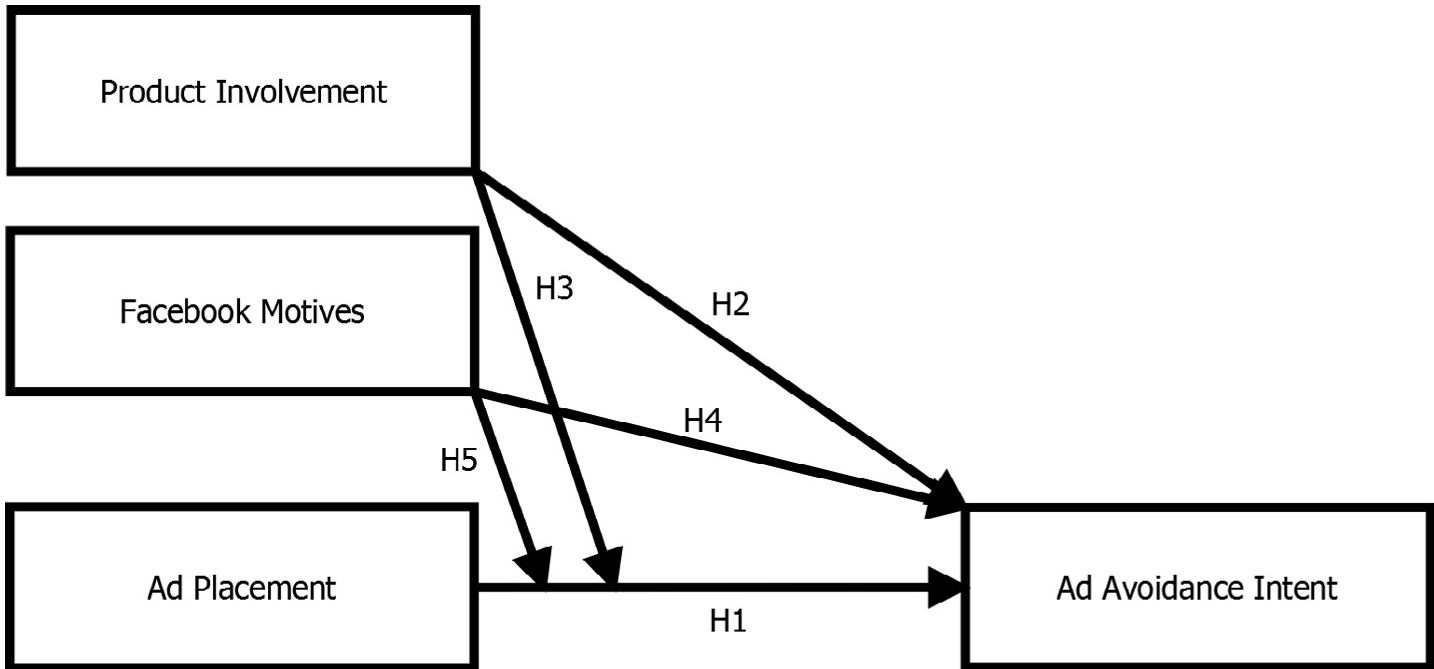
The authors argue that this is a simplification. While sidebar ads are physically separated from the content, message stream ads occupy the center of the user's focus. If an ad interrupts a specific task—like searching for a friend's news—it creates Goal Hindrance. The core motivation of this study was to determine if the "native" approach backfires when it creates more friction than the "clunky" sidebar.
Methodology: Simulating the Facebook Mindset
The researchers used a controlled experimental environment with 253 participants. They manipulated two key variables:
- Placement: The ad was either in the right sidebar (out-stream) or the message feed (in-stream).
- Motives: Participants were given either a Surfing task (browse at will) or a Searching task (find specific information about a newborn).
They also measured Product Involvement—how much the user actually cares about the category (in this case, a TV provider).
Key Results: Involvement Changes Everything
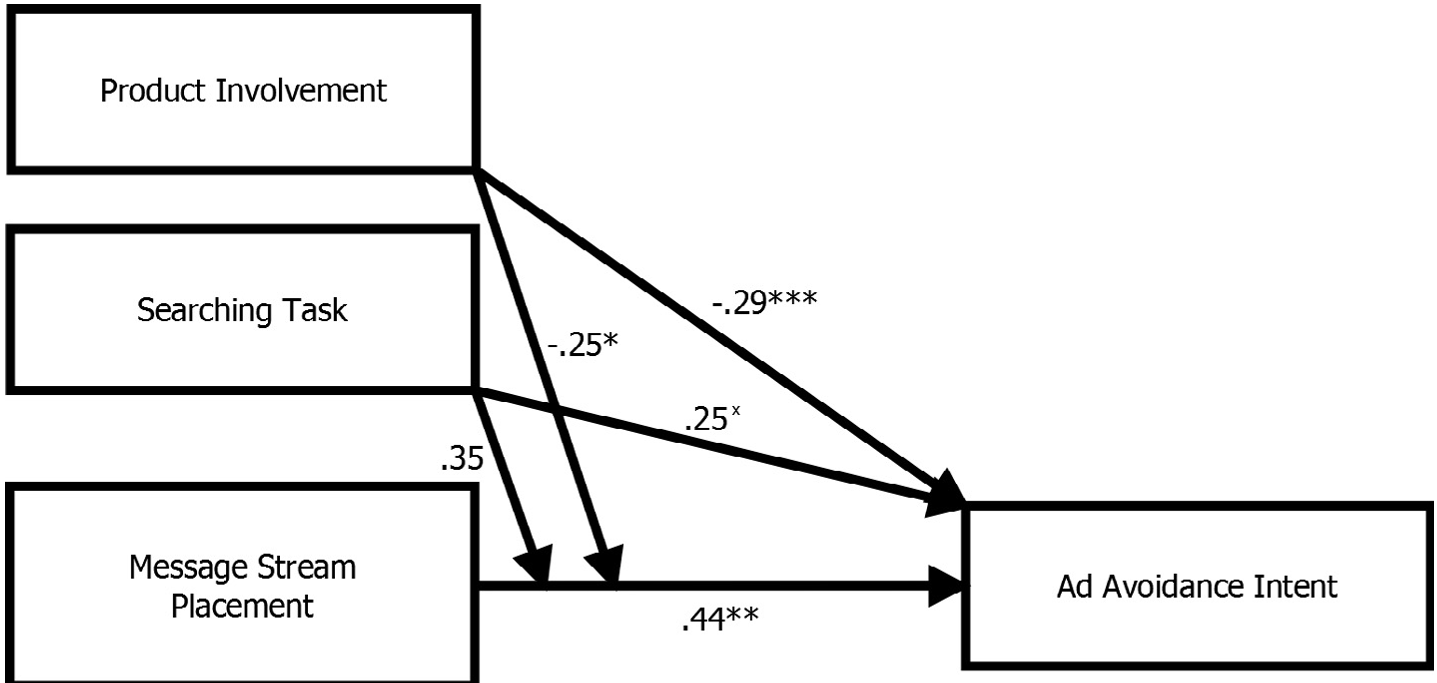
The study found a strong main effect: In-stream ads are avoided more than sidebar ads. However, this "Annoyance Factor" is highly sensitive to the user's internal state.
1. The Role of Product Involvement
If a user has low involvement with a product, a message stream ad feels like an unwelcome intruder. However, for high involvement users, the relationship flips—the message stream ad is actually accepted better than the sidebar. The ad ceases to be "noise" and becomes "content."
2. The Task Trap
The study highlighted that "Searching" motives lead to higher avoidance. When a user is on a mission, any ad in the central feed is a distraction. On the contrary, during "Surfing," users are more cognitively flexible and tolerant of interruptions.
Depth Insight: Re-evaluating Persuasion Knowledge
The study contributes to the Persuasion Knowledge Model. Usually, when users recognize an ad, they deploy "sentry" coping strategies (avoidance). This paper suggests that "Native" placement makes the persuasion attempt more prominent. Paradoxically, the more an ad tries to look like a post, the more annoying it becomes if the relevance isn't there.
Takeaways & Industry Applications
- Selective Targeting: Brands should use high-cost Message Stream placements only for "High-Involvement" audiences (e.g., Retargeting or Fans).
- Sidebar for Awareness: For broad "awareness" campaigns where involvement is low, Sidebar ads are actually safer because they don't trigger the same level of defensive avoidance.
- Real-time Context: Platforms should ideally adjust ad placement based on the user's current behavior (e.g., if a user is clicking through many profiles rapidly—a search motive—move ads to the periphery).
Conclusion
This research serves as a warning to digital marketers: "Native" is not a silver bullet. The "where" of an ad is inextricably linked to the "who" and the "why." Without high product relevance, putting an ad in the middle of a user's feed isn't integration—it's an interruption.