
Digital Multimodality: The Hidden Engine of Well-Being Across the Lifespan
Telematics and informatics
This study investigates the impact of "multimodal connectedness"—communicating through various digital channels—on subjective well-being across different age groups. Using a serial mediation model on a representative Hong Kong sample, it identifies that digital communication fosters well-being indirectly through social capital, civic engagement, and positive affect, with the strongest benefits observed in the 55-70+ elderly cohort.
Executive Summary
TL;DR: Is more technology better for your mental health? This study suggests the answer isn't about the quantity of gadgets, but the diversity of channels used to maintain social ties. While "multimodal connectedness" doesn't make you happier directly, it builds a ladder of social capital and civic engagement that eventually leads to a more purposeful life—especially for the elderly.
Academic Positioning: This work bridges communication technology, sociology, and gerontology. It moves beyond the "one-app-at-a-time" research vacuum to provide a holistic model of how digital life nourishes the "Good Life" through a lifespan perspective.
The Problem: The "Siloed" View of Technology
Most academic studies on digital well-being ask: "Does Facebook make you sad?" or "Do smartphones increase anxiety?" The author argues this is a fundamentally flawed approach. We don't live in a "Facebook vacuum"; we use WhatsApp to coordinate, Face-to-Face to bond, and Email to share detailed thoughts.
The real gap in literature was twofold:
- Lack of Mechanism: We knew that people feel better when connected, but we didn't know how the process flows (the mediators).
- The Age Gap: Most tech research focuses on "Digital Natives" (young people), ignoring the "Paradox of Well-being"—the fact that older people often maintain high well-being despite shrinking social circles.
Methodology: Mapping the Path to Happiness
The author constructed a Serial Mediation Model. The logic is a chain reaction:
- Multimodal Connectedness Increased Social Capital (knowing diverse people).
- Social Capital Increased Civic Engagement (participating in society).
- Civic Engagement Better Positive Affect and Psychological Well-Being.
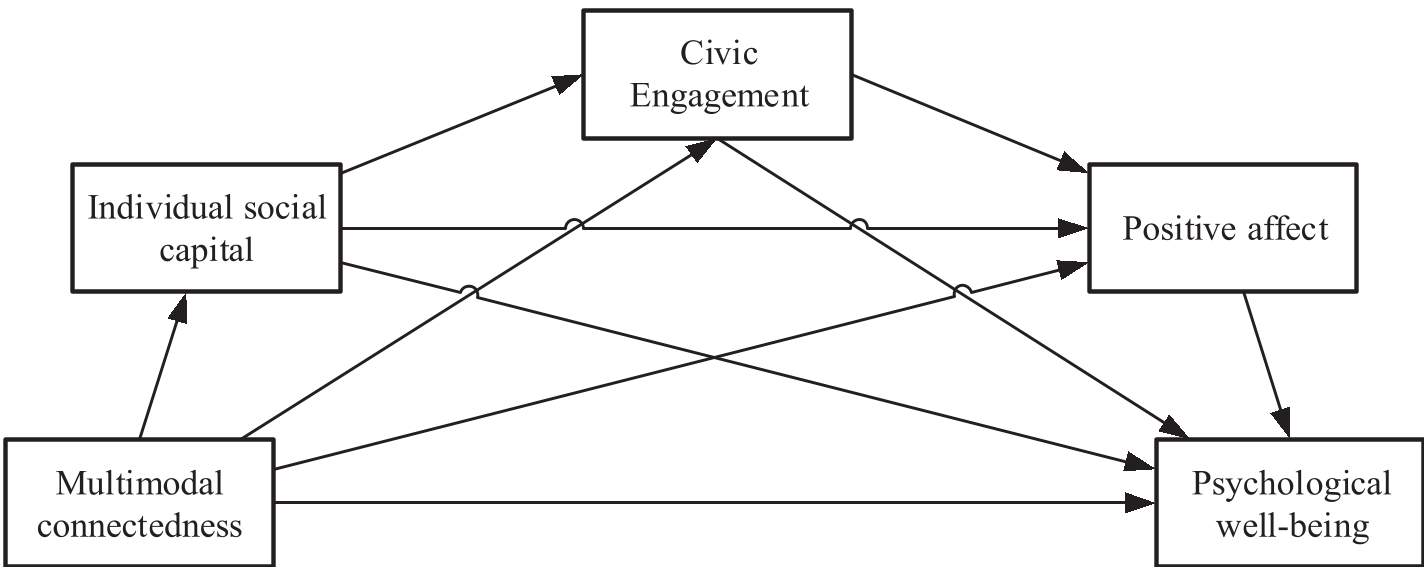
The study utilized a representative sample of 925 citizens in Hong Kong, a city with one of the world's highest mobile/internet penetration rates, ensuring the results reflect a mature digital society.
Key Results: The Elderly Advantage
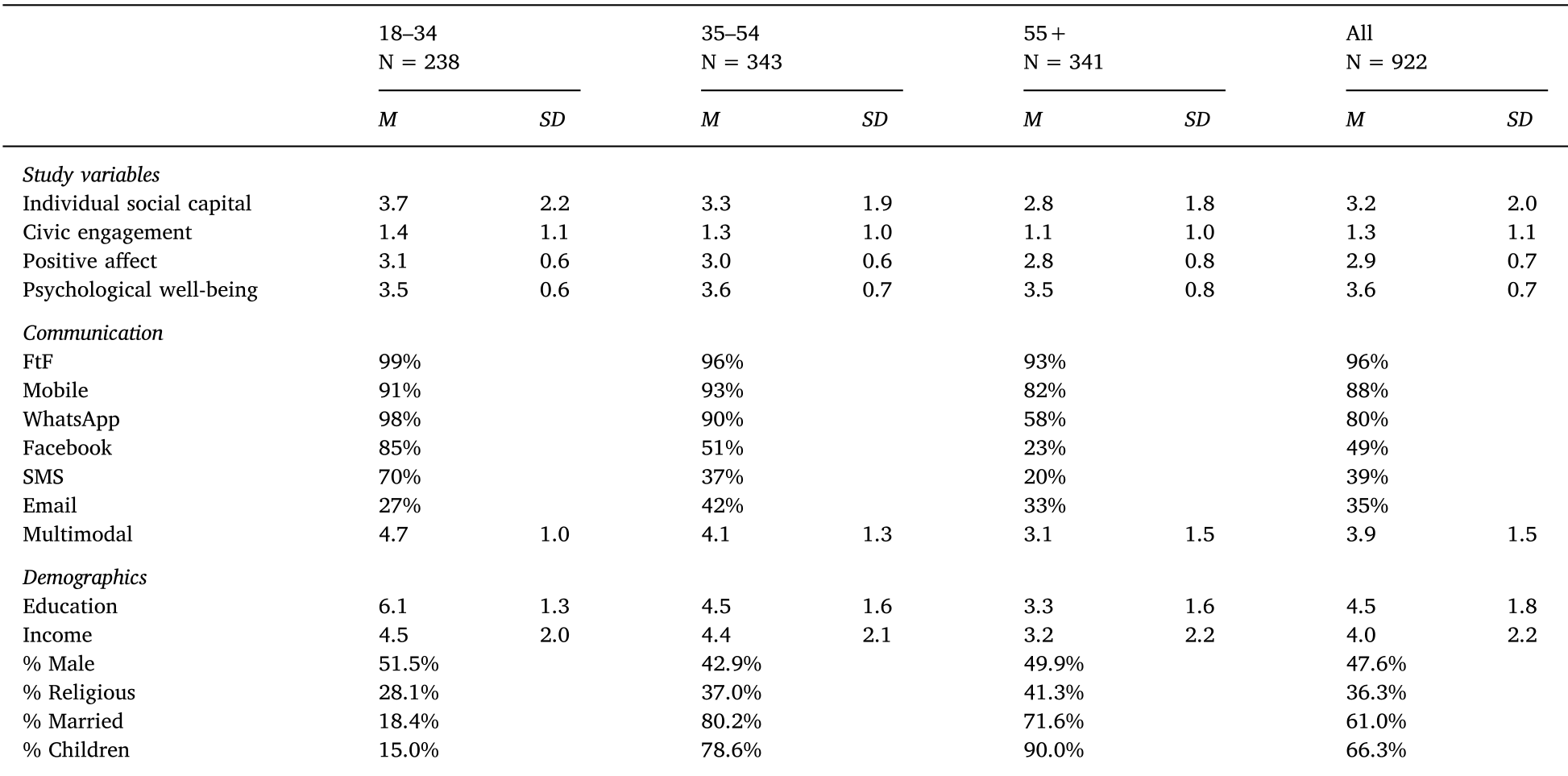
The findings were a surprise to those who view the elderly as "digitally disadvantaged." While the 55–70+ cohort used fewer channels, they gained the most from them.
- Total Indirect Effects: The elderly cohort had five significant pathways to well-being, while the 18–34 cohort only had two.
- The Affect Link: For the oldest cohort, the pathway through Positive Affect (feeling happy/content) was highly significant. For younger cohorts, this path was nonexistent.
- Instrumental vs. Emotional: Younger people use technology for "instrumental" goals (career, status), whereas older people use it for "emotional regulation," consistent with Socioemotional Selectivity Theory.
Deep Insight: Quality Over Quantity
The study highlights the Paradox of Well-being. Even though the oldest group had smaller networks and less tech variety, the meaning they extracted from those tools was higher. Digital communication for them isn't noise; it’s a vital bridge to community and emotional satiety.
Why this matters:
Social capital acts as a "buffer." By maintaining diverse ties through different platforms, individuals are more likely to get involved in their local communities (civic action), which provides a sense of purpose () that far outlasts the fleeting joy of a "like."
Critical Analysis & Conclusion
This paper successfully argues that communication is the bedrock of well-being, but it is a complex, mediated process.
Limitations:
- Cultural Context: Hong Kong's hyper-dense, hyper-connected environment might not translate to rural or less tech-savvy regions.
- Selection Bias: The "Need to Belong" variable—some people are naturally more social, which might drive both tech use and well-being.
Future Outlook: This study serves as a call to action for policy makers. Initiatives like the WHO’s "Age-Friendly" cities should not just focus on accessibility (ramps and buses) but on digital literacy and multimodal access. If we want a happy aging society, we need to ensure our seniors aren't just "online," but are using digital tools to weave themselves back into the social fabric.