
Smart Nitrate Sensing: Breaking the Cost Barrier in Agricultural IoT
15292_A Temperature Compensated Smart Nitrate-Sensor for Agricultural Industry.
This paper presents a low-cost, IoT-enabled smart nitrate sensor system specifically designed for real-time monitoring of agricultural water quality. Utilizing a Parylene-coated planar interdigital sensor and Electrochemical Impedance Spectroscopy (EIS), the system achieves precise detection of nitrate-N at low concentrations (0.01–0.5 mg/L), featuring a critical temperature compensation mechanism for field robustness.
Executive Summary
TL;DR: Researchers have developed a temperature-compensated, IoT-connected nitrate sensor that costs less than $100 but rivals the performance of instruments costing thousands. By leveraging planar interdigital capacitive sensing and smart algorithm-based compensation, the system provides real-time, high-frequency water quality data—a critical requirement for modern precision agriculture and environmental conservation.
Background: Monitoring nitrate leaching is a socio-economic necessity in regions like New Zealand. However, the industry is trapped between "slow, cheap" manual lab tests and "fast, expensive" commercial sensors. This paper bridges that gap, moving from laboratory prototypes to a field-ready, cloud-connected solution.
The Problem: The High Cost of Sensitivity
Nitrate-nitrogen (NO-N) is a double-edged sword: essential for protein synthesis in livestock but a primary cause of algae blooms and "blue baby syndrome" when it leaches into groundwater. Current SOTA monitoring faces three hurdles:
- Expense: High-end sensors are out of reach for individual farmers.
- Scale: Monthly manual sampling misses the "spikes" during stream flow changes.
- Physics: Electrochemical sensors are notoriously sensitive to temperature. A few degrees of shift can change ion mobility enough to render the reading useless.
Methodology: Sensing Beyond the Surface
The heart of the system is a Parylene-coated interdigital sensor. Unlike parallel plate capacitors, these planar sensors generate an electric field that penetrates the Material Under Test (MUT).
1. Hardware Architecture
The system uses an Arduino Yun to drive a Direct Digital Synthesis (DDS) process, generating a 122.5 Hz sine wave. It measures the impedance () and phase angle () to separate the real (resistive) and imaginary (reactive) components of the water sample.
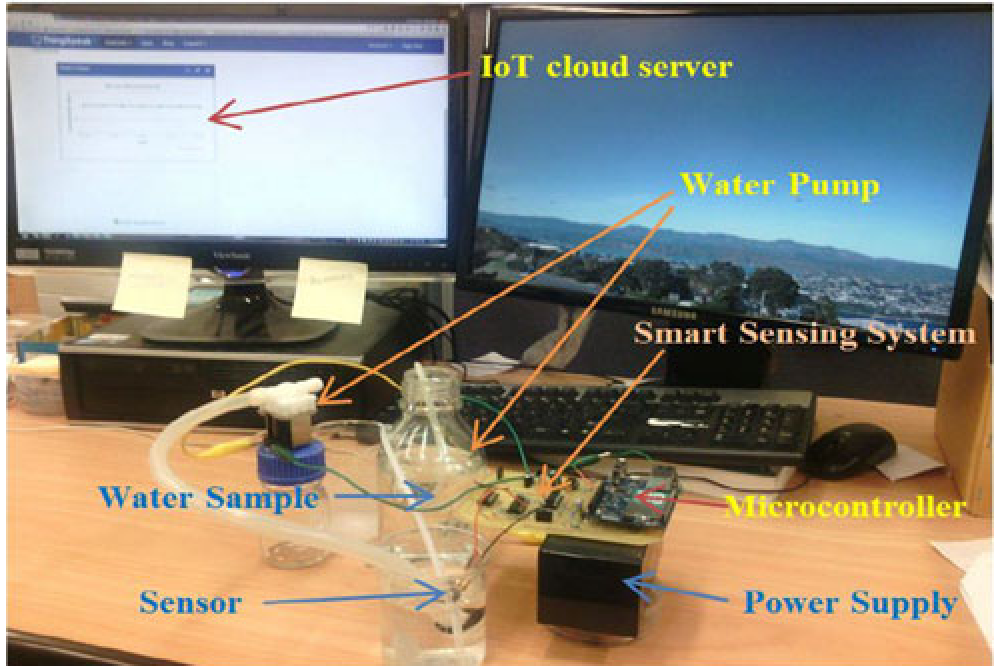 Fig 1: The system block diagram, showcasing the signal generation, amplification, and IoT integration.
2. The Innovation: Dual-Use Temperature Compensation
The authors realized the sensor's own resistance changes linearly with temperature. By characterizing this slope (), they used the sensor as its own thermometer.
- Formula: This corrected resistance is then plugged into the nitrate calculation, effectively "freezing" the environmental noise.
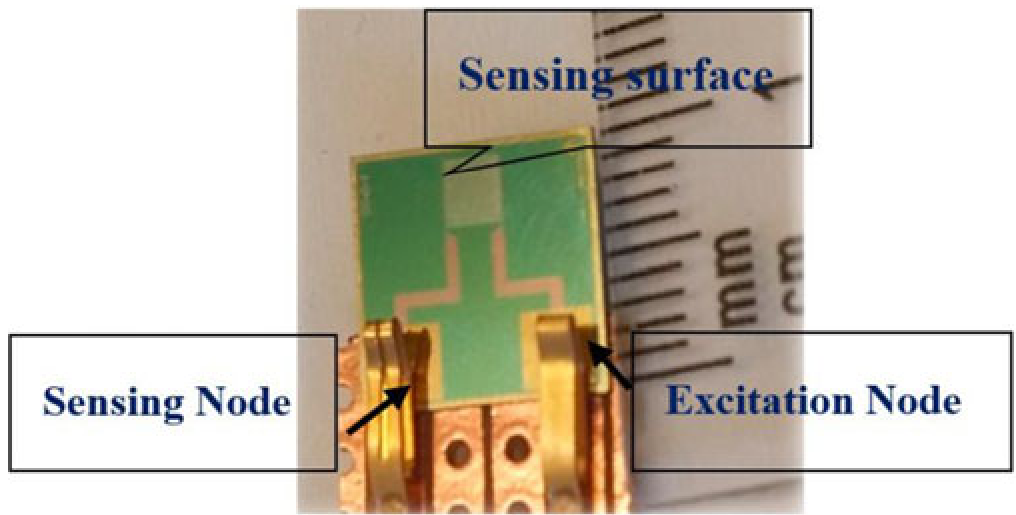 Fig 2: The fabricated sensing element. Parylene coating is vital to prevent oxidation and Faradic currents during immersion.
Experiments & Results: Lab Precision in the Stream
The system was tested against a high-precision Hioki LCR meter and validated using real water samples from New Zealand streams.
- Linearity: The system achieved an of 0.99 for both temperature and nitrate concentration (0.01–0.5 mg/L).
- Real-world Validation: When tested against the gold-standard spectrophotometric method, the sensor maintained an error rate of < 10%, even with other ions present.
- The Compensation Payoff: Without compensation, errors at 30°C spiked above 20%. With the algorithm, accuracy was restored to within 5%.
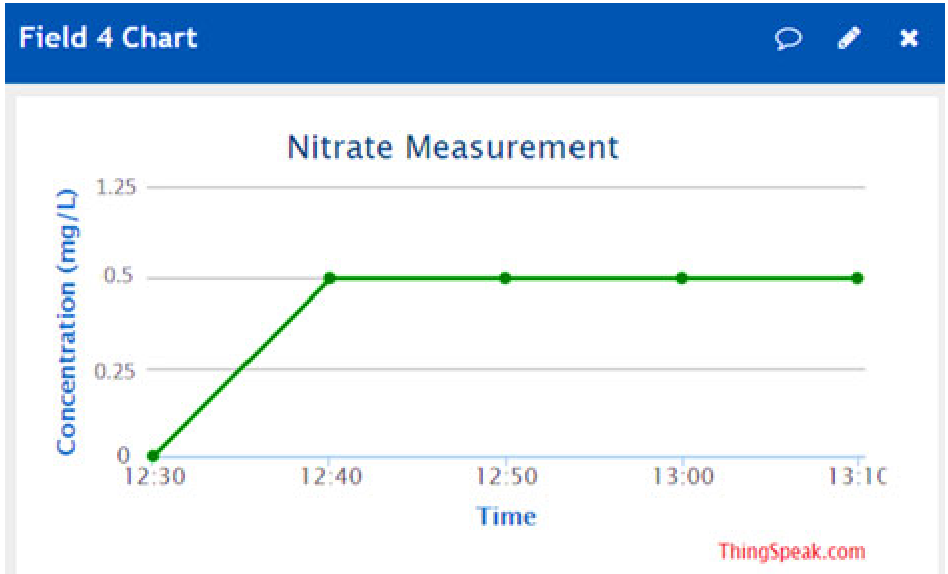 Fig 3: Comparison between the developed system and a professional LCR meter, demonstrating near-identical performance.
Critical Insight & Future Outlook
The brilliance of this work lies in software-defined sensing. Instead of using exotic, expensive materials to stabilize the hardware, the authors used a simple, robust Parylene coating and handled the environmental variables through calibration and computation.
Limitations: While the sensor is robust, the presence of high concentrations of other ions (phosphates, sulfates) could cause interference. Future work should explore ion-selective membranes to further isolate the nitrate signal.
Conclusion: By reducing the price point of high-frequency nitrate monitoring from 100, this research paves the way for "Distributed Water Intelligence," where every farm can participate in real-time environmental stewardship via the cloud.