
Hospital Cyberspace: Using Temporal Data Mining to Decipher the Life-Cycle of Clinical Services
Temporal data mining in history data of hospital information systems
This paper introduces a temporal data mining framework for hospital information systems (HIS) aimed at service innovation and evidence-based management. By analyzing "orders" as the fundamental unit of clinical activity, the authors utilize clustering and trajectory mining to visualize and classify the global behavior of hospital departments and patient processes.
TL;DR
This paper explores how the vast amounts of clinical data stored in Hospital Information Systems (HIS) can be more than just a digital filing cabinet. By treating every medical action as a "message" or "order," the researchers apply temporal data mining—specifically clustering and trajectory analysis—to visualize the macroscopic behavior of a hospital, revealing the hidden rhythms of healthcare delivery.
Background: The Hospital as a Cyberspace
Most modern hospitals function within a complex network of digital interactions. Every prescription, blood test, and nursing action is recorded. However, this data is often underutilized for management purposes. The authors argue that HIS represents a "cyberspace" where clinical actions propagate through departments like information on a network. To manage this effectively, we need to bridge the gap between microscopic individual actions (a single doctor's order) and macroscopic hospital behavior (departmental efficiency).
The "Order" as the Fundamental Unit
At the heart of this methodology is the concept of the Order. Whether it is a doctor prescribing medication to a pharmacist or a nurse recording a patient's vitals, every action is an order that triggers a workflow.
1. Data-Mining Based Hospital Services Model
The authors propose a three-tier architecture for hospital innovation:
- Patient Layer: Direct medical services and records.
- Medical Staff Layer: Decision support for chronic diseases and risk detection.
- Management Layer: Capturing global behavior to deploy staff optimally.
Methodology: From Raw Data to Trajectories
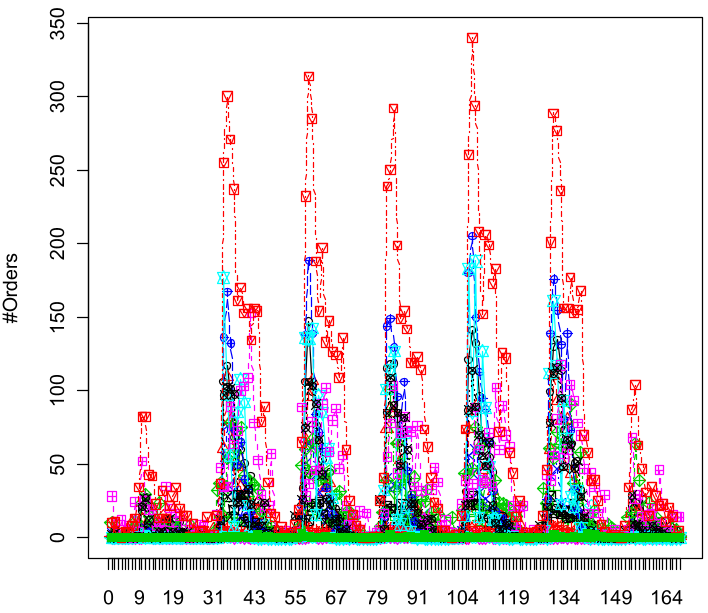
The research transforms heterogeneous clinical data into chronological trends. By counting the number of orders within specific time zones, the authors can plot the "pulse" of a department.
Strategic Clustering
Using Ward’s Method and Multidimensional Scaling (MDS), the study classifies hospital divisions based on their activity patterns. For instance, the activity of a Cardiology department might mirror the general outpatient trend, while Rheumatology exhibits unique temporal signatures.
Trajectory Mining
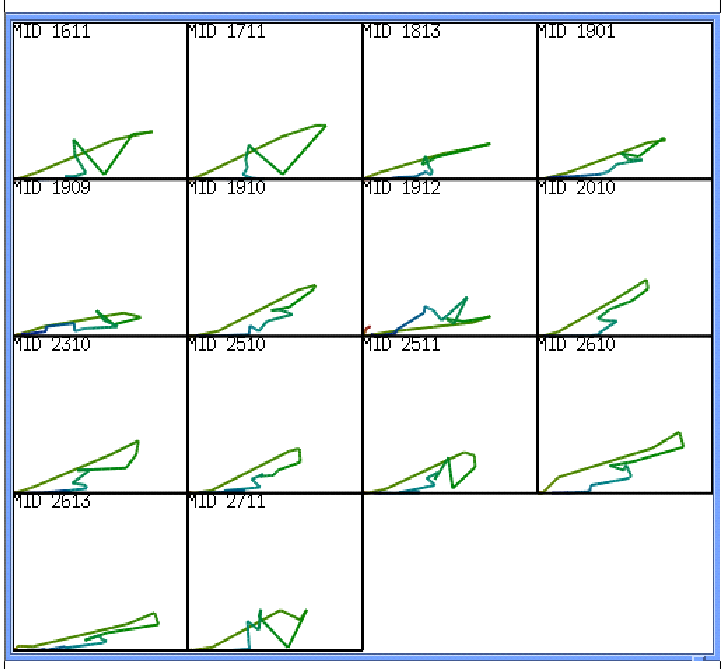
One of the most innovative aspects is Trajectory Mining. By taking two variables (e.g., number of nursing orders vs. doctor records) and tracking them over time, the researchers create a 2D path.
- Cluster 1: Orders given both in wards (inpatient) and outpatient clinics.
- Cluster 2: Orders strictly focused on ward-based activities.
Key Insights and Results
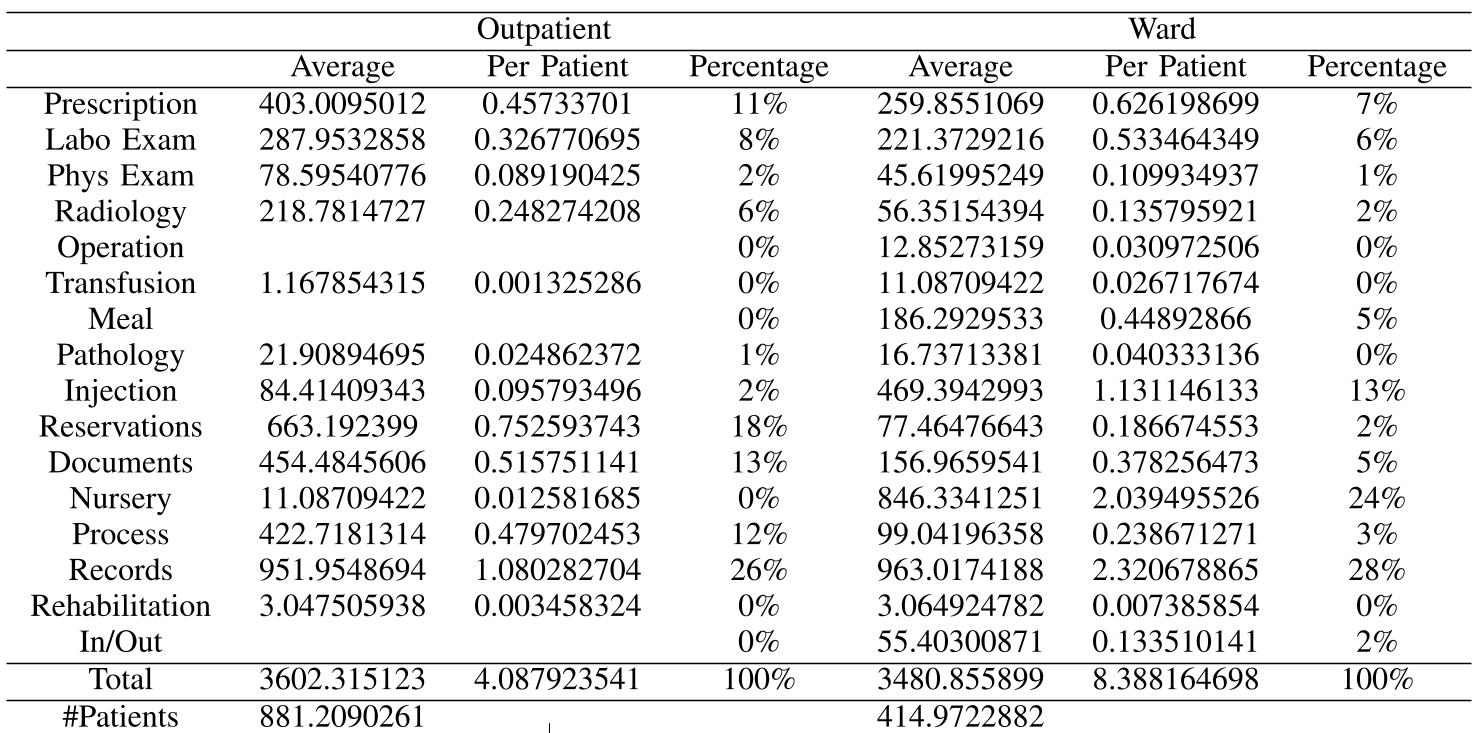
The analysis of long-term follow-up patients (over 5 years) yielded a striking statistic: 83% of all clinical work for these patients is dominated by just three activities:
- Prescriptions
- Laboratory Examinations
- Reservations
This "Pareto-like" distribution suggests that hospital management should focus its optimization efforts on the logistics and execution of these three core order types to see the greatest impact on efficiency.
Critical Analysis: Why This Matters
The true value of this work lies in its ability to visualize the "life-cycle" of a hospital. By detecting abnormalities in these temporal trends, hospital administrators can identify risks before they become crises. For example, a sudden deviation in the trajectory of laboratory orders could signal a bottleneck in the diagnostic department or an unexpected surge in patient volume.
Limitations: As a "preliminary approach," the paper focuses heavily on the volume of orders rather than the outcomes of those orders. Future work would benefit from integrating patient health outcomes to determine if "high activity" actually correlates with "better recovery."
Conclusion
This study moves hospital management from intuitive decision-making toward data-driven precision. By viewing clinical activity as a dynamic, temporal process rather than a static database, the authors provide a framework for the next generation of "smart" hospitals.