
Dynamic Territorial Governance: Bridging E-Government and Sustainability via System Dynamics
Territorial Governance, E-Government and Sustainable Development Policy: A System Dynamics Approach
This paper introduces a preliminary System Dynamics (SD) framework to integrate e-government policies with sustainable development goals. Leveraging the Hammarby model in Sweden as a case study, it demonstrates how dynamic performance management can align stakeholders and infrastructure for urban ecological efficiency.
TL;DR
This research tackles the fragmentation in urban planning by proposing a System Dynamics (SD) framework that links e-government initiatives directly to sustainable development outcomes. By examining the success of Hammarby, Sweden, the paper illustrates how modeling strategic resource flows—like waste-to-energy cycles—can align multi-stakeholder interests and drive measurable environmental improvements while boosting urban attractiveness.
Problem & Motivation: The Limits of Managerialism
Despite the global push for "e-government," many initiatives remain focused on simple administrative efficiency (e.g., digitizing forms) rather than solving systemic urban challenges like climate change and rapid urbanization.
The authors argue that existing governance models are too static. They fail to capture the dynamic complexity where public sector reforms, private sector investments, and citizen trust interact. The core insight is that unless we can model how information flows (e-government) affect physical resource flows (sustainability), urban policy will continue to yield "counter-intuitive" and often disappointing results.
Methodology: The Dynamic Performance Management Approach
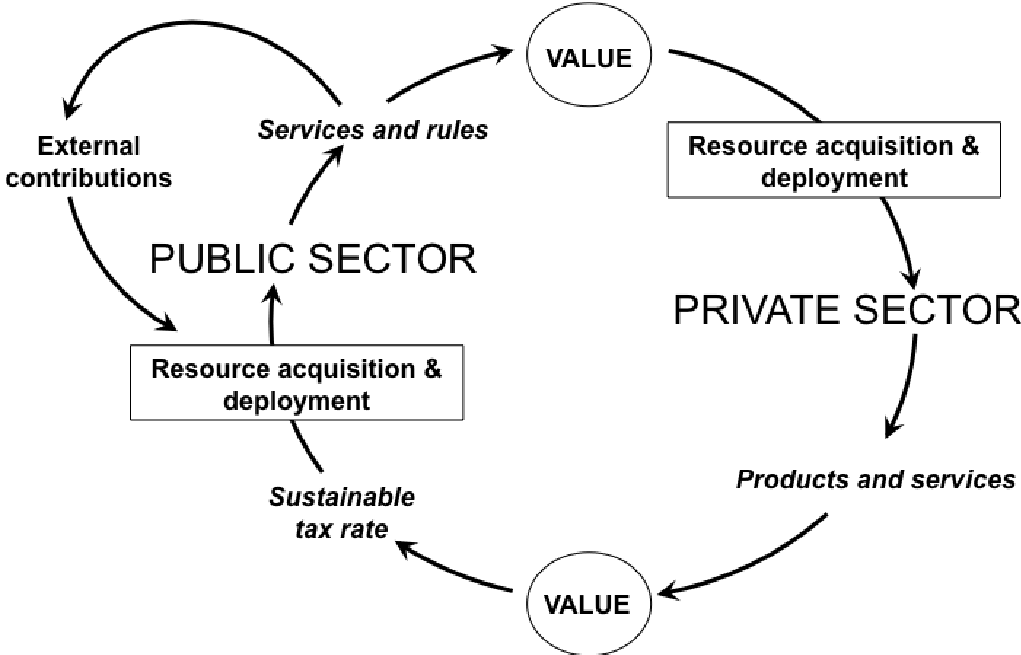
To move beyond static KPIs, the study employs a Dynamic Performance Management approach. This focuses on three pillars:
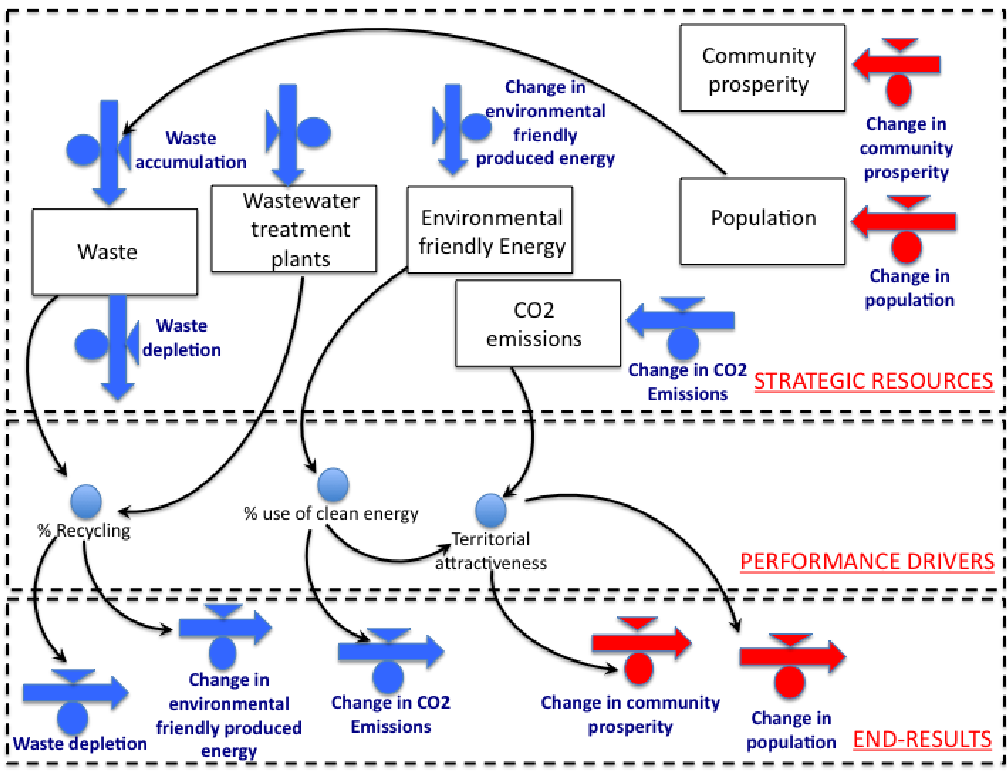
- Strategic Resources: The stocks that determine success (e.g., infrastructure, human capital, clean energy reserves).
- Performance Drivers: The factors that can be actively managed (e.g., recycling rates, transparency of authorization protocols).
- End-Results: The flows that increase or deplete strategic resources (e.g., CO2 emissions, employment rates).
The Integrated Architecture
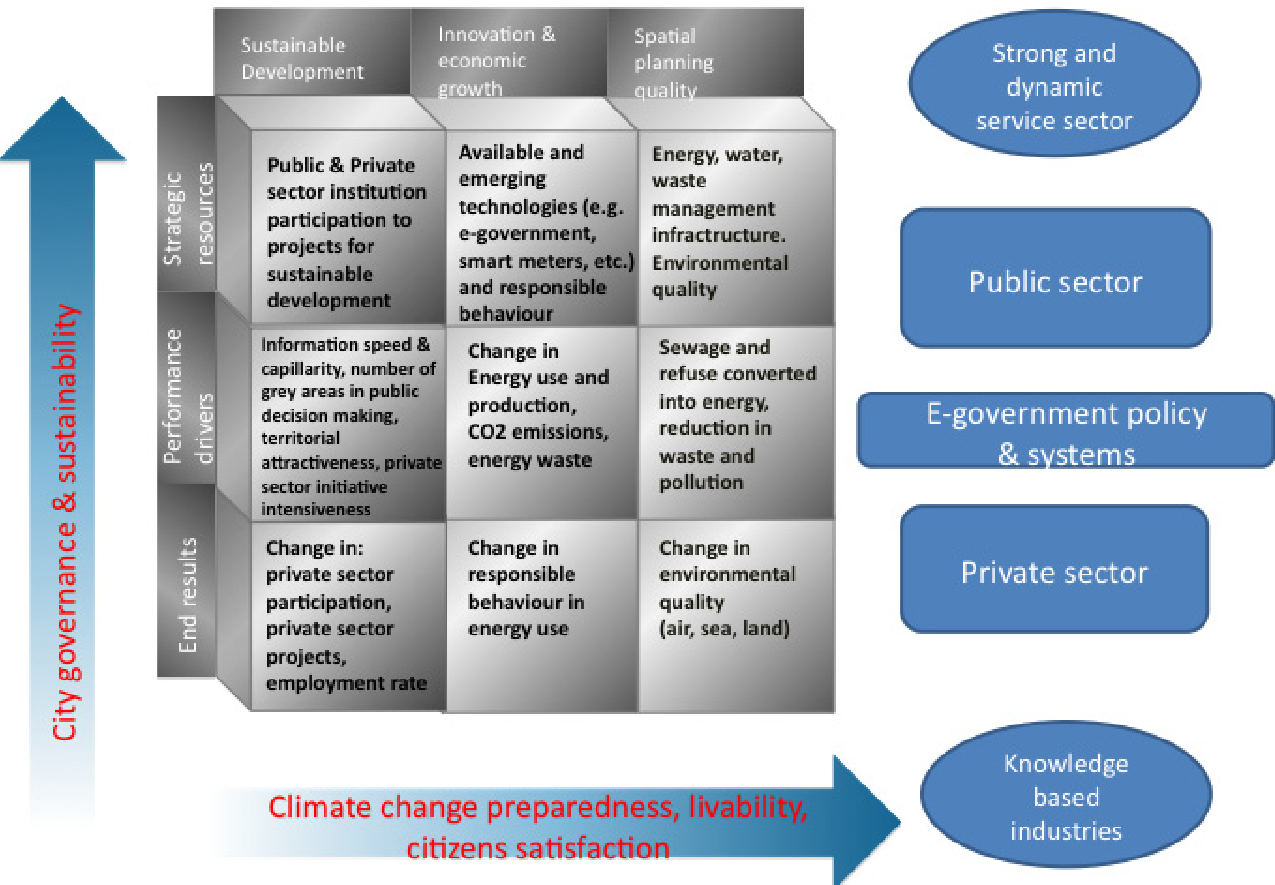
The paper emphasizes that e-government should act as the "nervous system" of a territory, providing the spatial and operational data necessary to feed these SD models.
Case Study: Sweden’s Hammarby Model
The most compelling evidence comes from the Hammarby district in Stockholm. The project moved from an "agency-centric" mode to a "service-oriented" architecture.
Key Insights from the Model:
- The Eco-Cycle: Waste and wastewater are transformed into renewable energy, which powers households/transport.
- The Feedback Loop: Higher clean energy use reduces CO2 and energy costs, increasing Territory Attractiveness. This attractiveness draws in knowledge-based industries, creating a "growth-oriented reinforcing loop" of prosperity and further green investment.
Critical Analysis & Results
The study highlights that the alignment of different stakeholders (waste management, energy providers, and ICT agencies) under a single strategic ministry was the primary driver for success in Sweden.
Key Outcomes:
- Transformation Speed: A heavily polluted brownfield converted to a global eco-model in less than a decade.
- Employment Integration: The sustainable shift didn't just help the environment; it created new professional profiles and job opportunities, validating the "sustainable innovative economy" thesis.
Takeaway & Future Outlook
The primary takeaway is that sustainability is a performance management challenge. By using System Dynamics, city officials can move from observing what happened to understanding why it happened.
Limitations: The paper presents a preliminary model. The actual implementation requires massive data integration across disparate government agencies, which remains a hurdle for many developing regions.
Future Work: The authors suggest that moving toward "agency federations" where data is offered "as a service" will be the next frontier in enabling real-time dynamic urban governance.