
DaOBML: Leveraging Machine Learning to Solve the Oracle Problem in Environmental Modeling
Testing Environmental Models supported by Machine Learning
The paper introduces DaOBML (Test Data Generation and Oracle via Knowledge Base and Machine Learning), a black-box testing methodology for environmental models that output complex artifacts like maps. It utilizes testing techniques (CIT, MBT, RT) to build knowledge bases and employs Machine Learning algorithms, with Artificial Neural Networks (ANN) achieving superior performance, to automate the test oracle verdict process.
TL;DR
Testing environmental models (like deforestation or fire spreads) is notoriously difficult because their outputs are complex, multi-colored maps rather than simple pass/fail values. The DaOBML methodology automates this by treating testing as a classification problem. By generating a knowledge base of "correct" behaviors and training Machine Learning (ML) models, it can automatically flag defective simulations with high accuracy, particularly when using Artificial Neural Networks (ANN).
The "Visual Oracle" Motivation
In software engineering, an "Oracle" is a mechanism to determine if a test passed or failed. When your output is a map of the Amazon rainforest generated by a tool like TerraME, how do you programmatically verify it?
Previous methods relied on:
- Expert Review: Slow and unscalable.
- Image Comparison: Highly sensitive to noise and minor shifts.
- Threshold Tuning: Requiring developers to manually define exactly how "similar" two images must be—a task that is often as hard as the testing itself.
The authors argue that we should instead use the "intellectual intuition" of ML to recognize the patterns of a correct model versus a defective one.
Methodology: Building a Knowledge Base of Reality
The DaOBML workflow operates in two distinct phases:
1. The Upper Flow (Knowledge Base Creation)
Before testing a new model, you need a reference. The system uses "Gold Standard" (trusted) models and stimulates them using:
- Combinatorial Interaction Testing (CIT): Testing combinations of parameters.
- Model-Based Testing (MBT): Deriving tests from statecharts.
- Random Testing (RT): Stressing the system with random inputs.
The resulting maps are converted to grayscale and processed through a Sobel operator for edge detection. This reduces the complex map to its essential structural features.
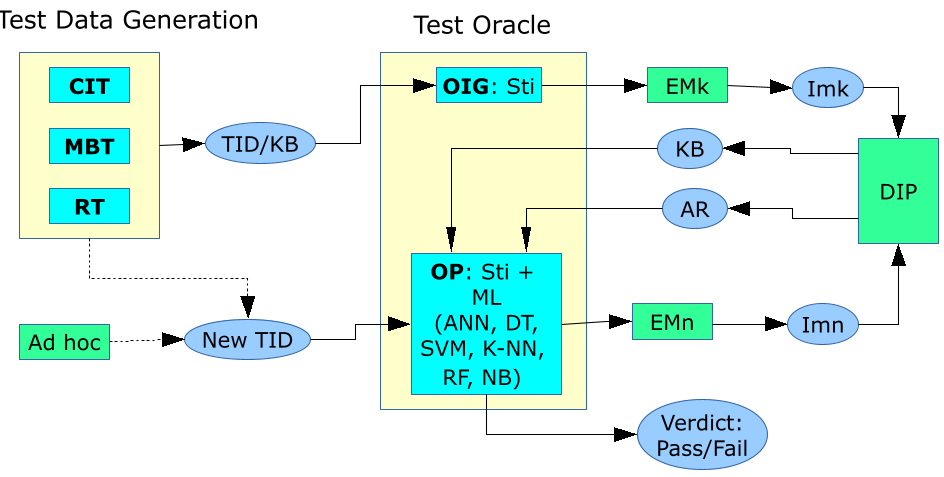 Figure 1: The DaOBML Methodology showing the duality between KB creation and Oracle Procedure.
2. The Lower Flow (The Oracle Procedure)
When a new model version is tested, its output is processed the same way. An ML classifier compared this "Actual Result" against the "Knowledge Base." If the classifier identifies the output as belonging to the correct class of model behaviors, it’s a Pass; otherwise, it’s a Fail.
Experiments and Insights
The researchers tested DaOBML on 22 different models, ranging from "Heat Bugs" to "Predator-Prey" simulations.
Key Findings:
- ANN is King: Out of six algorithms (including Decision Trees, SVM, and Naive Bayes), Artificial Neural Networks (Multilayer Perceptrons) performed the best at matching new outputs to the correct model profiles.
- Randomness Works: Surprisingly, Random Testing was the most "feasible" way to build the Knowledge Base. Despite its simplicity, it provided a diverse enough dataset for the ML models to learn effectively.
- Size Matters: There was a clear performance jump when the Knowledge Base size increased from 25 to 250 entries.
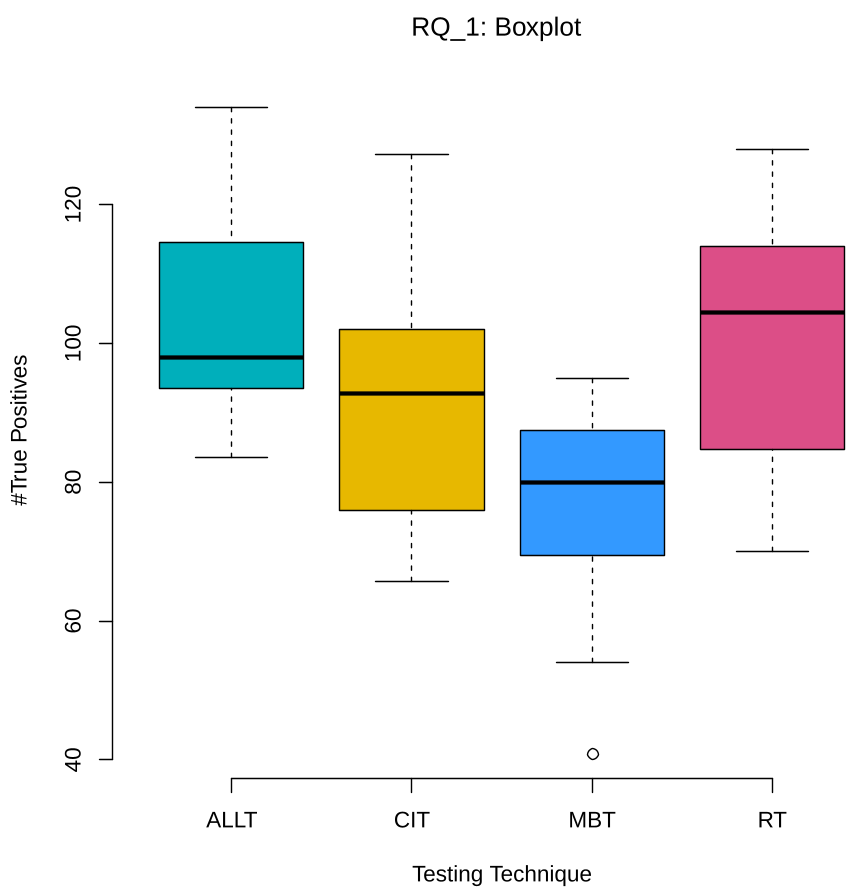 Figure 2: Performance comparison (True Positives) across different ML algorithms. Note the clear lead of ANN (index 1).
Critical Analysis: Why This Matters
The core contribution of this work is the removal of the similarity threshold. By using ML classification, the tester no longer needs to decide if a 95% pixel match is "good enough." The ML model learns the inherent variance of the simulation.
Limitations & Future Work:
- Fault Localization: While DaOBML can tell you that a model is wrong, it can't yet tell you which line of code is the culprit.
- Computational Cost: Training a KB of 250+ maps for every model is computationally expensive, though this is a one-time cost per "Gold Standard" version.
- Evolution: As models evolve significantly, the "Gold Standard" KB needs constant updates to avoid stale oracles.
Conclusion
DaOBML represents a shift toward "AI-assisted Software Engineering." By treating complex scientific outputs as data patterns rather than static files, we can bring the rigor of automated testing to fields like environmental science, where the "correct answer" is often a complex visual state rather than a single number.