
BPSO-RS: Precision Sentiment Analysis via Multi-Granularity Chunking and Optimized Ensemble Learning
Text tendency analysis based on multi-granularity emotional chunks and integrated learning
This paper proposes a multi-granularity emotional chunking framework combined with an integrated learning method for text sentiment orientation analysis. The core approach utilizes Binary Particle Swarm Optimization (BPSO) to optimize a Random Subspace (RS) ensemble, effectively processing diverse internet texts from news and e-commerce platforms.
TL;DR
With the explosion of social media and e-commerce, identifying emotional "tendencies" in massive text data has become a critical challenge for public opinion management. This paper introduces a hybrid approach that partitions text into multi-granularity emotional chunks and classifies them using a Random Subspace (RS) ensemble optimized by Binary Particle Swarm Optimization (BPSO). The result is a system that overcomes the "curse of dimensionality" while maintaining high accuracy across diverse text types.
Background & Motivation: The Granularity Gap
Most sentiment analysis systems fall into two traps:
- Coarse Granularity: Analyzing entire documents at once, which ignores subtle shifts in tone.
- The Dimensionality Curse: As features (words/phrases) increase, the vector space becomes too sparse and computationally heavy for traditional classifiers.
The authors argue that by dividing text into fine, medium, and coarse "emotional chunks," and using an intelligent search algorithm (BPSO) to pick the best classifiers for these chunks, we can achieve a more robust understanding of user sentiment.
Methodology: Evolutionary Subspace Selection
The core innovation lies in the BPSO-based Random Subspace method. Traditional ensemble learning (like Random Forest) uses random feature subsets. However, not all subsets are equally useful.
1. Multi-Granular Partitioning
- Fine-grained: Focused on word polarity (Seed words + Mutual Information).
- Medium-grained: Sentences as core units, often using Denoising Auto-Encoders (DAE) for feature extraction.
- Coarse-grained: Rapid classification of long-form text.
2. The BPSO Optimization Loop
The authors treat the selection of base classifiers as a binary optimization problem. Each "particle" in the swarm represents a candidate configuration of classifiers (1 = selected, 0 = ignored).
- Physical Intuition: Like a flock of birds searching for food, the particles move through the solution space, balancing their own historical best (Pbest) and the group's best (Gbest) to find the optimal ensemble structure.
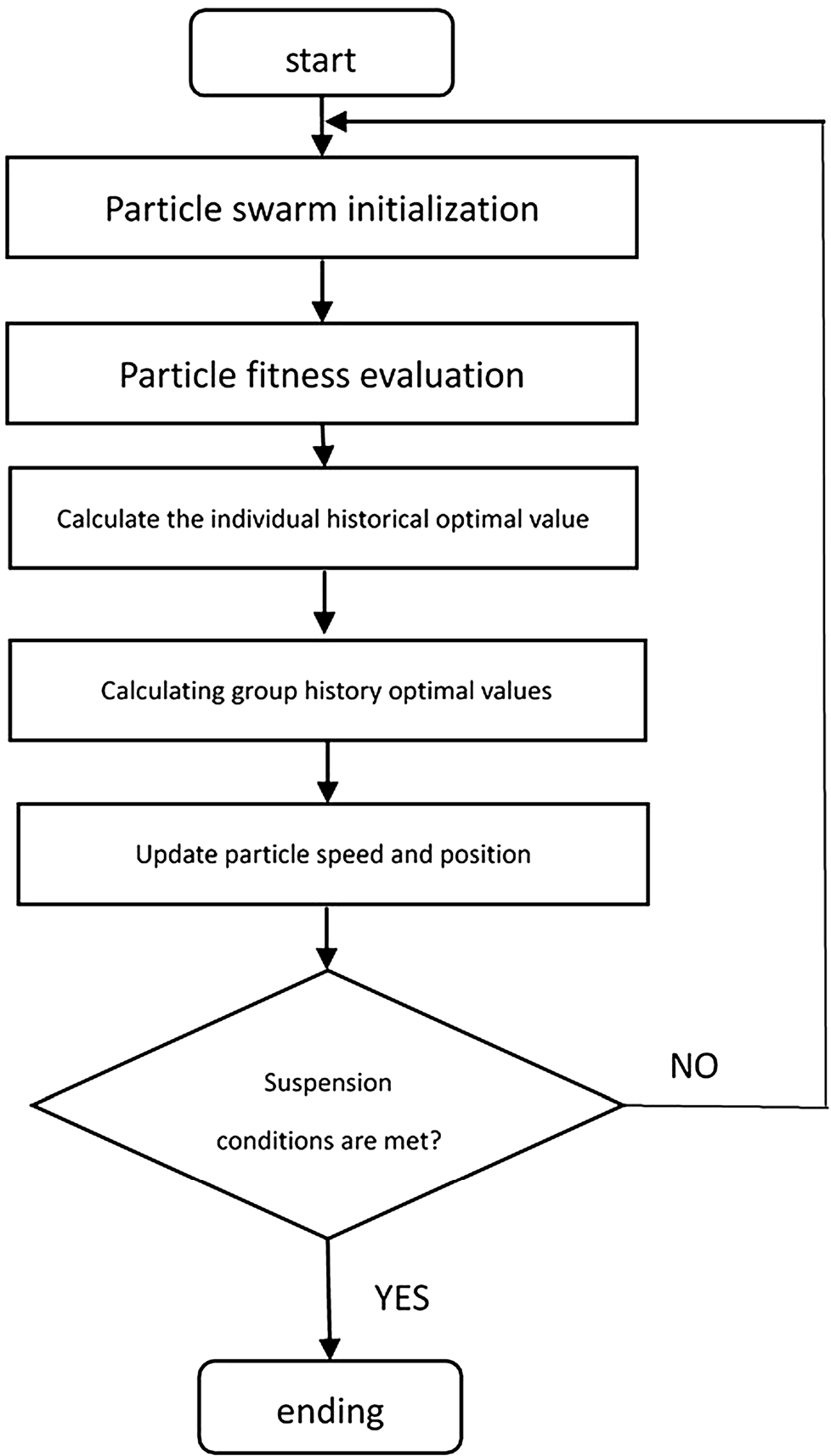 Figure 1: The BPSO workflow for optimizing the selection of base classifiers.
Experiments and Quantitative Results
The researchers tested their framework on news comments (Sina/Tencent) and e-commerce reviews (Taobao).
SOTA Performance Comparison
The system showed a clear advantage in system diversity, a key metric for ensemble reliability. Using the "Inconsistency Measure (dis)," the RS_BPSO outperformed standard RS by significantly diversifying the classification errors, which paradoxically leads to better overall accuracy when voted upon.
| Metric | Standard RS | RS_BPSO (Ours) |
|---|---|---|
| Accuracy (News) | ~79.7% | 80.5-82.3% |
| Diversity (dis) | 0.468 | 0.484 |
Convergence & Swarm Intelligence
A critical finding was the impact of particle count. While more particles generally find better solutions faster, too many lead to high computational costs. The study found that 30 particles represent the "sweet spot" for this scale of text data.
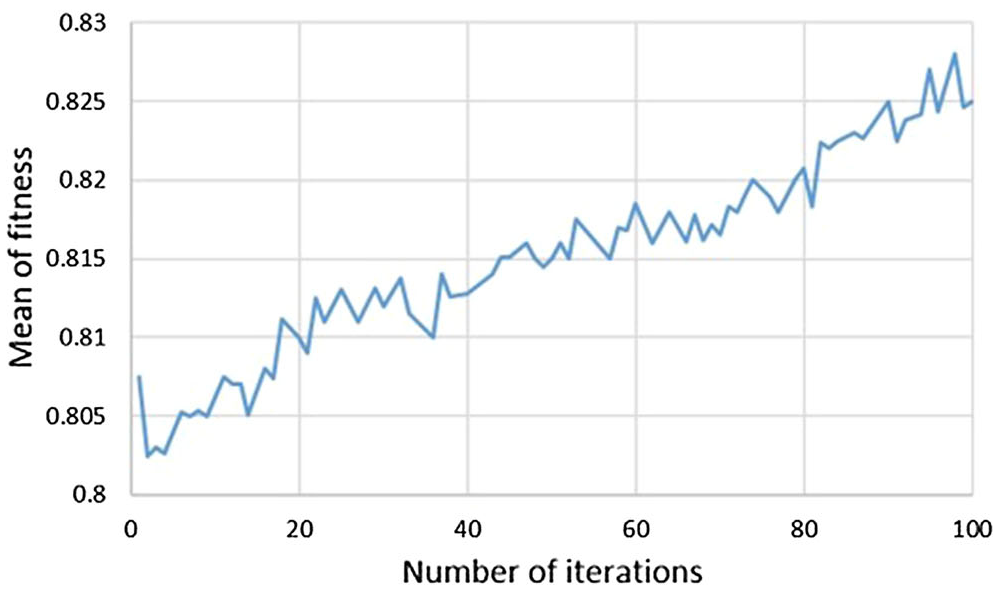 Figure 2: Convergence analysis showing the best fitness (accuracy) approaching 100% over 100 iterations.
Critical Insight: Why it Works
The success of this method isn't just in the "swarm" part—it's in the diversity. By using BPSO to specifically select base classifiers that are different from one another (lowering Q-statistics and correlation), the ensemble becomes much more resilient to the noise inherent in messy internet text.
The authors also noted that Dependency Parsing is superior for un-screened web data compared to simple Lexicon-based methods, as it can identify emotional objects even when specific slang or new words aren't in a pre-defined dictionary.
Conclusion & Future Work
The BPSO-RS framework provides a high-efficiency solution for managing massive text streams in IoT applications. While it significantly improves upon standard machine learning techniques, the authors acknowledge that classification accuracy can still be pushed further. Future research may look into integrating these evolutionary strategies with Deep Transformer architectures to combine swarm intelligence with context-aware embeddings.
Key Takeaway: Don't just build a large ensemble—use an evolutionary algorithm to select the right members of that ensemble to maximize diversity and accuracy.