
The Sky: Transforming Cloud Federation through Social Networking
The Sky: A Social Approach to Clouds Federation
This paper introduces The Sky, a novel federation model that leverages social networking principles to facilitate collaboration among heterogeneous Cloud service providers. It transitions from static resource sharing to a dynamic, social-based marketplace where Clouds autonomously form relationships to provide value-added composite services.
TL;DR
"The Sky" is an ambitious architectural proposal that seeks to solve the "silo" problem of modern Cloud computing by treating Cloud providers as nodes in a social network. Unlike traditional federation, which targets rigid resource sharing, this model enables Clouds to socialize, form competitive or collaborative relationships, and autonomously create composite services.
Context & Positioning
In the landscape of distributed systems, we have moved from Grids to Clouds. However, the current "Inter-Cloud" vision remains largely visionary or confined to homogeneous academic testbeds. This paper, presented at ANT 2013, bridges the gap between Cloud Computing and Social Network Analysis (SNA), positioning the "Sky" as a Web 3.0 evolution where the "Internet of Things" includes massive computing entities.
The Core Problem: Why Can't Clouds Just Get Along?
Current Cloud federation faces three major hurdles:
- Heterogeneity: Different vendors use proprietary APIs and different SLA standards.
- Lack of Trust/Incentive: There is no automated framework for Clouds to find reliable partners or replace failing ones dynamically.
- Static Integration: Most current collaborations are manually hardcoded between specific enterprises.
The authors argue that the missing ingredient is a social infrastructure that allows Clouds to "advertise" and "interconnect" based on behavior patterns rather than just hardware specs.
Methodology: The Socialization-Federation Architecture
The proposed architecture is split into two distinct functional domains, managed by a central Sky Broker.
1. The Socialization Module
This is the "Facebook for Clouds." It manages:
- Social Manager: Defines the business logic of social ties.
- Social Database: Stores the history of "who helped whom" and historical performance (reputation).
- Regulation Manager: The "police" of the community, handing out rewards for high uptime and penalties (or expulsion) for SLA violations.
2. The Federation Module
Once a social tie is formed, this module handles the technical "handshake":
- Service Catalog: A directory of technical interfaces (APIs).
- Federation Manager: Negotiates the SLOs (Service Level Objectives) and maps technical requirements.
- Monitoring Manager: Oversees the runtime operation to ensure both parties play by the rules.
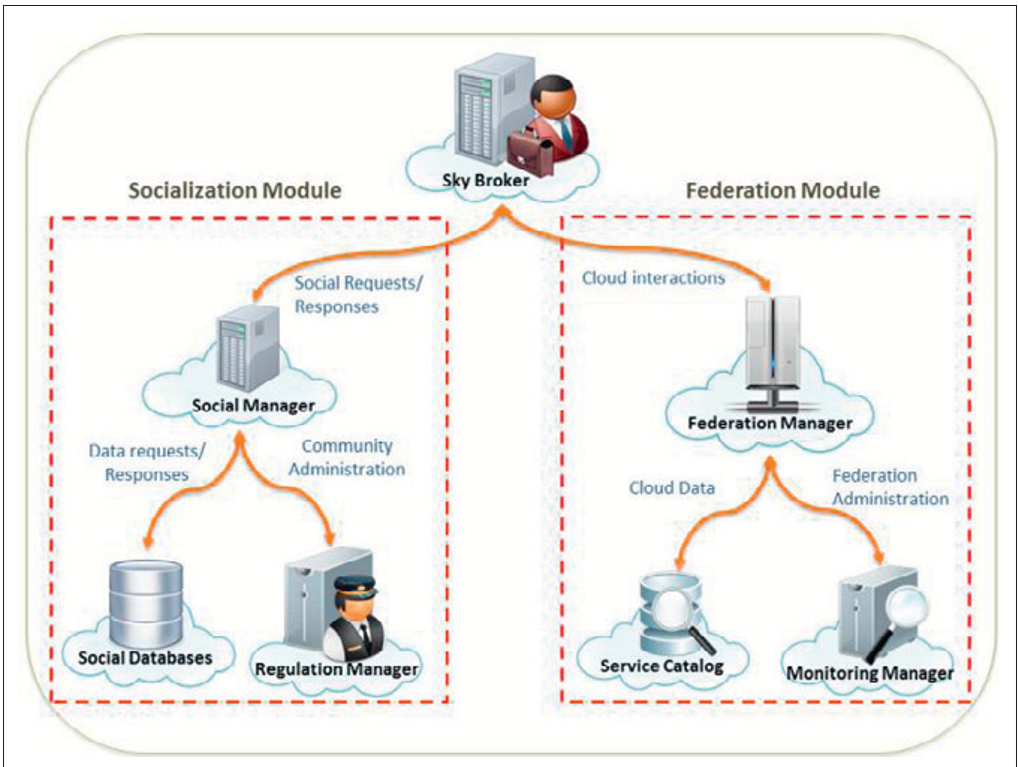 Figure 1: The dual-module architecture of the Sky model, showing the separation between social relationship management and technical federation.
Understanding Relationship Types
In "The Sky," relationships are more complex than simple "Friends." They include:
- Substitution: If Cloud A fails, it dynamically finds a "Substitute" peer to take the load.
- Competition: Clouds vying for the same request, driving down costs in a marketplace.
- Supervision: A master Cloud orchestrating several "Affiliate" services for a complex task.
The Lifecycle of a Connection
- Sign-up: Vendor creates a profile.
- Recommendation: The Social Manager suggests peers based on profile similarity.
- Realization: A task triggers the Federation Manager to start a session.
- Feedback Loop: Results are reported back to affect the Cloud's reputation score.
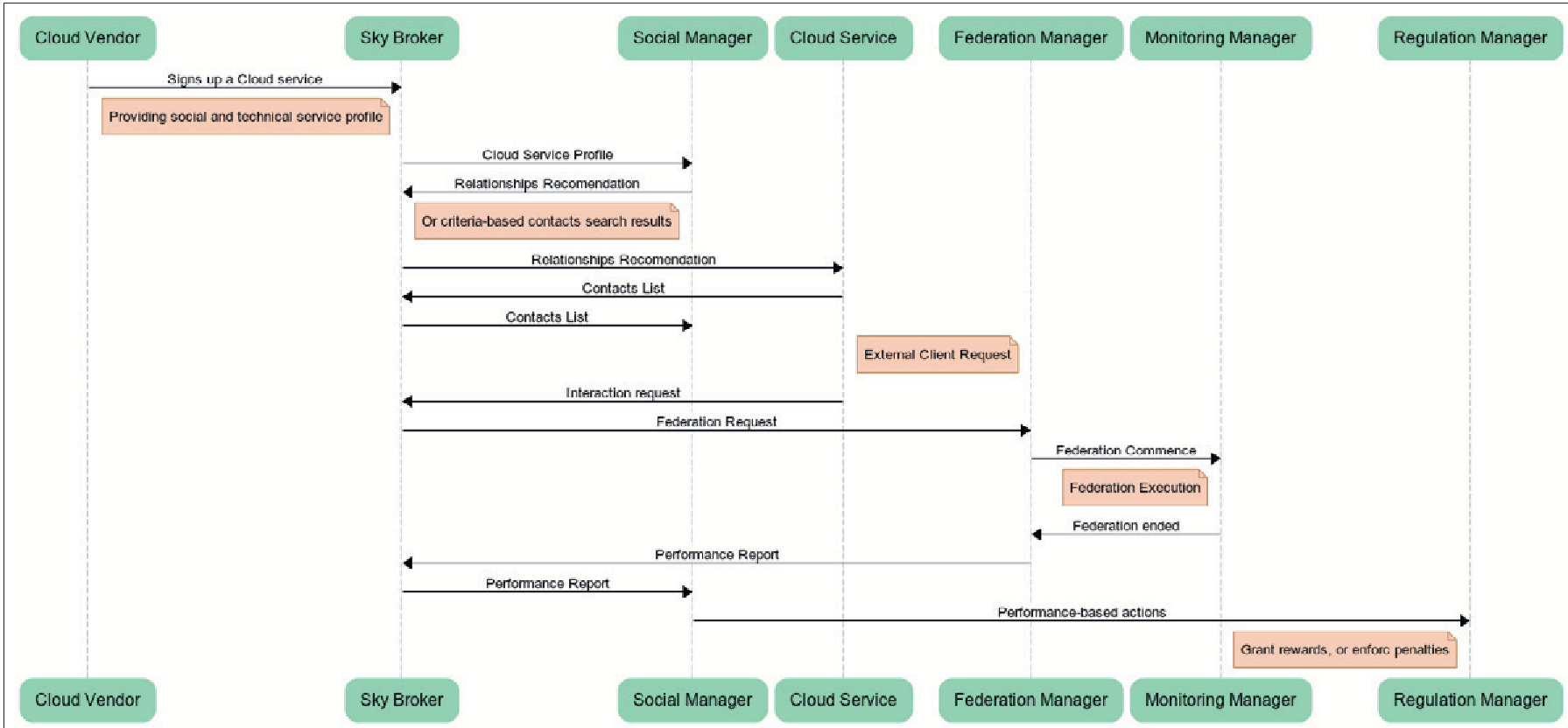 Figure 2: The operational sequence for establishing and executing a federation request between Sky members.
Critical Insight & Future Outlook
The genius of this paper lies in the application of Social Trust to a B2B Computing environment. While the paper relies on a centralized "Sky Broker" (a potential bottleneck), the shift toward quantitative reputation-based federation is a precursor to modern decentralized finance (DeFi) and decentralized cloud concepts.
Limitations
- Centralization: The "Sky Broker" and "Social Manager" represent single points of failure.
- Technical Mapping: The paper assumes that mapping heterogeneous APIs is a solved problem, which remains a significant hurdle in practice.
Conclusion
"The Sky" presents a compelling vision of an organic, self-organizing cloud marketplace. By moving away from static contracts and toward a social-based dynamic ecosystem, the authors pave the way for a more resilient and efficient Internet of Services.