
Theme-based Social Networks: Fusing Physical and Digital Social Life
Theme-Based Mobile Social Network System
The paper introduces a "Theme-based Mobile Social Network System" designed to bridge the gap between digital social tools and real-world physical interactions. It utilizes a context-aware framework to automatically detect nearby social "Themes" and intelligently recommends activities using a multi-factor weighting algorithm.
TL;DR
Mobile social networking is evolving beyond scrolling through feeds; it’s moving toward real-time, location-specific engagement. This paper proposes a system that automatically detects "Themes"—the context behind a physical gathering—and uses a weighted context-aware algorithm to connect you with nearby events and people.
Background: Beyond the Static Social Graph
Most social networks we use today are centralized and static. They connect us based on who we know or what we liked three years ago. However, human interaction is inherently dynamic and tied to physical spaces. When you are at a "Cloud Computing Conference" or a "Movie Theater," your social needs change. Existing systems struggle to bridge the gap between your digital profile and your current physical reality, often resulting in information overload.
The Core Innovation: Everything is a "Theme"
The authors redefine the mobile social experience through the concept of a Theme. A Theme is not just a hashtag; it is a formal object consisting of:
- Subject (): The core content (e.g., "Physics Class").
- Duration (): The specific timeframe of the event.
- Active-Space (): The physical location.
- Actor List (): The participants involved.
The Architecture
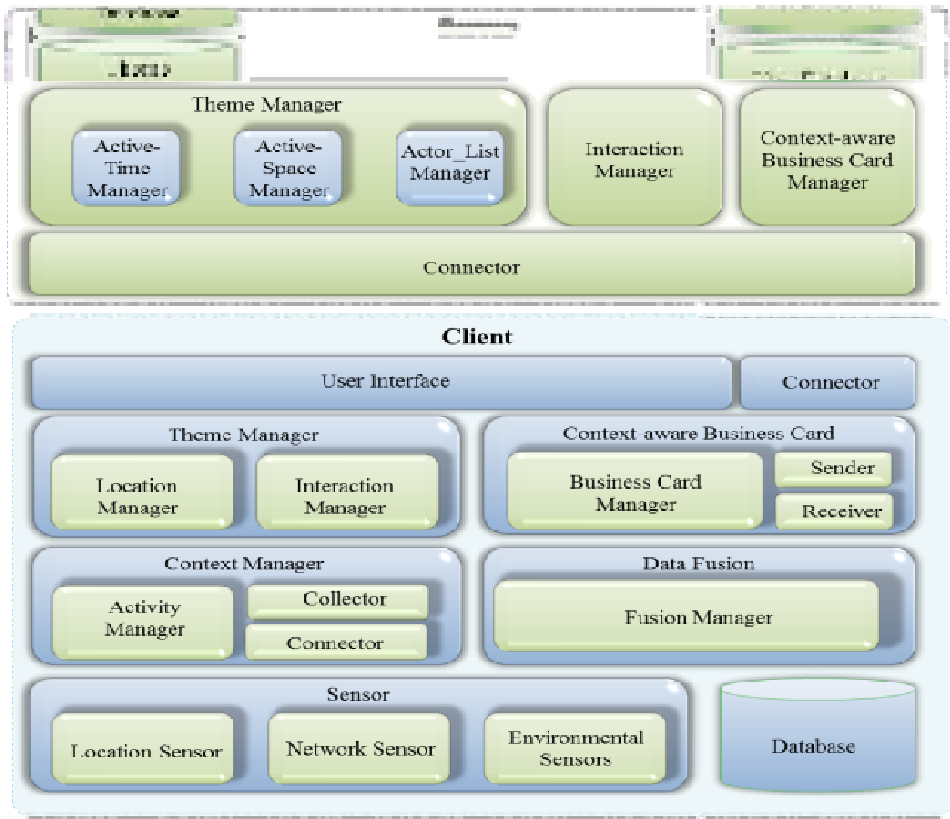
The system follows a Client/Server model where the server manages the lifecycle of these themes while the client (mobile device) handles local sensor data to detect social contexts.
Methodology: The Theme-Awareness Procedure
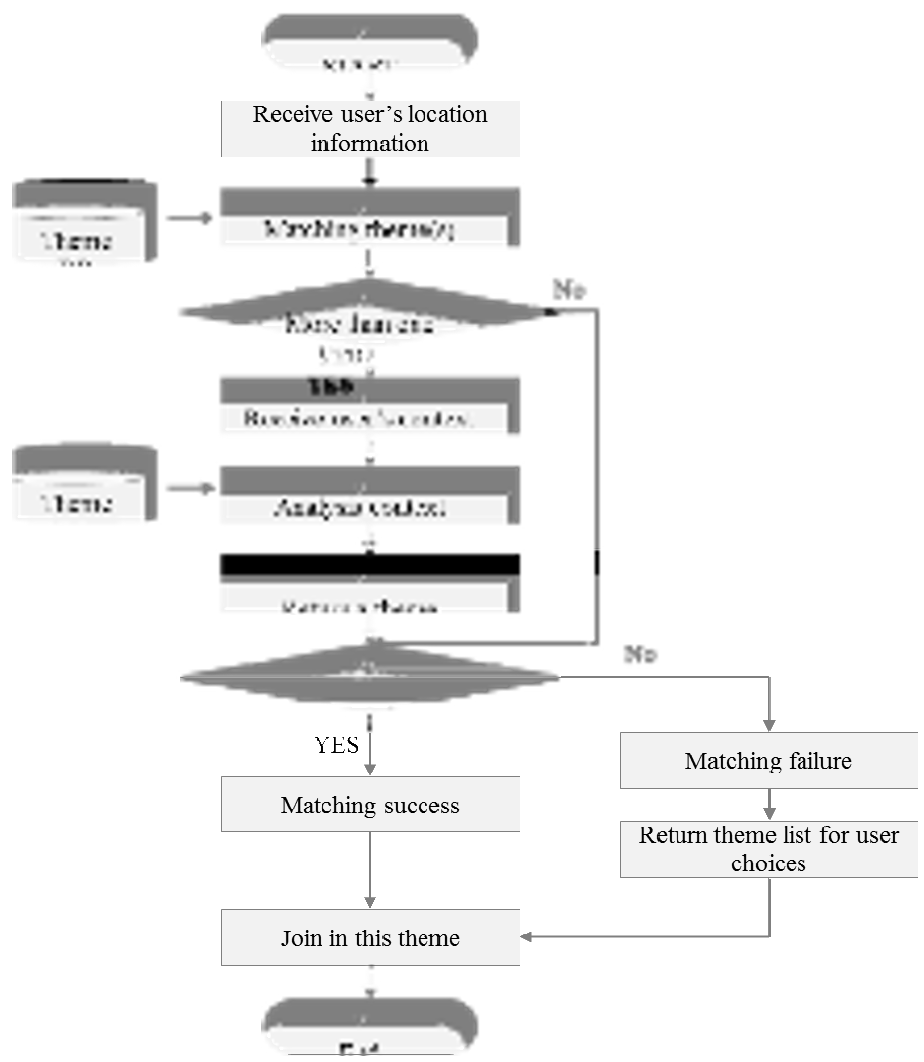
One of the paper's most significant technical contributions is the Theme-Awareness Procedure. When multiple social themes overlap in the same physical space, how does the phone know which one you are attending?
The authors propose a probability model () based on four distinct weights:
- Distance (): Calculated via Received Signal Strength (RSSI).
- Calendar (): Matching the user's schedule with the theme's subject.
- Tags (): Matching personal business card tags with the theme.
- History (): Analyzing past participation habits.
The probability for a Theme is calculated as:
Key Features: From Interaction to Lasting Relations
The system doesn't just recommend events; it facilitates interaction through two primary patterns:
- One-to-One / One-to-Many: Users can engage in private or group discussions localized to the specific theme.
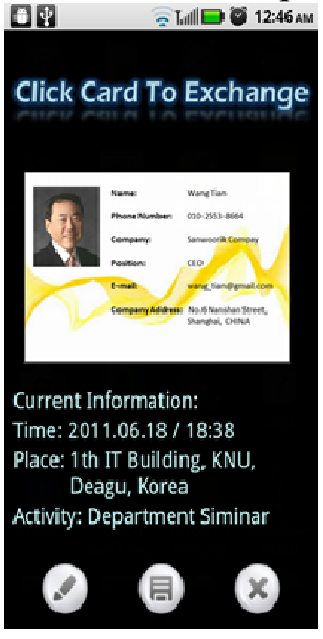
- Context-aware Business Cards: To prevent these temporary interactions from disappearing, the system uses VCard-based electronic business cards. A single click exchanges not just contact info, but also the context (time/place/event) of the meeting.
Critical Insight & Conclusion
While the paper is an early-stage exploration (as noted by the authors), its focus on ephemeral social data is profound. By deleting unrelated content after a user quits a Theme, the system inherently solves the "Information Overload" problem that plagues platforms like Facebook or WeChat.
Future Outlook: The next step for this technology lies in integrating more sophisticated indoor positioning (like UWB) and leveraging AI to refine the weighting factors () for more personalized social discovery.
Takeaway: The future of social networking isn't in your pocket; it's in the interaction between your pocket and the room you're standing in.