
Unifying Orthogonal LDA: The Hidden Synthesis of Trace Ratio and Null-Space Methods
On the theoretical and computational analysis between Trace Ratio LDA and null-space LDA
This paper presents a theoretical and computational analysis establishing the equivalence between Trace Ratio LDA (TR-LDA) and Null-space LDA (NLDA) under singularity conditions. It demonstrates that while these orthogonal variants of Linear Discriminant Analysis utilize different optimization schemes, they converge to identical solutions when the within-class scatter matrix is singular.
TL;DR
This research provides a rigorous theoretical proof that two of the most popular orthogonal extensions of Linear Discriminant Analysis—Trace Ratio LDA (TR-LDA) and Null-space LDA (NLDA)—are mathematically equivalent when dealing with the "Singularity Problem" (small sample size). By bridging these methods via a Trace Difference criterion, the authors simplify the landscape of dimensionality reduction, showing that TR-LDA provides a universal framework that encompasses NLDA, OLDA, and DCV.
Problem & Motivation: The Singularity Trap
In modern machine learning, we often encounter datasets where the dimensionality () is much larger than the number of samples (), such as face recognition or document categorization. In these cases, the within-class scatter matrix () becomes singular (non-invertible).
Traditional Fisher LDA fails because it requires inverting . To solve this:
- NLDA searches for discriminative information specifically in the null space of .
- TR-LDA maximizes a ratio of traces using an iterative procedure to avoid direct inversion.
The authors' core Insight was that while these two methods use different computational paths (iterative vs. closed-form null-space projection), they both seek the same optimal orthogonal transformation when the data is high-dimensional and sparse.
Methodology: The Trace Difference Bridge
The paper's breakthrough lies in using the Trace Difference Criterion as an intermediary:
The Theoretical Proof
- Iterative Convergence: The authors show that TR-LDA is solved by iteratively updating and finding the zero point of a trace difference function.
- The Limit: They prove that as grows (which happens when is near-singular), the eigenvectors of the trace difference problem align perfectly with the basis vectors of the null space of .
- Unified Framework: This logic extends to other variants, proving that OLDA (Orthogonal LDA) and DCV (Discriminative Common Vectors) are also members of this equivalent family under specific rank conditions.
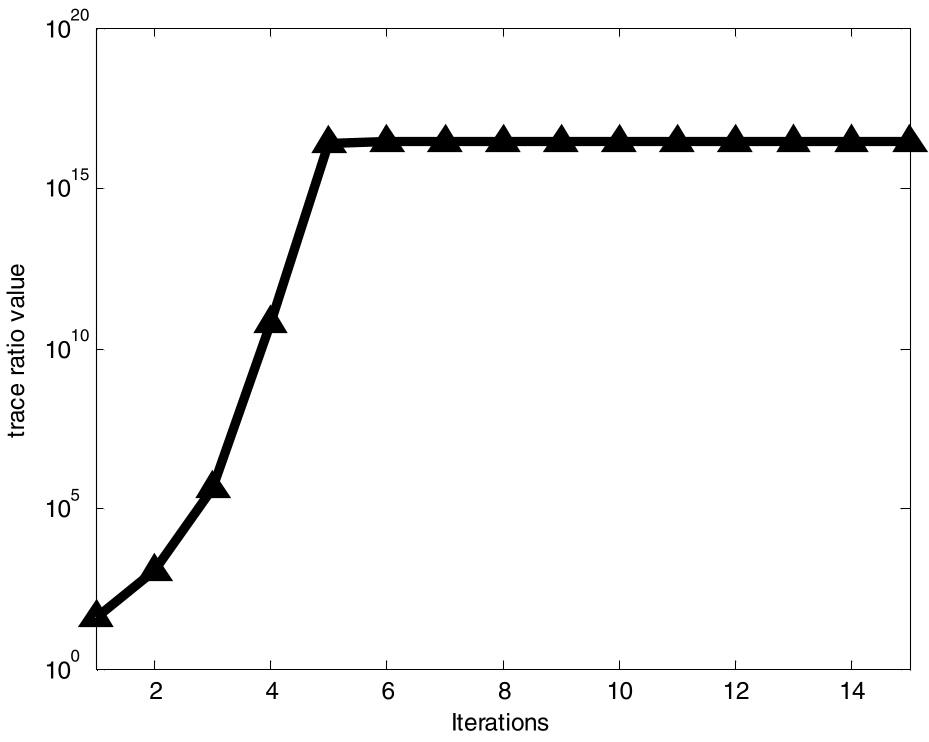 Figure 1: The pictorial relationship demonstrating how TR-LDA serves as the overarching framework for other orthogonal LDA variants.
Experiments & Results: Performance in the Wild
The researchers tested their theory on the UMIST Face and COIL20 Object datasets.
1. Verification of Equivalence
When the "Singularity Problem" was present (e.g., only 4 training samples), TR-LDA, NLDA, DCV, and OLDA produced identical classification accuracy curves. This empirically validated the mathematical proof of equivalence.
2. Superiority in Image Segmentation
In tasks where is not singular (e.g., pixel-level image segmentation), TR-LDA demonstrated its true strength. Because it directly optimizes the ratio of Euclidean distances, it achieved much cleaner segmentation of complex objects (like a boat against a sea background) compared to PCA or standard LDA.
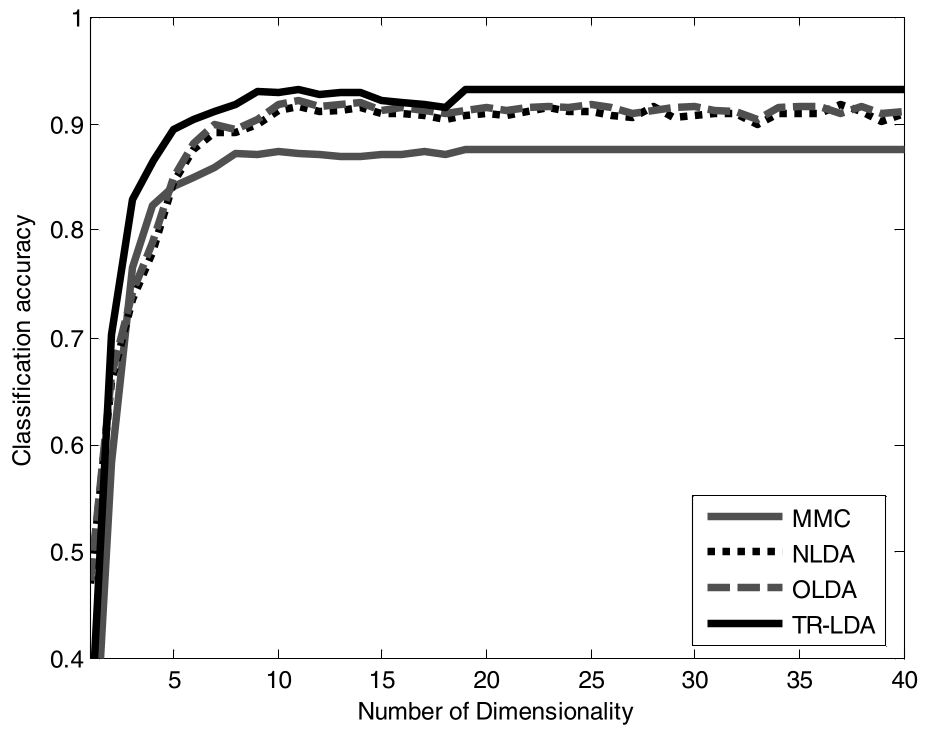 Figure 2: TR-LDA (bottom right) shows significantly fewer misclassified pixels in the boat and sea categories compared to OLDA and MMC.
Critical Analysis & Conclusion
Takeaway
The paper effectively "cleans up" a cluttered subfield of dimensionality reduction. By proving that TR-LDA is a more general version of NLDA, it suggests that researchers no longer need to choose between them based on whether a matrix is singular—TR-LDA handles both cases optimally.
Limitations & Future Work
While the equivalence holds for the global optimum, the computational cost of the iterative TR-LDA can be higher than the closed-form SVD-based NLDA. Future research could focus on hybrid solvers that switch from iterative to closed-form projections automatically when singularity is detected to save GPU/CPU cycles.
Ultimately, this work reinforces the value of seeking Orthogonal Projections; they preserve Euclidean distances, ensuring that "similar" items in high-dimensional space remain "similar" after we've compressed them.