
IBMM: Scaling Misinformation Defense with Theoretical Integrity
17778_A Theoretically Guaranteed Approach to Efficiently Block the Influence of Misinformation in Social Networks.
The paper introduces IBMM (Influence Blocking Maximization using Martingale), a two-step algorithm designed to minimize misinformation spread in social networks under the Competitive Independent Cascade Model (ICM). It achieves a (1 - 1/e - ε)-approximation guarantee while providing superior runtime efficiency on large-scale graphs.
TL;DR
The spread of rumors on social media can trigger real-world crises. While the Influence Blocking Maximization (IBM) problem aims to find "savior nodes" to counter rumors, existing solutions are either too slow for large networks or too inaccurate. This paper introduces IBMM, the first algorithm to offer both a (1 - 1/e - ε) approximation guarantee and millisecond-level performance on networks with hundreds of thousands of nodes.
The Scalability Trap in Social Defense
The core challenge of IBM lies in the "Competitive Independent Cascade Model." When a rumor starts, we must deploy an anti-rumor campaign simultaneously. In this race, the anti-rumor must reach a user before or at the same time as the rumor to be effective.
Mathematically, this has been solved using Greedy algorithms, but they rely on millions of Monte Carlo iterations to estimate influence. For a network like Email-Eu-All, a single Greedy run could take hours, making it useless for the rapid-response required to block viral misinformation.
Methodology: The Power of Modified RR Sets and Martingales
The authors break the bottleneck by reimagining how we sample the network. Their secret weapon consists of two parts:
1. The Modified RR Set
Standard influence maximization uses Reverse Reachable (RR) sets to see who can reach a node. However, in a competitive setting, reachability isn't enough; timing is everything.
- The Insight: A node is only a potential savior for node if the distance .
- The Modified RR set identifies these "interceptors," effectively filtering out nodes that are too far away to help.
2. Martingale-Based Sampling
To ensure the results are mathematically sound without over-sampling, the paper uses Martingale theory. Unlike the standard Chernoff bound, which requires a massive number of samples to be safe, Martingale estimation allows the algorithm to "reuse" samples effectively, drastically reducing the required number of simulations while maintaining the same error bounds.
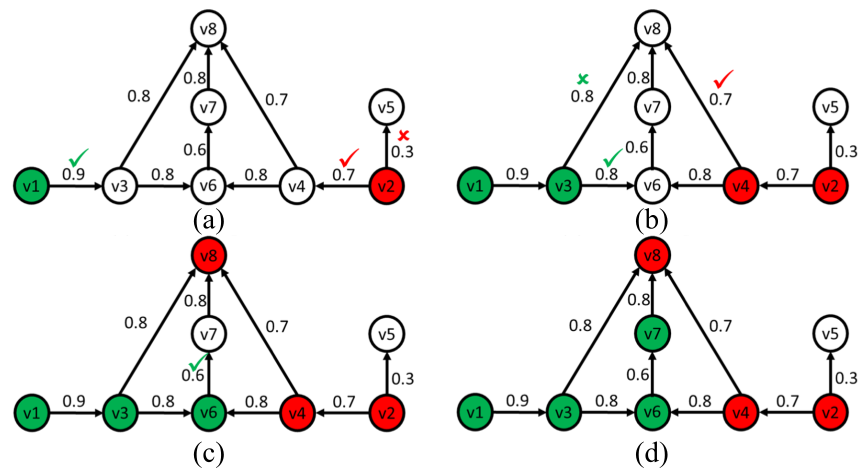 Figure 1: Illustration of the reverse sampling logic used to build modified RR sets.
Battle-Tested Performance
The authors tested IBMM against baselines on datasets like Epinions and p2p-Gnutella.
- Effectiveness: IBMM's Saving Ratio (SR) is virtually indistinguishable from the Greedy algorithm, meaning we lose no accuracy for the speed we gain.
- Efficiency: On the Email-Eu-All dataset, IBMM found the top 50 savior nodes in 3.5 seconds. Traditional greedy methods were so slow they couldn't even finish on the larger datasets in a comparable timeframe.
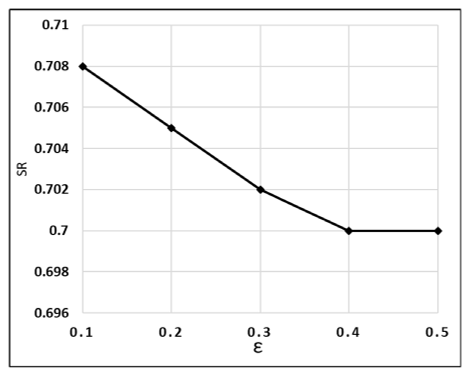 Figure 2: Runtime comparison across different datasets. IBMM scales linearly where others grow exponentially.
Critical Insight: Why This Matters
The true value of this work is the Parameter Estimation phase (Algorithm 2). Most sampling algorithms struggle because they don't know the "Lower Bound" of the objective function. By using a two-hop neighbor heuristic to estimate this bound, IBMM bridges the gap between abstract Martingale theory and practical software implementation.
Conclusion & Future Look
IBMM proves that "Provable Accuracy" does not have to come at the cost of "Practical Speed." As we move toward 2026, where AI-generated misinformation can spread in seconds, algorithms like IBMM will be essential components of social media safety layers. Future improvements might involve integrating location-aware or topic-specific parameters to make the "savior nodes" even more targeted.
Key Terminologies:
- ICM (Independent Cascade Model): A stochastic model for how information spreads.
- SOTA Position: This is currently the most efficient algorithm for IBM that preserves the (1-1/e) guarantee.