
Monitoring the Wild West: Automated Surveillance of CBD Marketing on Twitter
Therapeutic Claims in Cannabidiol (CBD) Marketing Messages on Twitter
This study presents the first systematic surveillance of therapeutic claims in CBD marketing messages on Twitter. By leveraging a hand-labeled dataset of 1,000 tweets and training an SVM-based classifier, the researchers analyzed over 2.2 million tweets to identify unsubstantiated health claims, achieving an 85% precision rate in distinguishing marketing content.
TL;DR
As the CBD market moves toward a $55 billion valuation, the gap between scientific evidence and marketing claims is widening. Researchers from the University of Kentucky have developed an automated pipeline to identify CBD marketing on Twitter and extract therapeutic claims. They found that over 50% of CBD tweets are marketing-driven, with pain and anxiety being the most touted "cures," often in direct violation of FDA guidelines.
Background & Motivation: The Evidence Gap
While the FDA has only approved one CBD product (Epidiolex for seizures), the digital landscape tells a different story. Consumers are bombarded with messages suggesting CBD is a panacea for everything from cancer to insomnia. The problem? Public health surveillance has traditionally relied on lagging indicators like electronic health records. Twitter offers a real-time pulse, but distinguishing between a consumer's genuine experience and a brand's "shilling" is a complex NLP challenge.
Methodology: High-Precision Classification
The researchers didn't just look for keywords; they built a classifier designed to ignore the noise of regular conversation.
- Data Collection: 2.2 million tweets filtered for "cbd", "cbdoil", and "cannabidiol".
- The Labeling Challenge: Initial annotator agreement was weak (Kappa 0.43). Through iterative refinement, they achieved a moderate 0.67 Kappa, highlighting how nuanced "marketing speak" has become.
- Feature Engineering: Beyond unigrams and bigrams, the team included structural features like the presence of a URL or whether "cbd" was part of the account's username.
Architecture & Pipeline
The researchers tested Support Vector Machines (SVM) and Logistic Regression (LR). The SVM emerged as the winner for its ability to handle the high-dimensional feature space (14,799 features).
 Table II: SVM vs. LR performance. SVM’s 85% precision was selected to minimize false positives in claim analysis.
Key Insights: What is being Sold?
The study’s analysis of the classified marketing subset revealed two shocking trends:
1. The Therapeutic Claims Hierarchy
Contrary to the FDA's narrow approval for seizures (which ranked only 8th in mentions), marketers focus heavily on "Lifestyle" ailments. Pain and Anxiety account for nearly 60% of all claims.
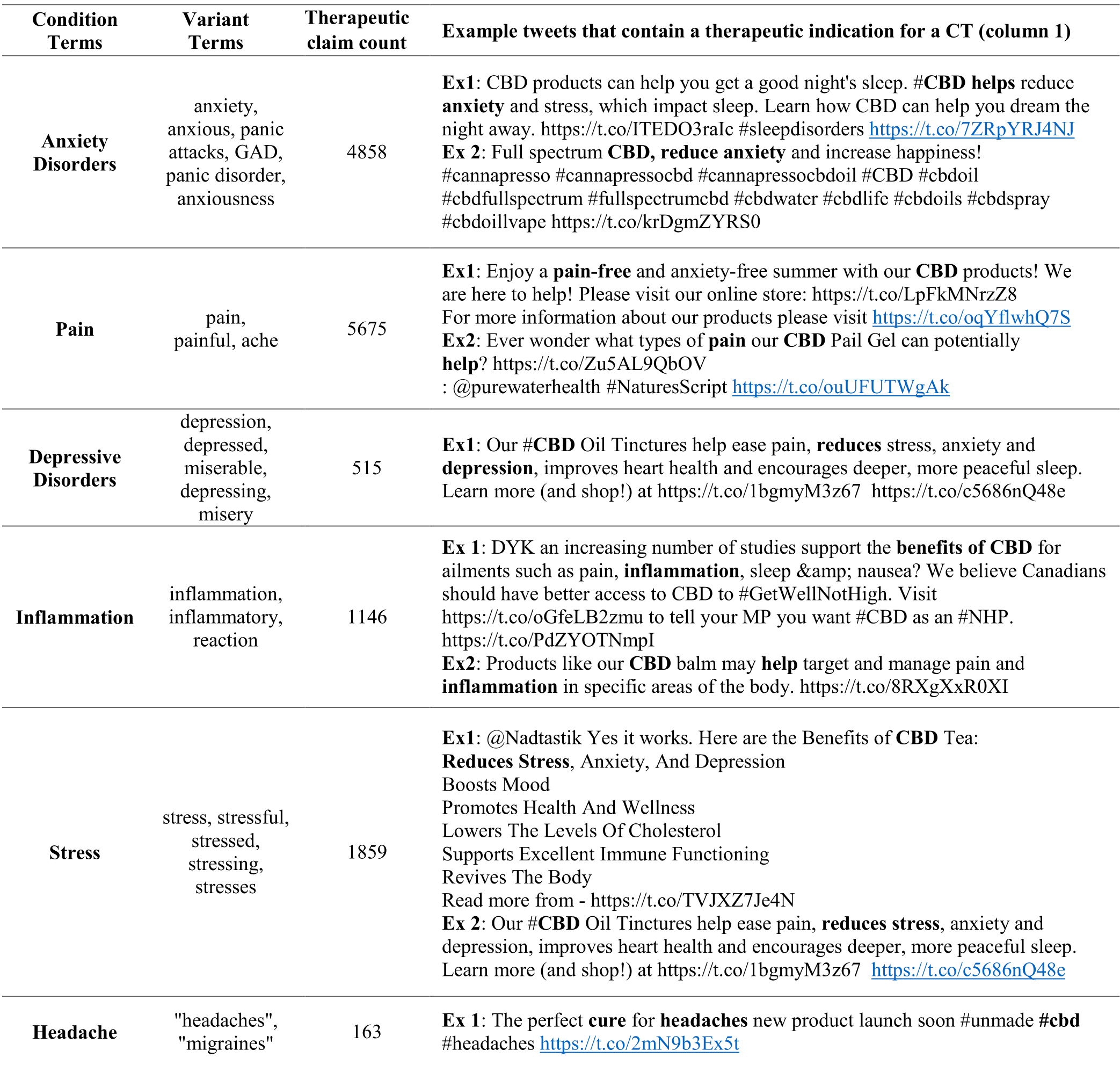 Table IV: Detailed breakdown of condition terms and the blatant nature of marketing "cures" found in the dataset.
2. The Rise of Edibles
While "CBD oil" is the most common search term, edibles dominate actual marketing activity on Twitter. 75% of advertised products were gummies, candies, or beverages. This suggests a pivot toward "convenience" and "lifestyle integration" that may mask the pharmacological nature of the substance.
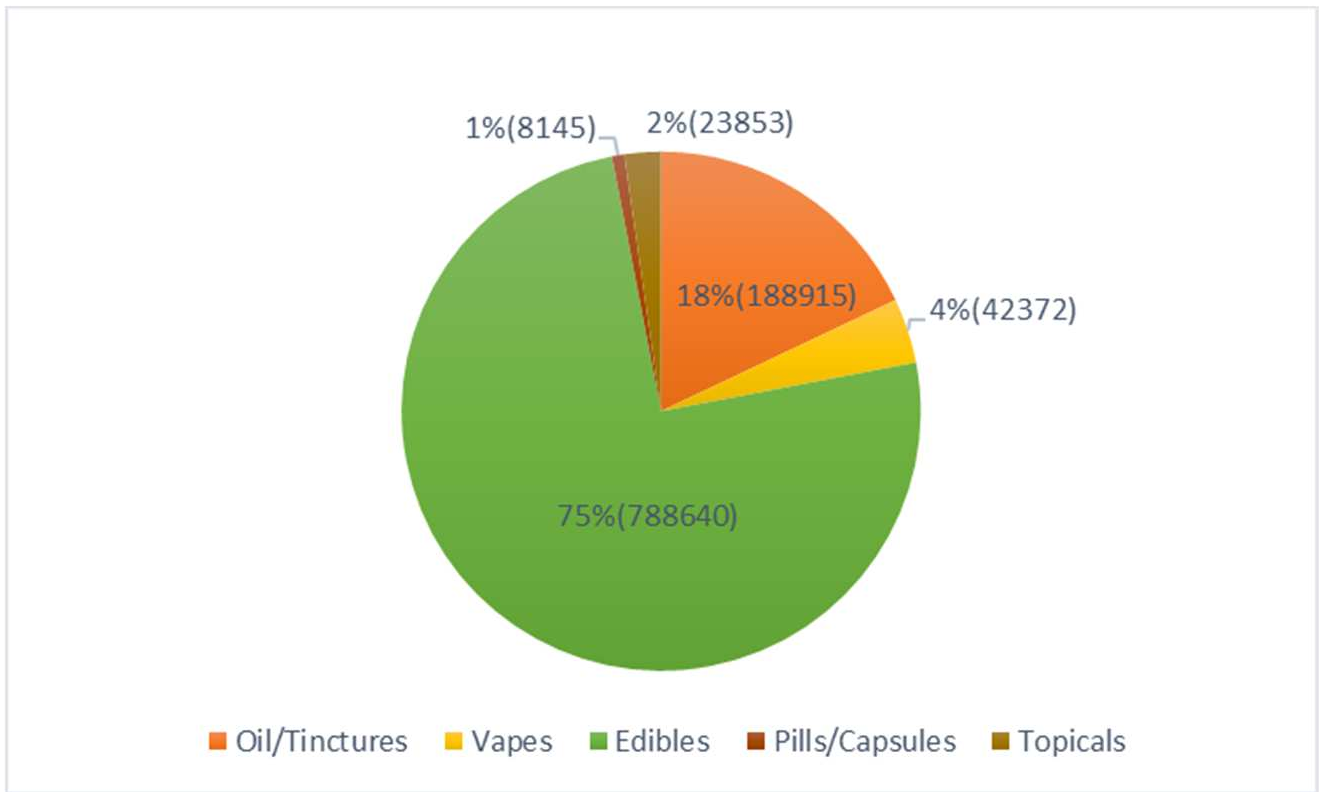 Fig 1: Edibles take a massive share of the marketing pie compared to traditional topicals or vapes.
Critical Analysis & Conclusion
This study serves as a "first-of-its-kind" proof of concept. The 1.93 tweets-per-user ratio in the marketing subset (vs. 1.27 for consumers) suggests that a concentrated group of high-activity accounts is driving the majority of these unsubstantiated health claims—a classic hallmark of "social bots" or professional marketing firms.
Limitations:
- The 85% precision means some consumer tweets are still misidentified as marketing.
- The "72-character window" approach for claim detection, while effective, might miss more sophisticated or long-form marketing narratives.
Takeaway: The FDA and global health regulators can no longer afford to ignore social media. This paper provides the blueprint for an automated "early warning system" to flag companies making dangerous medical claims, moving public health surveillance from reactive to proactive.
Future Work
The next logical step is applying Large Language Models (LLMs) to these datasets to detect more nuanced sentiment and identify the "intent to deceive" more accurately than traditional SVMs can manage.