
IROMEC: Bridging Isolation through Robot-Assisted Play for Autism
Abstract-This article is a methodological paper that describes the therapeutic and educational objectives that were identified during the design process of a robot aimed at robot assisted play. The work described in this paper is part of the IROMEC project (Interactive Robotic Social Mediators as Companions) that recognizes the important role of play in child development and targets children who are prevented from or inhibited in playing. The project investigates the role of an interactive, autonomous robotic toy in therapy and education for children with special needs. This paper specifically addresses the therapeutic and educational objectives related to children with autism. In recent years, robots have already been used to teach basic social interaction skills to children with autism. The added value of the IROMEC robot is that play scenarios have been developed taking children's specific strengths and needs into consideration and covering a wide range of objectives in children's development areas (sensory, communicational and interaction, motor, cognitive and social and emotional). The paper describes children's developmental areas and illustrates how different experiences and interactions with the IROMEC robot are designed to target objectives in these areas
This paper introduces the IROMEC (Interactive Robotic Social Mediators as Companions) project, focusing on a modular, autonomous robotic toy designed for Robot Assisted Play (RAP). It specifically details the methodological framework for therapeutic and educational objectives targeting children with autism across five developmental domains.
TL;DR
The IROMEC project introduces an autonomous, modular robotic toy designed to act as a Social Mediator. By providing a stable, predictable, and adaptive environment, the robot helps children with autism progress through sensory, motor, and social milestones. Rather than replacing therapists, it acts as a "scaffold" to guide children from solitary play toward meaningful human interaction.
Background: The Critical Role of Play
In the developmental hierarchy, play is not merely recreation; it is the primary vehicle for learning. For children with Autism Spectrum Disorder (ASD), the unpredictability of social environments often leads to exclusion. Traditional therapeutic interventions can sometimes be stressful due to the complexity of human social cues. The IROMEC project (Interactive Robotic Social Mediators as Companions) posits that a robot—a consistent, non-judgmental partner—can serve as the perfect entry point for these children into the world of social play.
Problem & Motivation: The "Predictability Gap"
Existing SOTA (State-of-the-Art) robotic interventions often focus on specific tasks, like imitation or eye contact. However, children with autism represent a diverse spectrum with varying sensory sensitivities and cognitive levels. The authors identified two major gaps:
- Versatility: Most robots are "one-trick ponies" that cannot handle multiple disabilities (e.g., combining motor and cognitive impairments).
- Transitioning: There is often a failure to move from "child-robot" dyadic interaction to "child-peer" triadic interaction.
The motivation behind IROMEC was to create a modular hardware and software system that evolves with the child, gradually increasing complexity to prevent stagnation.
Methodology: The Framework of Interaction
The core of IROMEC is its Scenario-Based Design. The authors developed 10 specific "IROMEC Scenarios" (IS) based on the ESAR system, which categorizes play into exercise, symbolic, assembly, and rules-based play.
The Modular Architecture
The robot supports two configurations:
- Horizontal: For high-mobility activities (e.g., "Bring me the ball").
- Vertical: For stationary, screen-based interaction and recharging.
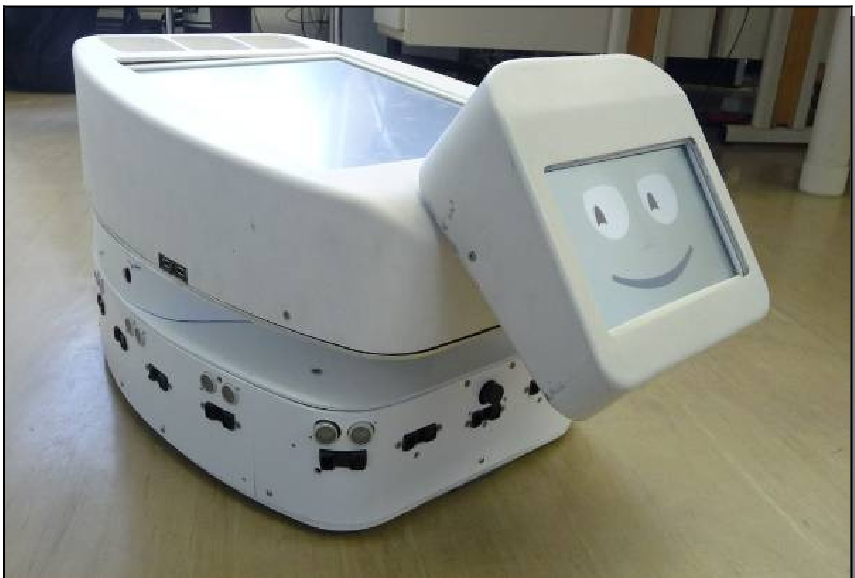 Fig 1: The IROMEC robot in horizontal configuration, emphasizing its mobile platform.
The Five Developmental Domains
The methodology maps every robot action to a therapeutic objective (informed by ICF-CY):
- Sensory: Modulating light and sound to match the child's threshold.
- Communication: Using non-verbal cues or speech-to-movement triggers.
- Cognitive: Fostering cause-and-effect understanding and delayed gratification.
- Motor: Encouraging gross motor movement through chasing/following.
- Social & Emotional: Facilitating turn-taking and "Joint Attention."
Deep Dive: From Dyadic to Triadic
One of the most profound insights of this work is the use of the robot as a Scaffolding Element. The clinician can set up a scenario (like IS02 "Turn Taking") where the robot refuses to move unless two players cooperate. This forces the child to acknowledge the presence of a peer or adult to achieve the "sensory reward," effectively using the robot as a bridge to human connection.
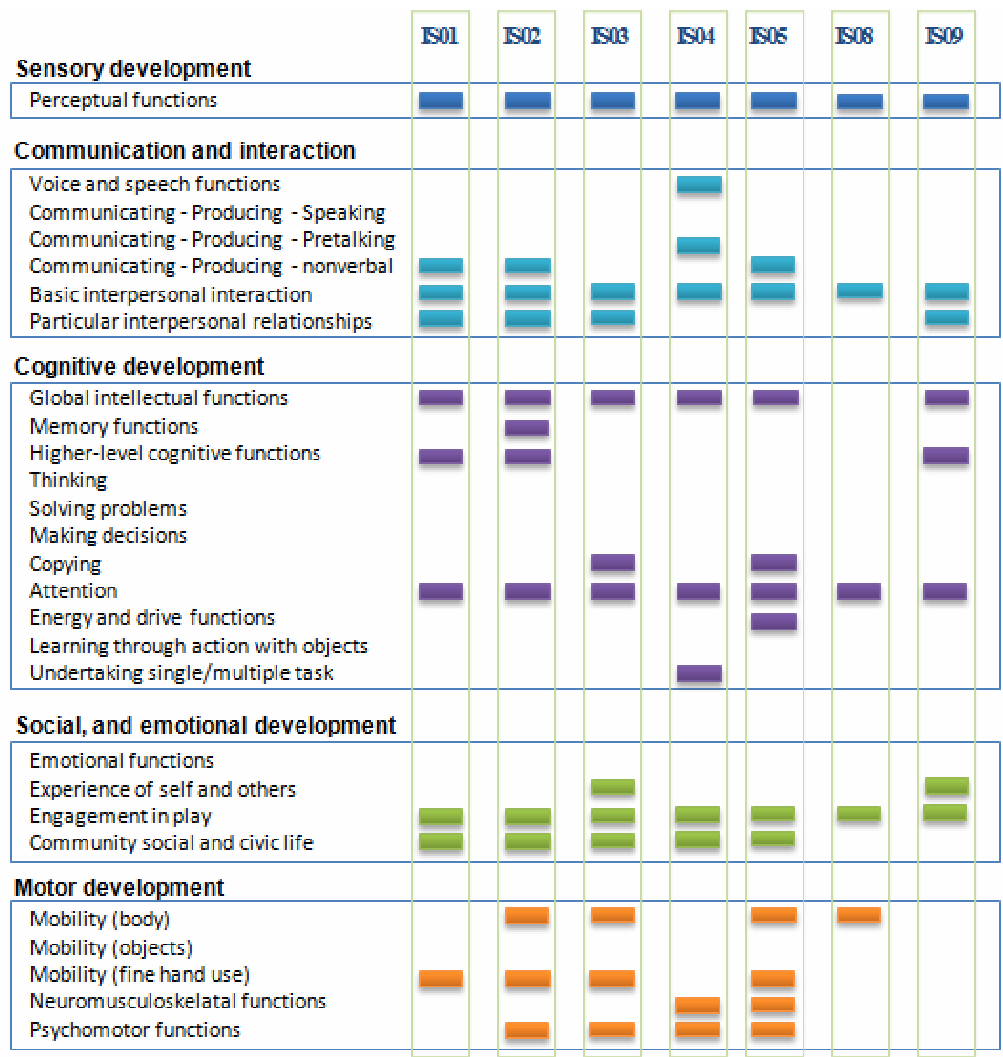 Fig 2: Mapping of Scenarios (IS01-IS09) to specific developmental objectives like Imitation and Joint Attention.
Experiments & Functional Analysis
The paper outlines the functional value of IROMEC’s features. For instance, the robot’s "simple mask" (used to cover the screen) was a direct result of user panel feedback to reduce visual over-stimulation—a common trait in autism.
| Feature | Developmental Area | Benefit |
|---|---|---|
| Autonomous Mobility | Motor / Cognitive | Promotes spatial awareness and cause-effect. |
| Touch Screen/Buttons | Fine Motor / Sensory | Improves hand-eye coordination. |
| Turn-Taking Logic | Social / Emotional | Teaches social rules and cooperative play. |
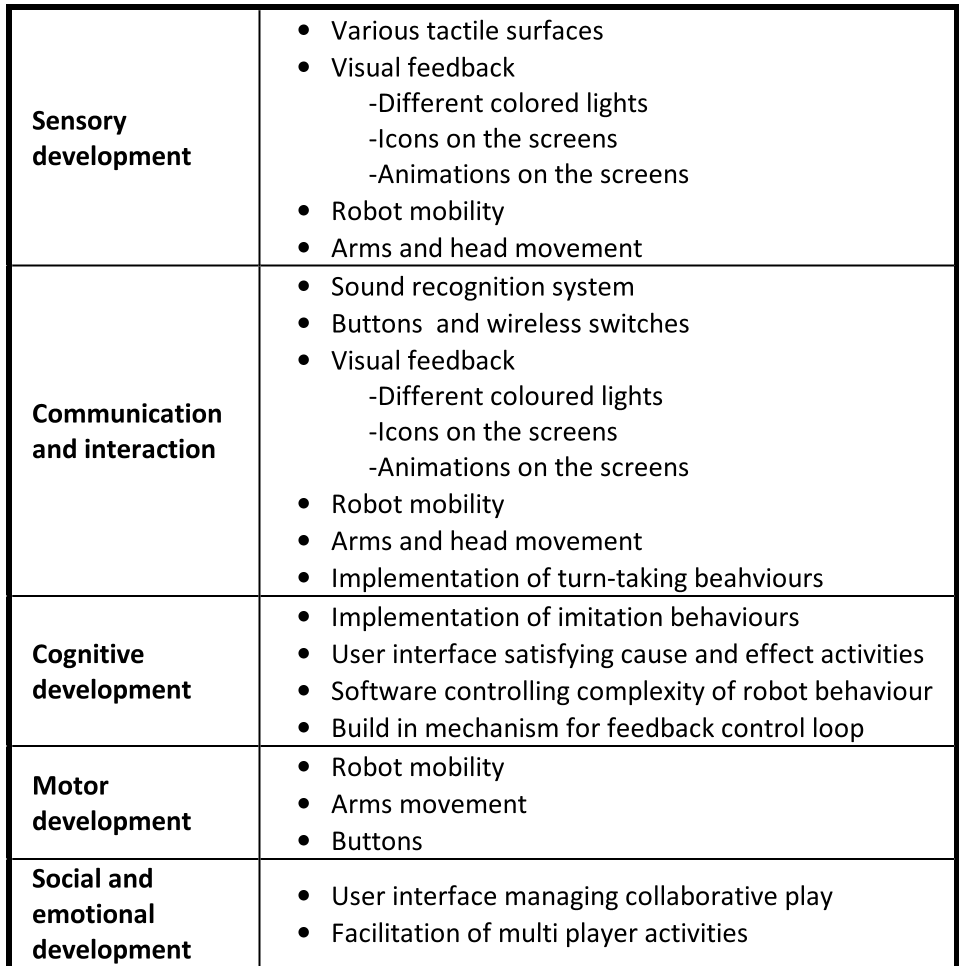 Table 1: Implementation of robot features specifically aligned with developmental needs.
Critical Insight & Conclusion
Takeaway
The IROMEC project's true innovation is its Inclusion Factor. By designing a system that is interesting to both children with special needs and typically developing peers, the robot becomes a shared object of interest that naturally dissolves social barriers.
Limitations & Future Work
While the methodological framework is robust, the paper primarily describes the design and objectives. The real-world efficacy depends on upcoming field trials to quantify how well these skills transfer from robot-play to everyday social life without the robot's presence.
Final Thoughts
IROMEC represents a shift in Assistive Tech: moving away from "fixing a deficit" towards "empowering growth" through the universal right of play. It proves that for a child with autism, a robot isn't a distraction—it's a translator for the social world.