
LocalRec 2019: The Frontier of Geospatial Intel and Precision Marketing
The Third ACM SIGSPATIAL Workshop on Location-based Recommendations, Geosocial Networks and Geoadvertising
This report summarizes LocalRec 2019, the 3rd ACM SIGSPATIAL Workshop focusing on location-based recommendations, geosocial networks, and geoadvertising. Key contributions included novel Spatial Analytics, fairness-aware recommendation systems, and advanced geoadvertising strategies using Augmented Reality (AR) and Uplift Modeling.
TL;DR
LocalRec 2019 served as a pivotal symposium for researchers tackling the "explosion of geo-referenced data." The workshop synthesized advances in Spatial Analytics, Privacy-Preserving Recommendations, and Geoadvertising, moving beyond simple proximity alerts to complex, context-aware "situated" marketing and fair recommendation algorithms.
Problem & Motivation: The Scalability and Ethics of Location
While the ubiquity of smartphones has created a multi-billion dollar geoadvertising industry, existing solutions face a two-fold crisis:
- Technical Bottlenecks: Standard DBMS cannot efficiently handle the high-dimensional, expensive geospatial computations required for real-time recommendations.
- The Privacy Paradox: Precision marketing requires granular user traces (GPS, WiFi, Cellular), which directly conflicts with emerging "Privacy-by-Design" mandates and user ethics.
The workshop's motivation was to bridge these gaps by treating location not just as a coordinate, but as a rich semantic context that involves social ties, historical behavior, and environmental fairness.
Methodology: From Property Graphs to Ant Colonies
The workshop showcased several high-impact methodologies that move the needle in spatial intelligence:
1. Spatial Analytics and Property Graphs
Siva Ravada (Oracle) highlighted the shift from relational databases to Property Graphs. By modeling locations and customers as nodes with rich relationship edges, systems can perform "Augmented Location" tasks—predicting market share and store potential far more efficiently than traditional spatial joins.
2. Intelligent Itinerary Generation
Research into trip planning utilized Ant Colony Optimization (ACO). Unlike static planners, this method integrates social media popularity and historical city relevance to calculate optimal paths, effectively balancing local heritage with modern user interests.
3. Privacy-Preserving Hyper-Local Marketing
A critical session focused on Geo-indistinguishability and obfuscation. One significant study explored how recommendation systems can function using only locally-stored user trajectories, ensuring that the "Stay Area" of a user remains private while still receiving relevant POI suggestions.
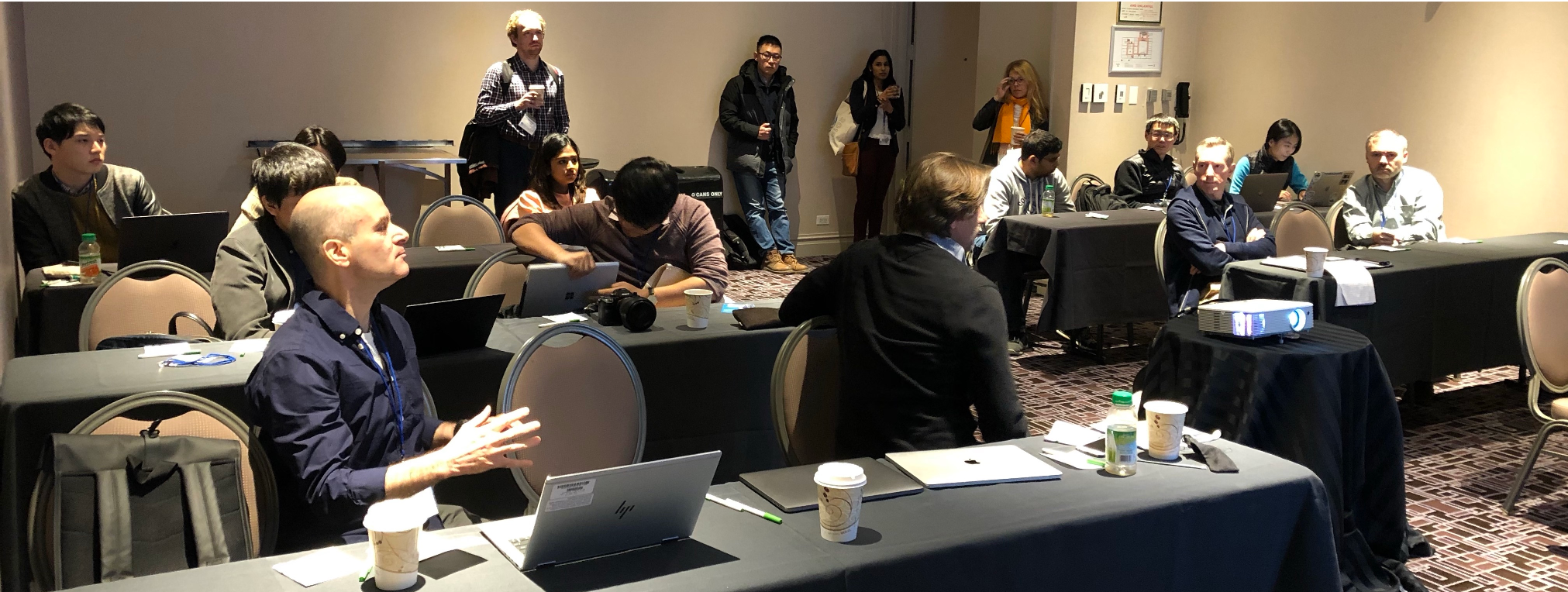 Figure 1: Researchers and practitioners discussing the convergence of GIS and Recommender Systems.
Experiments & Results: Precision and Fairness
The research papers demonstrated that "less is often more" and that fairness is quantifiable:
- POI Classification with Minimal Metadata: One study proved that POIs could be accurately categorized using only names and coordinates, bypassing the need for extensive ratings or price-range data.
- Uplift Modeling: Researchers utilized geo-features to predict which specific user segments would actually change their behavior due to an ad (the "Uplift"), rather than just targeting those already likely to visit a store.
- Quantifying Fairness: For the first time, a framework was presented to measure fairness in location recommendations, ensuring that either the receivers of ads or the recommended venues are not systematically biased against over time.
 Figure 2: Peak attendance during the Spatial Analytics keynote session.
Critical Insight & Future Outlook
LocalRec 2019 made it clear that Location-Based Services (LBS) are entering a "Semantic Era." It’s no longer enough to know where a user is; systems must understand the intent behind the location (e.g., discovery vs. conversion).
Key Takeaways for the Future:
- AR Integration: The introduction of AR applications that align User-Generated Content (UGC) with 3D real-world coordinates marks the next phase of Geosocial Networks.
- Differential Privacy: As regulations tighten, "Local Privacy" (processing data on-device) will become the standard, necessitating more efficient, lightweight spatial algorithms.
- Ethical Geo-Marketing: Fairness and transparency are no longer "side-car" features but core requirements for sustainable marketing ecosystems.
In conclusion, LocalRec 2019 transitioned the field from simple "check-ins" to a sophisticated study of how spatial data can be used responsibly to enhance the human experience in physical spaces.