
Deconstructing the Normative: How Third-Wave HCI Challenges the "Default" Culture in Computer Science
How to Think About Third Wave HCI that Questions the Normative Culture in Computer Science?
This paper explores the normative culture of Computer Science in Brazil through the lens of Third-Wave Human-Computer Interaction (HCI) and Feminist Science, Technology, and Society (STS) studies. It analyzes official curriculum documents from the Brazilian Computer Society and a public university to reveal structural gaps in diversity, intersectionality, and gender representation.
TL;DR
This research critiques the invisible "normative culture" in Computer Science—the idea that technology is neutral and objective. By analyzing Brazilian educational guidelines through Third-Wave HCI and Feminist STS, the authors expose how documents regulating the field often fail to acknowledge gender, race, and class, thereby reinforcing structural barriers for underrepresented groups.
Background: Beyond the Artifact
In the world of Human-Computer Interaction (HCI), we have moved through three waves:
- First Wave: Optimization of human factors and cognitive science.
- Second Wave: Transitioning from "human factors" to "human actors."
- Third Wave: Focusing on situated experiences, values, sustainability, and feminism.
The authors argue that despite the emergence of the Third Wave, the core of Computer Science education in Brazil remains tethered to a "normative culture" that views technology purely as artifacts, ignoring the social and political power structures embedded within them.
The Problem: The Myth of Neutrality
The paper highlights a critical blind spot: the "Normative Culture" of CS. According to the research, the field often suffers from:
- Technological Determinism: The belief that technology evolves independently of society.
- Scientific Objectivity: A "view from nowhere" that ignores the specific identities (and biases) of creators.
- Structural Barriers: The monopoly of male-centric values established post-WWII, which continues to dictate who "belongs" in tech.
Methodology: The Three Lenses
To evaluate how Brazilian CS education handles diversity, the authors analyzed eight documents from the Brazilian Computer Society and two specific degree programs at UTFPR using three theoretical pillars:
- Multiculturalism: Moving toward inclusion by honoring group experiences.
- Intersectionality: Engaging with multiple identities (gender, race, ethnicity, class) and forms of oppression.
- Reflexivity: Problematizing scientific objectivity and considering the "intentions" behind document creation.
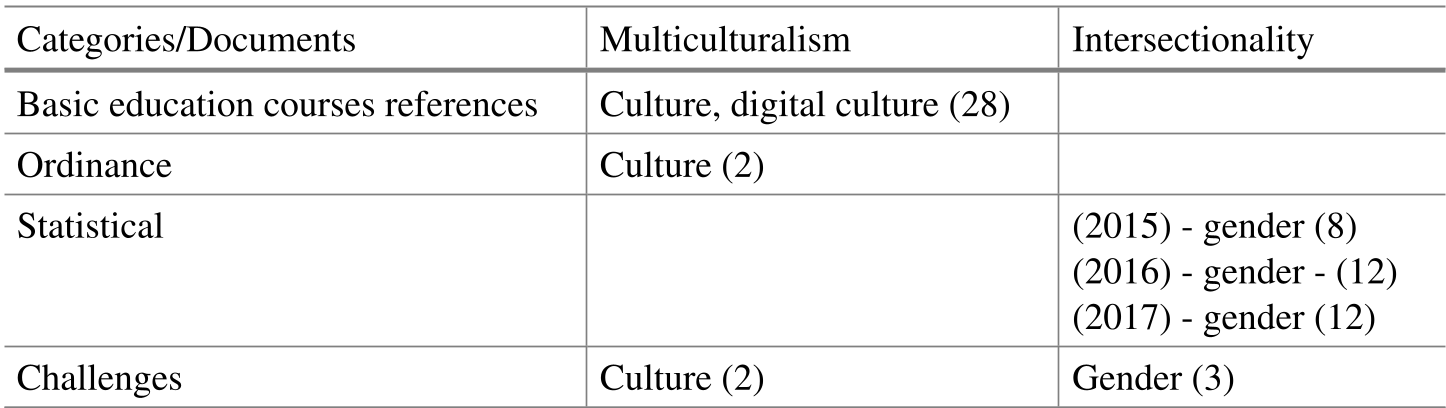
Key Results: A Tale of Two Programs
The comparative analysis of the school's Pedagogical Course Projects (PPC) yielded striking results:
- Computer Engineering (CE): Strictly followed national guidelines, focusing on "Digital Culture" but completely ignoring intersectionality and gender disparities. It remains a rigid, "normative" environment.
- Information Systems (IS): Showed signs of Reflexivity. It included specific mentions of race, social class, and gender. The authors attribute this to "curriculum flexibility" born from student criticism and a more humanistic approach to technology.

The quantitative data shows that while the term "Culture" is used frequently (28-33 times), it is almost always used as an ethical abstraction rather than a call for social diversity. In the Brazilian Computer Society's statistics, "gender" is tracked as a binary data point (male/female) without addressing the reasons for the disparity or non-binary identities.
Critical Insight: Why This Matters
The fundamental takeaway is that documents are not neutral. They are artifacts created by people with specific intentions. If intersectionality and multiculturalism are absent from the regulating documents, they are likely absent from the classroom, the lab, and the code.
The authors suggest that to break the normative cycle, we must:
- Challenge binary data tracking.
- Implement intersectional public policies starting from basic education.
- Valuing "reflexivity" — the capacity of those within the system to question and change its guidelines.
Conclusion
This paper serves as a wake-up call for technical educators and designers. Technology is a "livelihood," and its design cannot be separated from the people who inhabit it. By ignoring intersectionality in our foundational documents, we don't just omit words—we omit people.
Reference: Castelini, P., & Amaral, M. A. (2026). How to Think About Third Wave HCI that Questions the Normative Culture in Computer Science? (Paper analysis).