
Threat or Opportunity: Decoding the AI-Labor Paradigm in Emerging Cities
Threat or Opportunity – Analysis of the Impact of Artificial Intelligence on Future Employment
This paper investigates the multifaceted impact of Artificial Intelligence (AI) on the labor market using a mixed-methods approach (questionnaires and interviews) focused on China's second and third-tier cities. By applying multiple linear regression analysis, the authors quantify how AI literacy correlates with professional acceptance and perceived industrial disruption, specifically highlighting the vulnerability of traditional manufacturing and service sectors.
TL;DR
Is Artificial Intelligence a job killer or a productivity catalyst? This study analyzes the pulse of practitioners in China’s second and third-tier cities, revealing that while traditional manufacturing faces the highest threat of displacement, the majority of the workforce views AI as an opportunity—provided they can master software development and intelligent control skills.
Background Positioning
Unlike theoretical papers that speculate on global trends, this work provides a localized, data-driven perspective on "Artificial Intelligence +" as a new economic format. It positions itself as a socio-technical bridge, connecting economic anxiety with actionable strategies for stakeholders.
Problem & Motivation: The 77% Anxiety
The motivation stems from a stark contrast: Oxford University researchers suggest 77% of Chinese jobs could be replaced by AI, yet China’s AI market is growing at a compound rate of over 40%. The authors seek to solve the "perception gap"—understanding why some practitioners fear obsolescence while others see liberation. They argue that the primary hurdle isn't just technology, but the speed of adaptation across different educational and industrial demographics.
Methodology: Multiple Linear Regression Analysis
The researchers utilized two surgical regression models to dissect the impact.
Model 1: The Industrial Impact
This model attempts to predict which sectors will feel the most "heat" based on the general understanding of AI (LJCD) and demographic variables.
Model 2: The Skill Evolution
This model shifts the focus to the individual, analyzing what skills (jn) become essential as AI literacy increases.
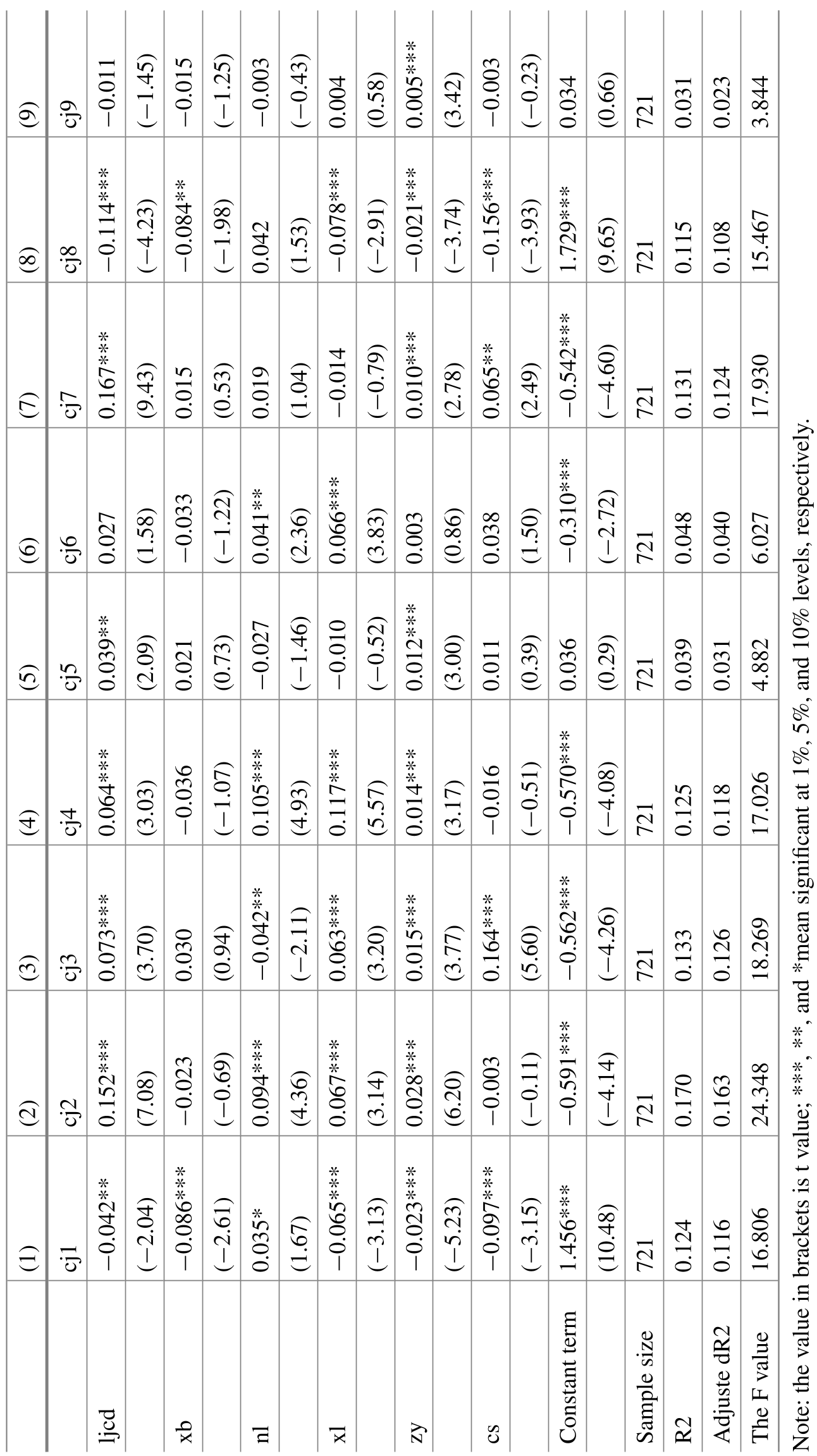 Table 1: Regression results showing the significant impact on traditional manufacturing (cj2) and finance (cj7).
Key Insights & Results
1. The Vulnerability Map
The study confirms a high significance level () for traditional manufacturing. Workers in these sectors are most likely to perceive AI as a direct competitor. Interestingly, white-collar jobs with high regularity (administrative and finance) also showed high sensitivity to AI disruption.
2. The Education Optimism Bias
There is a "significance difference" between educational backgrounds. Respondents with a bachelor's degree or higher (70.2%) were significantly more optimistic about seizing AI-related opportunities compared to those with lower educational attainment (49.7%).
3. Required Skillsets
The "must-have" skills for the future are no longer just domain-specific. As shown in Table 2, software development () and intelligent control are the most critical expertise areas for new graduates to survive the shift.
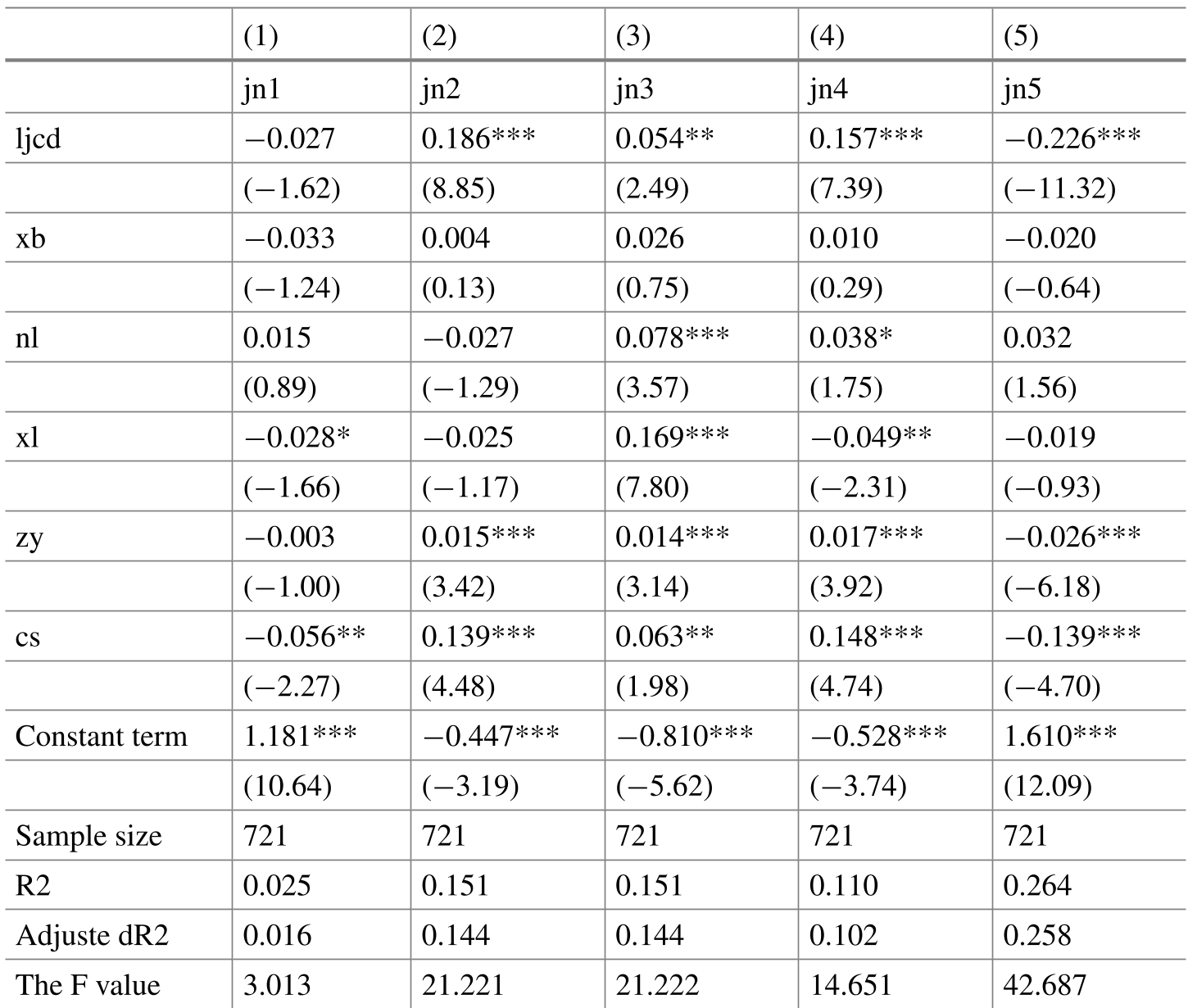 Table 2: Multiple linear regression on the skills practitioners believe are necessary to master.
Critical Analysis & Conclusion
The Takeaway
The paper concludes that AI is not a static threat but a dynamic shift. The "Substitution Effect" is most dangerous in sectors characterized by repetitive, manual, or highly structured cognitive tasks. However, the "Opportunity" lies in the high-end employment roles managing these systems.
Strategic Recommendations
- Government: Develop supportive systems for reemployment and limit the speed of "polarization" through policy.
- Enterprises: Reposition human resource tasks to emphasize "innovation consciousness" that AI lacks.
- Universities: Move beyond theoretical knowledge to "AI + Education" frameworks that foster ethical mastery and technical literacy.
- Individuals: Transition into a "Lifelong Learning" mindset, focusing on breaking conventional rules—something algorithms struggle to do.
Limitations
While the focus on Wuhu City provides a great look at "third-tier" dynamics, the study's reliance on self-reported questionnaire data may include "social desirability bias," where respondents claim to be more optimistic or tech-prepared than they truly are. Future work should look at longitudinal employment data as these AI systems are actually deployed.