
The Social Trap: Navigating Privacy Risks and Cyber-Threats in Online Social Networks
Threats, crimes and issues of privacy of users’ information shared on online social networks
This paper provides a comprehensive taxonomic analysis of security threats and privacy vulnerabilities within Online Social Networks (OSNs), reviewing methods like Fuzzy-based scoring and Sen2Vec for risk mitigation. It classifies cybercrimes into classic and modern categories while proposing a multi-layered defense strategy involving user education, technical tools, and governmental policy.
TL;DR
With over 3.6 billion active users, Online Social Networks (OSNs) have become a primary target for cybercriminals. This paper dissects the anatomy of OSN threats—ranging from SQL injections to sophisticated "Inference Attacks"—and evaluates emerging AI-driven solutions like Fuzzy Privacy Scoring and Sen2Vec while providing a roadmap for both users and governments to bolster digital defenses.
Contextualizing the OSN Security Landscape
Social media is no longer just a communication tool; it is a digital extension of our identity. However, this convenience comes at a steep price. The paper identifies a critical "Privacy Paradox": while users expressed concern about data security, a large percentage fail to utilize the very privacy settings provided by platforms like Facebook and Twitter.
The Anatomy of Modern Threats
The research categorizes threats into two distinct tiers:
- Classic Threats: These include Malware (Viruses, Trojans) and Phishing, which rely on technical vulnerabilities or basic deception.
- Modern/Identity Threats: These are more insidious, leveraging user-shared data to perform:
- Inference Attacks: Using Public attributes (like education or likes) to predict sensitive, hidden information (like political leanings or home addresses) using techniques like Principal Component Analysis (PCA).
- Cyber-Casing: Utilizing Geotagging and multimedia content to facilitate physical crimes like burglary.
- De-Anonymization: Re-identifying anonymous users by correlating cross-platform data.
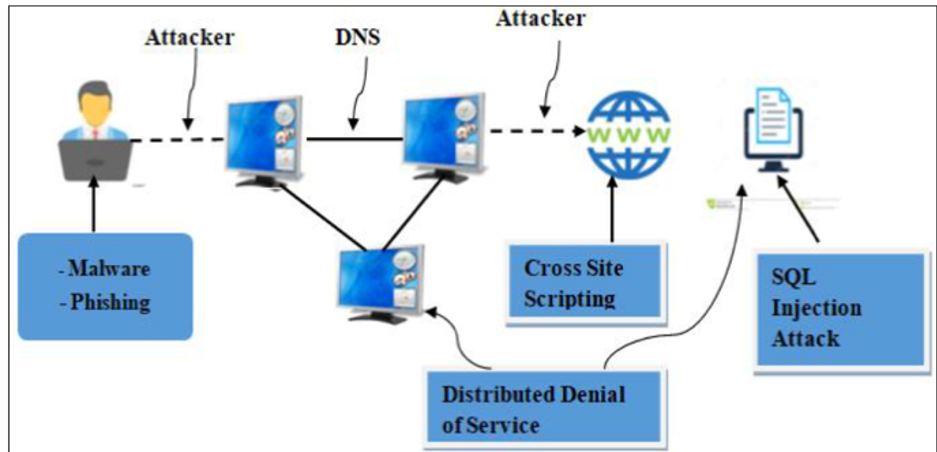 Figure 1: Taxonomy of common threats targeting OSN users.
Methodology: Can AI Save Our Privacy?
The paper reviews two standout technical approaches to automated protection:
1. Automated Fuzzy-Based Privacy Scoring
To combat the issue of users not knowing the risk level of their posts, researchers proposed an Automated Fuzzy Model.
- Phase 1: Information retrieval and pre-processing of unstructured data (text, posts).
- Phase 2: Feature extraction via Machine Learning to determine which elements (sentiment, keywords) affect privacy.
- Phase 3: A Fuzzy logic system calculates a final "Privacy Score," warning users before they hit "Post."
 Figure 2: The workflow of the proposed privacy scoring method.
2. Sen2Vec for Spam Detection
Moving beyond simple keyword filtering, the Sen2Vec approach uses deep learning to transform entire sentences into representative vectors. This allows the system to detect malicious intent even if the attacker changes specific words, by analyzing the "Semantic Similarity" of the attack campaign.
Critical Results: The Cost of Inaction
The financial impact of these vulnerabilities is staggering. Data from the IC3 (Internet Crime Complaint Center) shows a sharp incline in monetary damage, reaching over $3.5 Billion annually. This emphasizes that OSN security is no longer just a "privacy" issue—it is a significant economic risk.
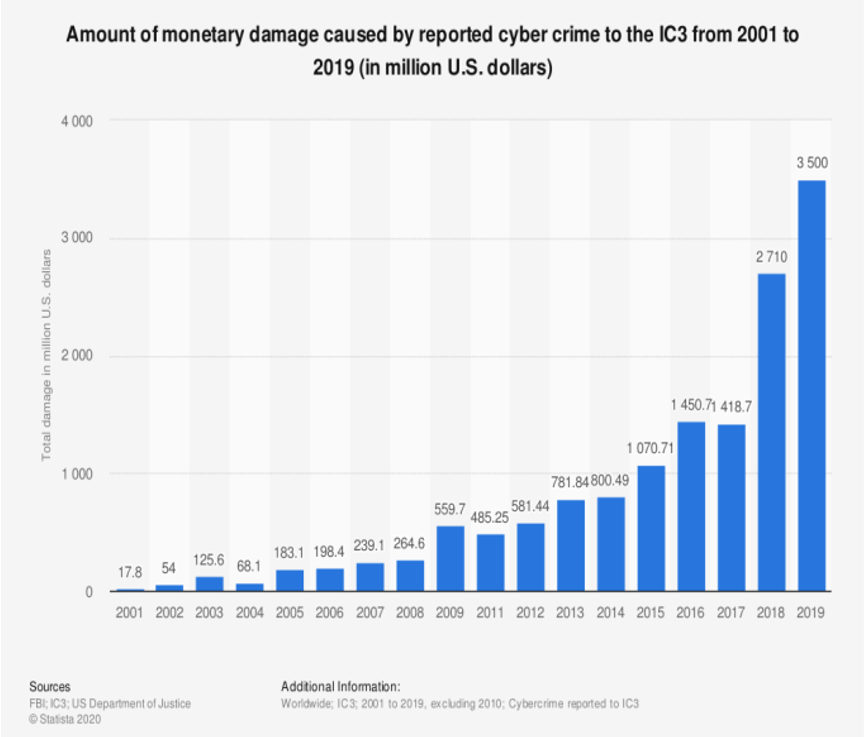 Figure 3: Monetary damage reported to IC3 (2001-2019) showing exponential growth.
Strategic Recommendations
The authors argue that technical solutions (like Firewalls and Anti-virus) are only half the battle. They propose a dual-track strategy:
- For Users: "Digital Hygiene" is key. Turning off GPS for "Cyber-Casing" prevention, using the "Two-Person Rule" for property access, and leveraging browser add-ons like NoScript to prevent Cross-Site Scripting (XSS).
- For Governments: Cyber-literacy must be integrated into school curricula, and strict legal penalties for "Electronic Crimes" must be established to create a deterrent.
Conclusion & Insights
This paper serves as a sobering reminder that on social media, you are the product if you aren't careful with your data. While AI-based scoring models provide a promising technical "safety net," the ultimate defense remains user awareness. The transition from "shared-by-default" to "private-by-design" is the next necessary evolution for the social internet.
Limitations: The reviewed models predominantly focus on English-language sentiment; future research must adapt these fuzzy logic models to multilingual contexts and increasingly complex multimedia spoofs (Deepfakes).