
3T-IEC: Bridging the Gap Between IoT Streams and Real-Time Social Event Recommendations
Three-tier IoT-edge-cloud (3T-IEC) architectural paradigm for real-time event recommendation in event-based social networks
This paper introduces 3T-IEC, a novel Three-tier IoT-Edge-Cloud architectural paradigm for real-time event recommendation in Event-Based Social Networks (EBSN). By integrating IoT data (location, weather, traffic) and multi-criteria decision making, the system achieves state-of-the-art performance, outperforming baselines like CAER and SoCaST* by 335% and 16% in recommendation precision, respectively.
TL;DR
Event-Based Social Networks (EBSNs) like Meetup present a unique challenge: events are temporary, location-specific, and highly sensitive to external factors like weather. The 3T-IEC (Three-tier IoT-Edge-Cloud) paradigm addresses these challenges by offloading contextual data processing to the edge and using a sophisticated multi-criteria ranking system. It doesn't just ask if you like an event; it calculates if you can actually get there on time given current traffic and weather.
Why Traditional Recommendation Fails EBSNs
Standard Collaborative Filtering (CF) and Content-Based Filtering (CBF) work great for movies or books because those items don't "expire." However, an event is a "one-time participation" item. The authors identify several critical pain points:
- Ephemeral Nature: Recommending an event that finished 5 minutes ago is useless.
- Cold-Start Sensitivity: New users have no history, and events have no long-term rating history.
- Physical Constraints: Unlike a Kindle book, a person must physically move through traffic and weather to consume the "item."
The Architecture: Intelligence at the Edge
The core innovation is the three-tier structure that shifts the heavy lifting away from a centralized cloud.
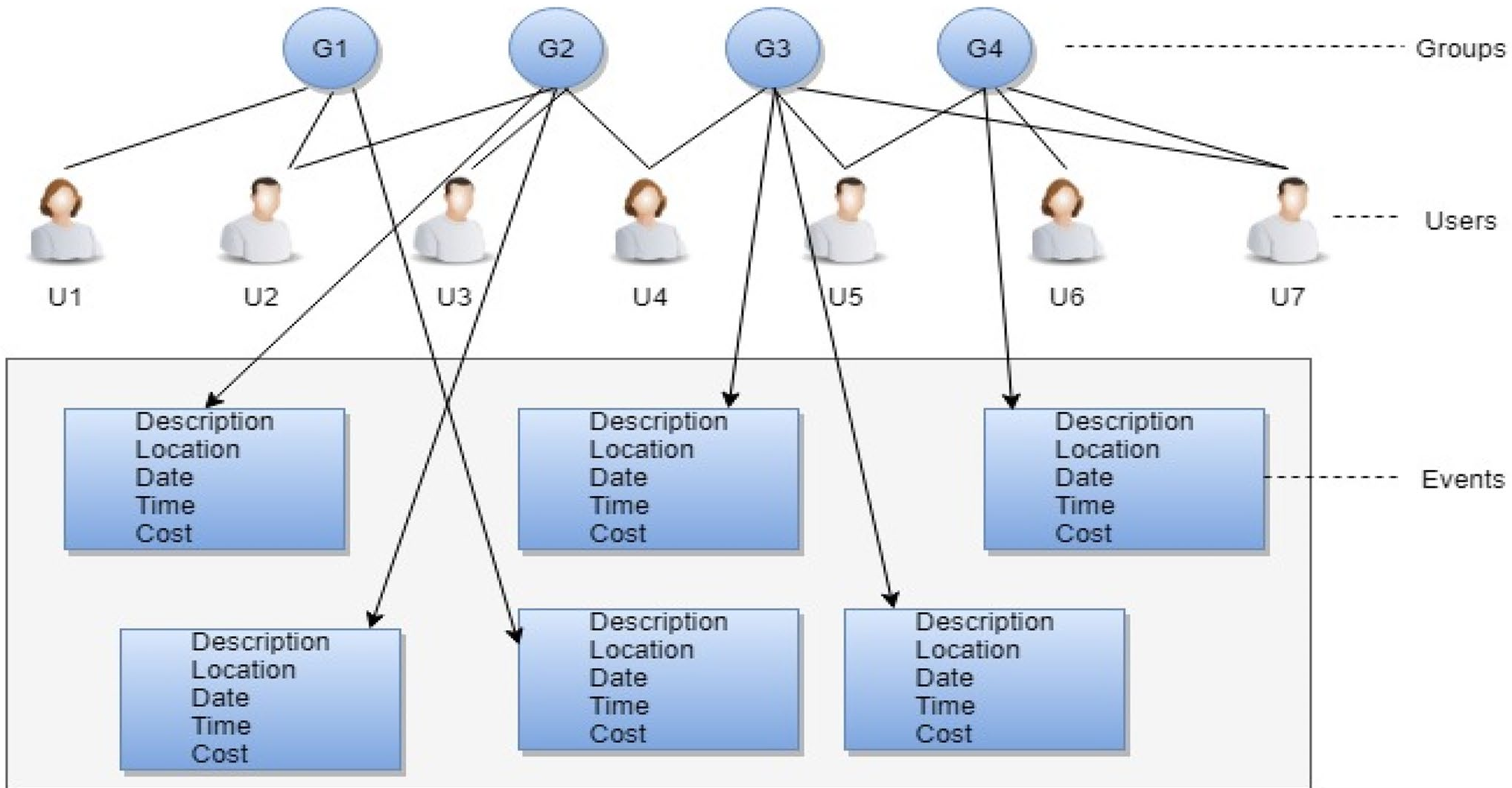
- User Layer: Mobile interface (SpotEvent) collecting RSVPs and preferences.
- Edge Computing Layer: Local devices perform data cleaning and reduction. This layer handles the high-frequency IoT streams (GPS, sensors), calculating if the user is even within a feasible distance before sending data to the cloud. This reduces cloud traffic and slashes latency.
- Cloud Layer: The "Brain." It houses the recommendation generator which handles Influencer Discovery, Pre-filtering, and Preference Modeling.
Methodology: Decision Making Under Influence
The system ranks events using Multi-Criteria Decision Making (MCDM). Instead of a simple score, it evaluates each event based on:
- Group Influence: How often you attend events from this specific organizer/group.
- Category Influence: Your affinity for "Tech" vs "Arthouse" events.
- Economic Influence: A unique factor measuring the "closeness" of the participation fee to your historical spending habits.
What makes 3T-IEC stand out is the Dominance Intensity Measure. It calculates how much event A "dominates" event B across all criteria, adjusted by personalized weights learned from your history. If you are a price-sensitive student, the "Economic" weight will be higher than for a corporate executive.
Results: Efficiency Meets Accuracy
The authors tested 3T-IEC against major baselines including Vector Space Models (VSM) and Skyline queries.
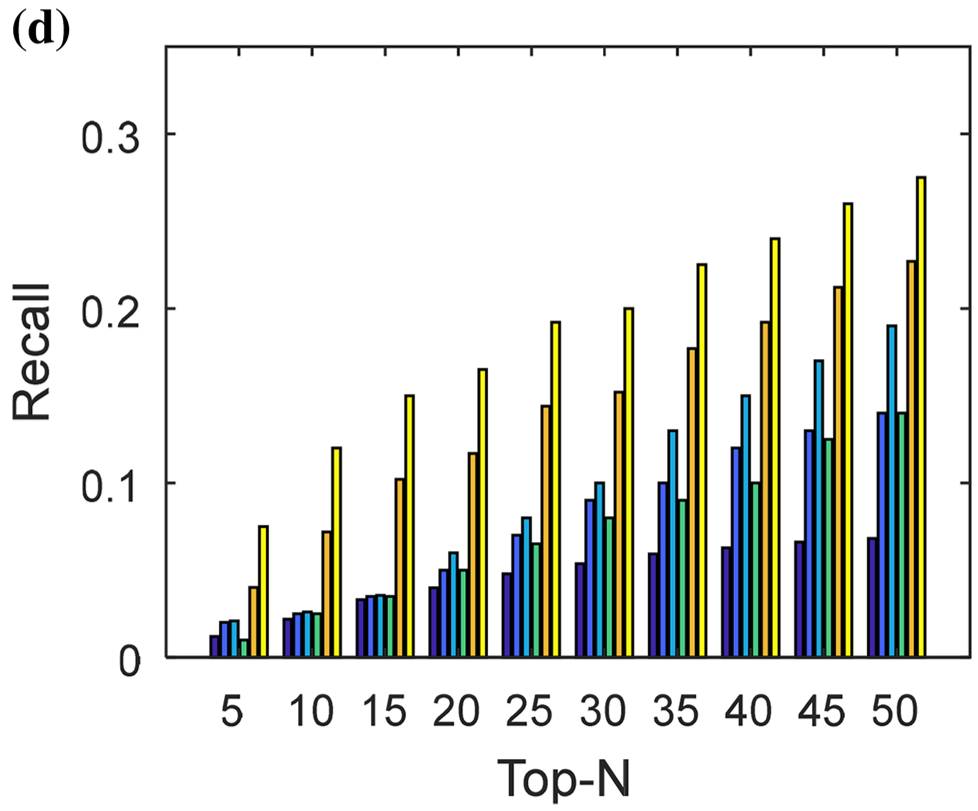
- Precision: 3T-IEC showed massive gains (up to 335% over CAER).
- Cold-Start: By utilizing "Top-M Influencers" (friends with high tie-strength), the system successfully predicted preferences for new users with significantly higher accuracy than standard CF.
- System Performance: By using the edge layer, the system maintained low latency even as the user-defined search distance increased.
Critical Analysis & Future Outlook
While 3T-IEC is a robust leap forward, it currently relies on a relatively narrow temperature productivity model (13°C to 33°C). Future iterations could incorporate more granular IoT data like wheelchair accessibility or indoor/outdoor parking availability.
The transition from "What do you like?" to "What can you achieve right now?" marks a shift towards Prescriptive Recommendation—where the system understands the physical world as well as it understands the user's digital profile.
Conclusion
The 3T-IEC paradigm proves that for real-time social applications, the Cloud cannot act alone. By empowering the Edge with IoT awareness and using MCDM for nuanced ranking, the researchers have created a blueprint for the next generation of "Social-Physical" systems.