
Beyond Social Pressure: The Role of Self-Confidence in Collective Action
Analysis of threshold models for collective actions in social networks
The paper investigates the asymptotic behaviors of non-progressive threshold models during collective actions in social networks. It introduces a novel "self-confidence" parameter and evaluates two decision mechanisms across complete, star, and ring graph topologies, revealing how individual weights on personal opinions influence community-wide action spread.
TL;DR
Why do some social movements take off like wildfire while others fizzle out instantly? This paper explores a sophisticated threshold model that adds a crucial human element: Self-Confidence (). By analyzing how agents weigh their own beliefs against their neighbors', the researchers uncover a spectrum of asymptotic behaviors—from total participation to eternal indecision—across various network structures like complete, star, and ring graphs.
Background & Positioning
Threshold models, rooted in the work of Mark Granovetter, have long been the "standard model" for understanding riots, strikes, and innovation diffusion. However, most models treat agents as simple accumulators of social pressure. This paper, appearing in the lineage of system-theoretic social analysis, introduces a dynamic threshold update rule that accounts for an agent's internal "inertia"—their relative confidence in their own opinion versus the community consensus.
Problem & Motivation: The Weight of One's Own Voice
Prior work often assumed that an agent's decision is a simple function of the percentage of active neighbors. But humans are rarely that simple. A "radical" agent (one with a threshold of zero) might try to spark a revolution, but if the "ordinary" agents are highly self-confident, the social pressure from that one radical—or even a few—might never overcome the agent's internal threshold. The authors set out to determine how this internal weighting () changes the "tipping point" of a network.
Methodology: Two Degrees of Freedom
The model operates on two primary equations:
- Threshold Update: . This represents how agents' internal barriers to action change as they talk to their neighbors.
- Activity Decision: .
The authors introduce two distinct decision settings:
- Setting (a): Agents apply their self-confidence weight to their own previous action when calculating social pressure.
- Setting (b): Agents simply count the fraction of active neighbors (the classic "counting" approach).
Architecture of Influence
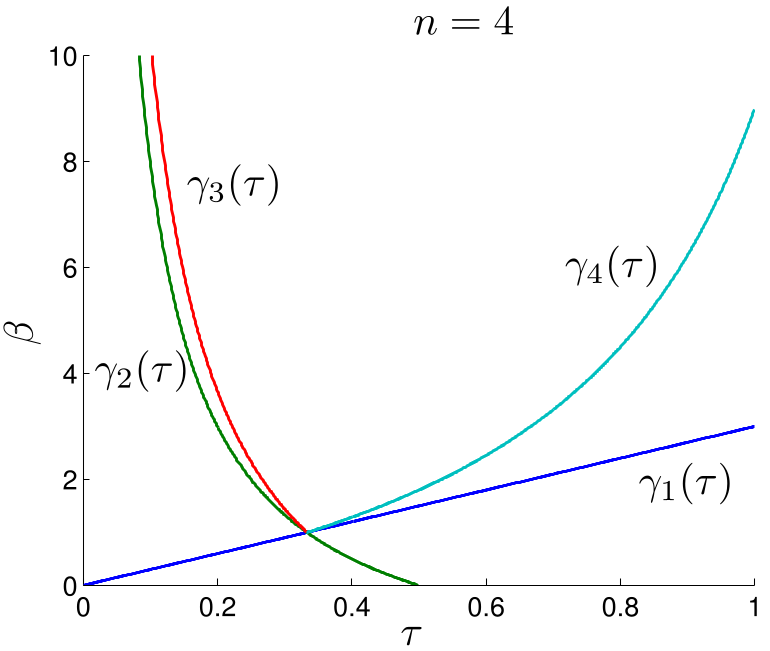 Fig 1: Mathematical boundaries () in the plane for a complete graph with . These curves define the "phase transitions" between total action and total inaction.
Experiments & Results: Stability, Waves, and Oscillations
The study moves from the analytical certainty of the Complete Graph to the complex simulations of Star and Ring topologies.
The Star Graph: The Power of the Hub
In a star graph, if a radical is at the center, one might expect an easy cascade. However, the simulation shows that as increases, even a central radical can be ignored if the leaves of the star are confident enough.
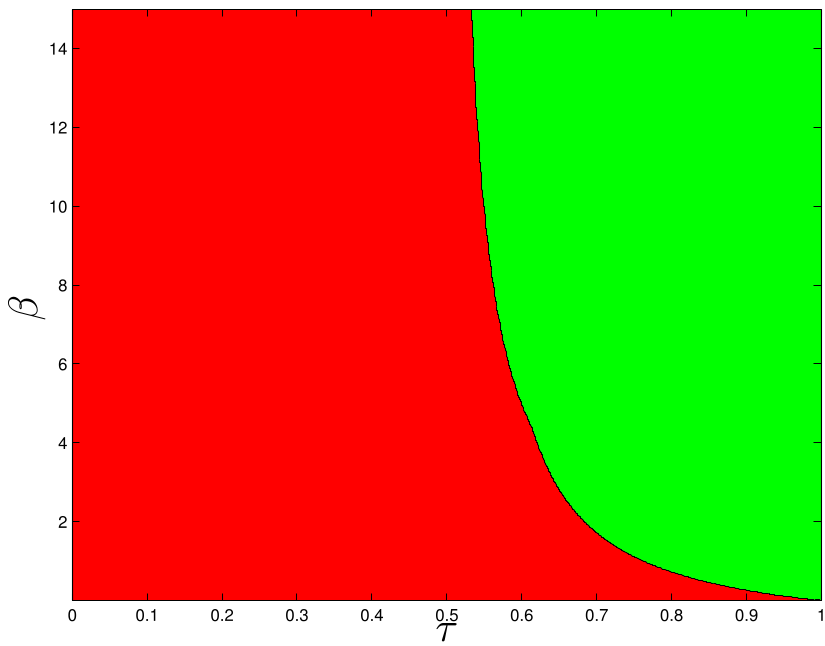 Fig 2: Asymptotic behaviors in a Star Graph (). Cyan represents "Frozen" states where the center radical fails to move the masses.
The Ring Graph: Localized Feuds
The ring graph introduces a fascinating "Yellow Region"—localized clusters of activity. Unlike the complete graph where everyone eventually agrees, ring graphs allow for "stable coexistence" where some neighborhoods are active while others are not.
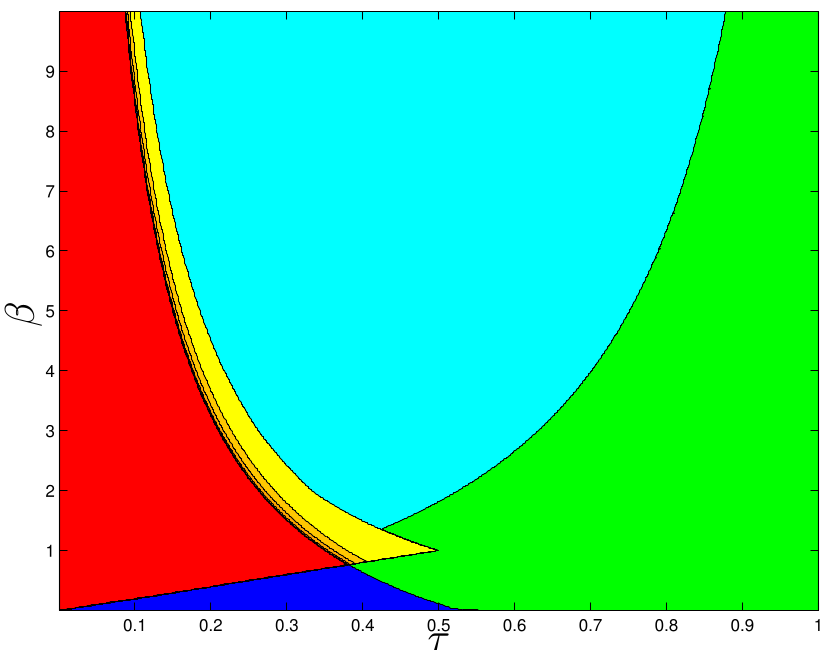 Fig 3: The yellow regions indicate states where only a subset of the ring becomes active ( neighbors from the radical), showcasing the "damping" effect of distance and confidence.
Critical Insight & Conclusion
The most striking takeaway is the persistence of the initial state. In Setting (a), there is a significant region of the parameter space where the network simply "freezes"—the radical remains radical, and the ordinary remain ordinary. This suggests that when agents value their own current state highly, the network loses its ability to reach a consensus, a phenomenon often reflected in polarized modern social media.
Limitations: The current model assumes a time-invariant graph and uniform for all agents. Real-world networks frequently see "opinion leaders" with much higher than their followers, and network edges fluctuate.
Future Outlook: Integrating these results with adaptive weight schemes (where changes based on past success) could provide a more realistic model for the "radicalization" or "cooling" of communities over time.