
TickTalkTurk: Transforming Crowdsourcing from Static Forms to Interactive Dialogues
TickTalkTurk: Conversational Crowdsourcing Made Easy
TickTalkTurk is an open-source tool designed to deploy microtask crowdsourcing through a customizable, web-based conversational interface. By replacing traditional static GUIs with a chatbot-led workflow, it achieves significantly higher worker engagement and provides a framework for analyzing conversational styles' impact on performance.
TL;DR
TickTalkTurk is a revolutionary tool that replaces boring, static web forms in crowdsourcing with interactive Conversational Interfaces. By turning microtasks (like image labeling or sentiment analysis) into a chat-like experience, it boosts worker engagement, increases retention, and provides deeper insights into worker performance through the lens of conversational styles.
Strategic Positioning: This work bridges the gap between Human-Computer Interaction (HCI) and traditional crowdsourcing, moving the industry toward a more "human-centric" data labeling paradigm.
Problem & Motivation: The Boredom of the Form
For years, the backbone of AI—the crowd worker—has interacted with platforms like Amazon Mechanical Turk through rigid, static web forms. This leads to several pain points:
- Low Engagement: Linear forms are monotonous, leading to "worker burnout" and high drop-out rates.
- Instruction Fatigue: Technical instructions are often ignored when presented as a wall of text.
- Limited Feedback: Requesters have little insight into how a worker arrives at an answer, only receiving the final output.
The authors hypothesized that a Conversational Agent could solve these issues by simulating a natural dialogue, making the work feel less like a chore and more like a collaboration.
Methodology: The Conversational Logic
TickTalkTurk isn't just a chatbot; it is a structured workflow built on standard web technologies (HTML/JS), ensuring it works out-of-the-box on existing platforms without requiring external apps like WhatsApp or Telegram.
1. The Four-Step Workflow
The interaction follows a logical progression designed to mimic a supervisor-worker relationship:
- Greetings & Instructions: Adaptive onboarding through dialogue.
- Q&A: The core microtasking phase.
- The "Edit" Affordance: A crucial feature allowing workers to type "edit answer" to correct previous mistakes, mimicking the flexibility of a GUI.
- Reward: Immediate confirmation of task completion.
2. Architecture and Extensibility
The system is designed to be "media-agnostic," supporting text, audio, video, and even custom HTML components like drawing tools within the chat bubble.
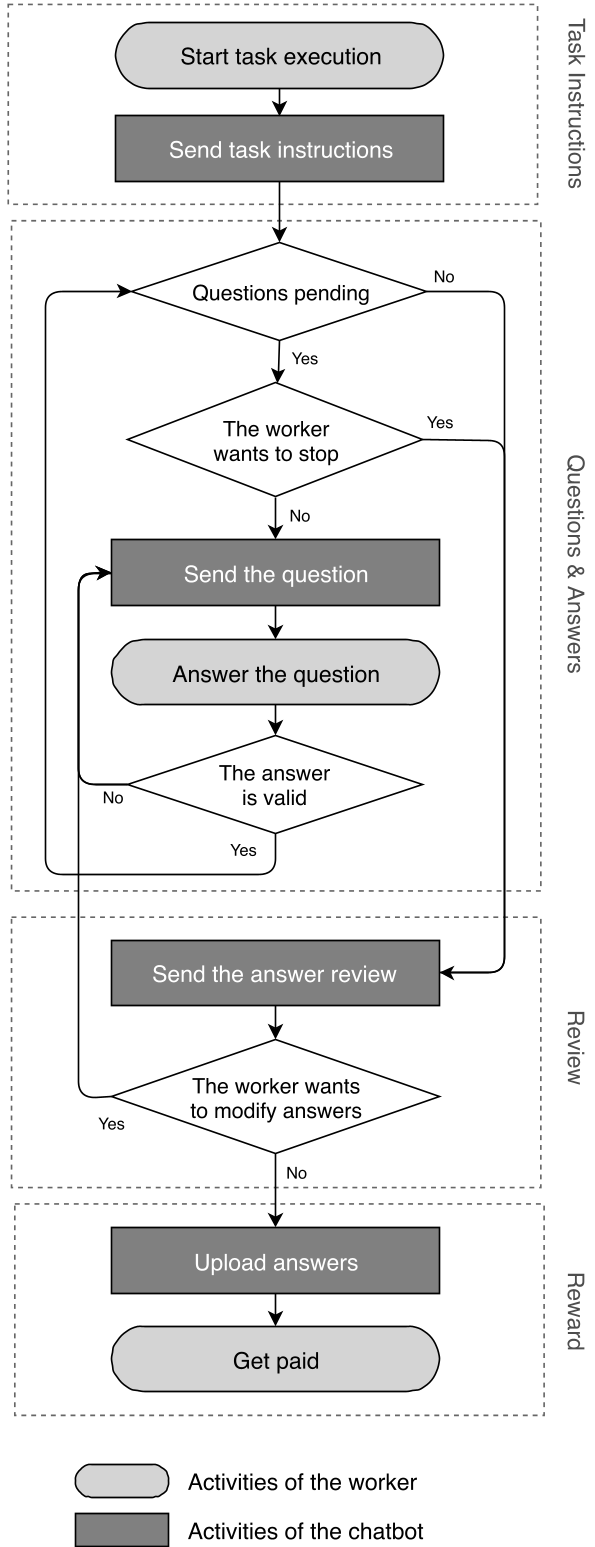 Figure 1: The logical workflow of the TickTalkTurk conversational agent.
Experiments & Results: Engagement is Key
The authors tested TickTalkTurk across multiple task types: CAPTCHA recognition, sentiment analysis, and image classification.
Key Performance Indicators (KPIs):
- Retention: Workers in the conversational group completed significantly more microtasks than those in the web GUI group.
- Linguistic Influence: By analyzing the "conversational styles" of workers (using a coding scheme for linguistic devices), the researchers found that specific styles correlate with higher output quality and lower cognitive load (measured via NASA-TLX).
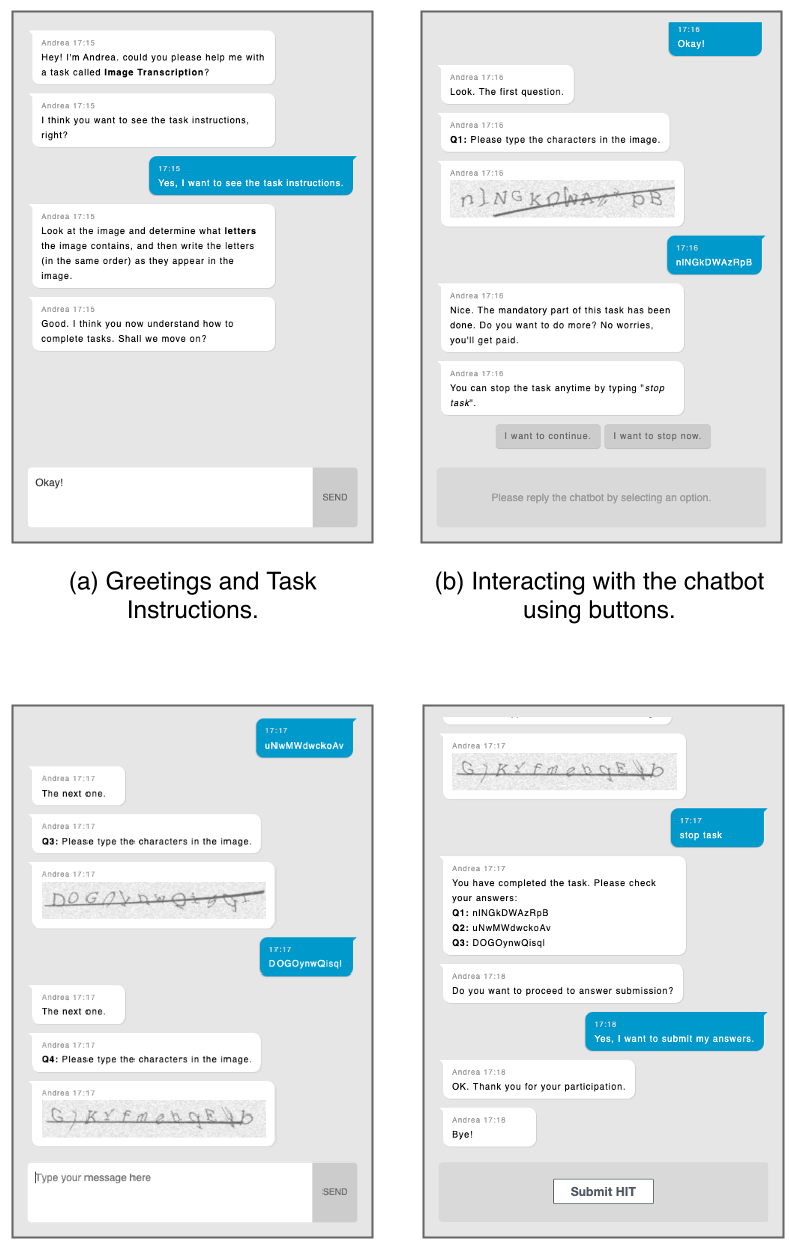 Figure 2: Examples of conversational interfaces for different task types, including custom UI integration.
Critical Analysis & Conclusion
The Takeaway
TickTalkTurk proves that the medium through which we collect data is just as important as the task itself. By humanizing the interface, we don't just get better data; we respect the worker's cognitive state.
Limitations & Future Work
While the system improves engagement, the paper acknowledges that "conversational style" is a complex variable. Future iterations could involve AI-driven adaptive agents that detect a worker's mood or style in real-time and adjust the dialogue to maximize performance.
Furthermore, as the industry moves toward Generative AI, using LLMs to power these conversational agents could make the instructions even more personalized and effective.
Academic Reference: Sihang Qiu, Ujwal Gadiraju, and Alessandro Bozzon. 2020. TickTalkTurk: Conversational Crowdsourcing Made Easy. In CSCW ’20 Companion. GitHub Repository