
Navigator: Leveraging Time-Based Activity Profiles for Opportunistic P2P Collaboration
Time Based Activity Profiles to Recommend Partnership in a P2P Network
The paper introduces Navigator, a multi-agent P2P recommendation system designed to foster opportunistic collaboration. It utilizes a novel time-based activity profiling method that categorizes user profiles into long-term expertise and short-term interests to match potential partners in real-time.
TL;DR
Navigator is an agent-based P2P system that moves beyond simple keyword matching to find collaborators. By analyzing how long and how recently a user interacts with specific documents, it creates a dual-layered profile (Short-Term Interest vs. Long-Term Expertise) to suggest partners for immediate cooperation or expert consultation.
Context: The Gap in Social Navigation
In large-scale distributed organizations, "knowing who knows what" is a significant hurdle. While we have tools for planned meetings, we lack the digital equivalent of "bumping into someone at the water cooler." Most recommender systems are static; they know you liked a topic three years ago, but they don't know you are struggling with a specific problem right now. Navigator addresses this by treating Time as a first-class citizen in user profiling.
The Core Insight: Time as a Proxy for Relevance
The authors argue that a user’s profile shouldn't just be a bag of words. Instead, it should be weighted by two temporal factors:
- Accumulated Usage Time: Total time spent on a resource indicates a level of expertise (Long-Term).
- Recency of Access: Frequent recent access indicates a "hot" interest or current work focus (Short-Term).
Methodology: Building the Bi-Dimensional Profile
The system utilizes a multi-agent architecture within the COPPEER framework. The workflow is as follows:
- Miner Agents: Parse the content of PDFs, Word docs, and text files using TF-IDF to extract key domains.
- Tasker Agent: Monitors the OS to record exactly which applications and documents are active.
- Profiler Agent: Combines content and time. It applies a decay function to the short-term profile (e.g., interest expires after a few days of inactivity) while allowing the long-term profile to grow cumulatively.
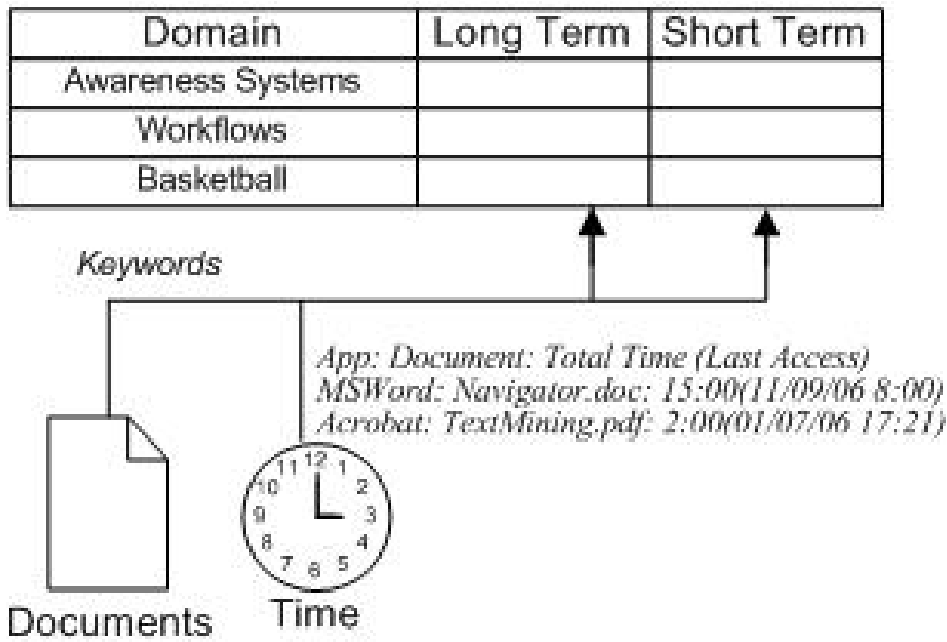 Figure 1: The dual-layer profiling mechanism extracting Expertise and Interest from ongoing activity.
Matchmaking Scenarios
By comparing the Short-Term (ST) and Long-Term (LT) profiles of different users using cosine similarity, Navigator identifies four distinct "Opportunities for Collaboration":
| User Perspective | Peer Short-Term (ST) | Peer Long-Term (LT) |
|---|---|---|
| User ST | Cooperation: Both are working on the same thing now. | Requesting Advice: Peer is an expert in what User is doing. |
| User LT | Offering Advice: User can help Peer with their current task. | Discussion: Both share a history of interest in the topic. |
Experimental Setup & Interface
The system was implemented in Java using Lucene for indexing. To maintain privacy and accuracy, the Tasker agent polls the system every 30 seconds. The researchers visualize these matches through a "Radar Display," where the distance from the center represents current activity similarity, and colors represent the depth of expertise.
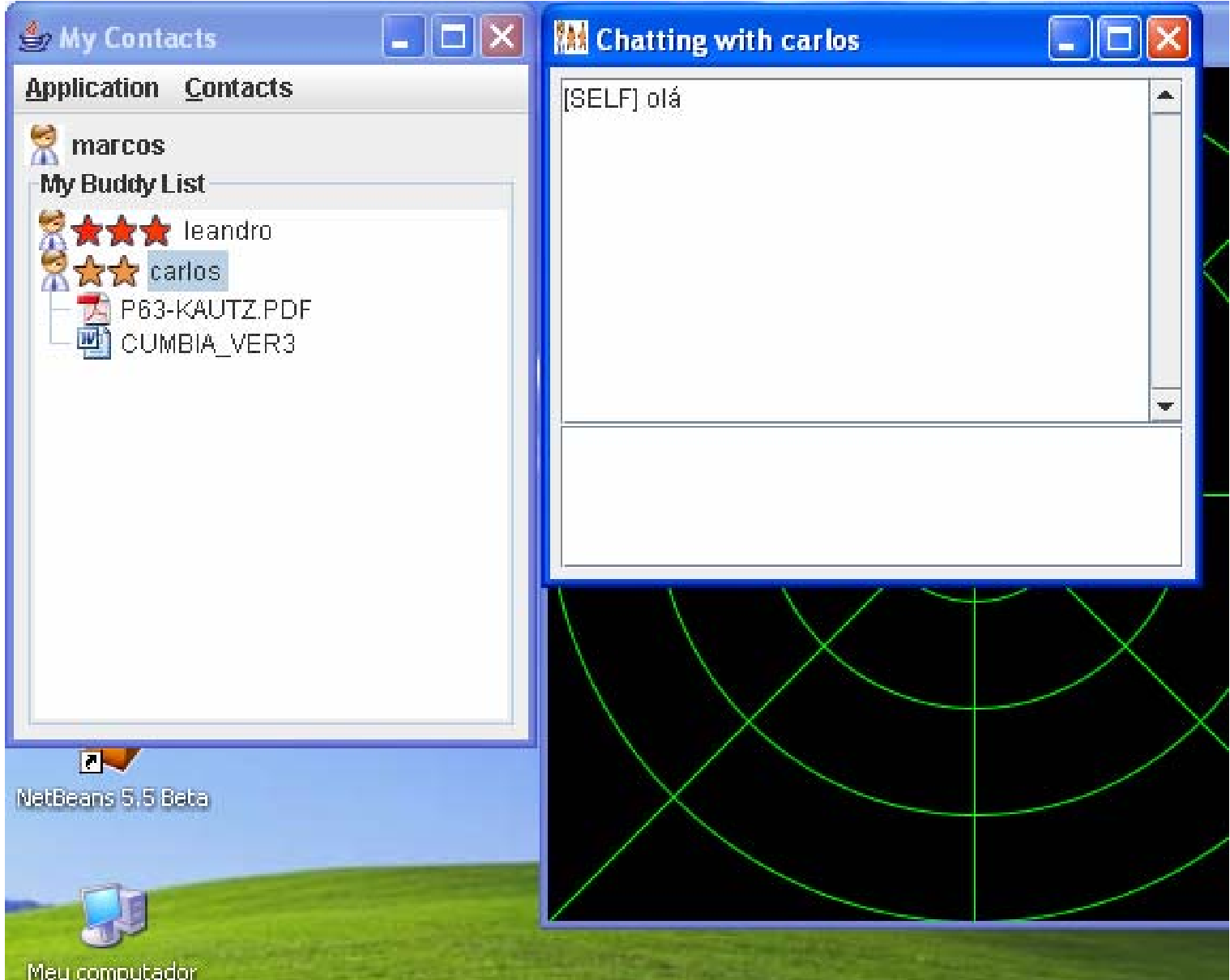 Figure 2: The Navigator UI including the peer list and the proximity-based radar display.
Critical Analysis & Future Outlook
Strengths: Navigator bridges the gap between awareness tools (like Portholes) and recommender systems. By automating profile generation through background agents, it solves the "cold start" and "manual update" problems common in corporate directories.
Limitations:
- Privacy: High-frequency monitoring of document focus raises significant surveillance concerns, which the authors acknowledge will require "block lists" or AI-driven privacy filters.
- Context Nuance: The system currently doesn't distinguish between reading a document (learning) and editing it (producing), which are different indicators of expertise.
Moving Forward: As we move toward more decentralized work cultures, the inclusion of temporal "attention" metrics will likely become a standard feature for intelligent workspaces and LLM-assisted collaboration tools.