
Precise Community Identification: Beyond Static Links in Dynamic Social Networks
Time Based Constrained Object Identification in a Dynamic Social Network
The paper introduces a time-based constrained framework for community identification in dynamic social networks. It proposes two algorithms—one for assigning new nodes to communities and another using rule-based reasoning for dynamic constraints—leveraging weighted directed graphs to improve the accuracy of "People You May Know" (PYMK) recommendations.
TL;DR
Researchers have developed a time-constrained community identification framework that outperforms traditional platforms by analyzing not just who you know, but when your paths crossed. By integrating static attributes (like education) with dynamic constraints (like evolving interests) and strict temporal windows, the proposed algorithms provide a significantly more accurate "People You May Know" list.
Perspective: The Flaw in Static Snapshots
In the world of Graph Theory and Social Computing, the most persistent challenge is Dynamism. Most community detection algorithms treat social networks as frozen frames in time. However, human relationships are fluid—we change jobs, move cities, and pick up new hobbies.
The authors argue that current SOTA implementations (including Facebook's 2012-era logic) fail because they treat a "University" tag as a binary match. They ignore the temporal intersection: if you attended a university in 1990 and another user attended in 2010, the probability of a meaningful community connection is low. This paper seeks to fix that by making Time a first-class citizen in the community detection objective function.
Methodology: The Logic of Constraints
The core of the research lies in a directed weighted graph , where the weight of edges () is determined by the intersection of node domains.
1. Dual-Algorithm Architecture
The system splits the workload into two distinct processes:
- Algorithm 1 (Node Assignment): When a new node enters the network, it computes a "People You May Know" (PYMK) list by matching domain tags and applying a temporal buffer (e.g., years or percentiles).
- Algorithm 2 (Rule-Based Matching): This handles the "soft" logic, using synonyms and transitive properties to match dynamic interests (e.g., matching "Music" with "Melody" or "Ghazals").
2. Weighted Calculations
The authors utilize Node Rank and People Rank to determine the "betweenness" of nodes. This ensures that the weight of a link isn't just a 0 or 1, but a reflection of how central those entities are to the specific community they share.
(Note: The paper describes the flow from Tag extraction to working set Z and W creation, eventually forming the prioritized PYMK list.)
Experimental Insights
The study tested a scenario involving 21 nodes. By applying Algorithm 1, the researchers were able to filter a broad list of potential friends down to a hyper-relevant core.
| Node Discovery Phase | Logic Applied | Result |
|---|---|---|
| Static Filtering | Matches Employer/Uni labels | Broad candidate list (Table 2) |
| Temporal Constraints | Employment period overlap | Refined proximity set (Table 3) |
| Dynamic Matching | Rule-based interest similarity | Final "Optimistic" Community |
The visual comparison between the proposed algorithm's output and a "Facebook-style" output (Fig 1 vs Fig 2) demonstrates that the proposed method results in a denser, more logically sound community structure with fewer "noise" connections.
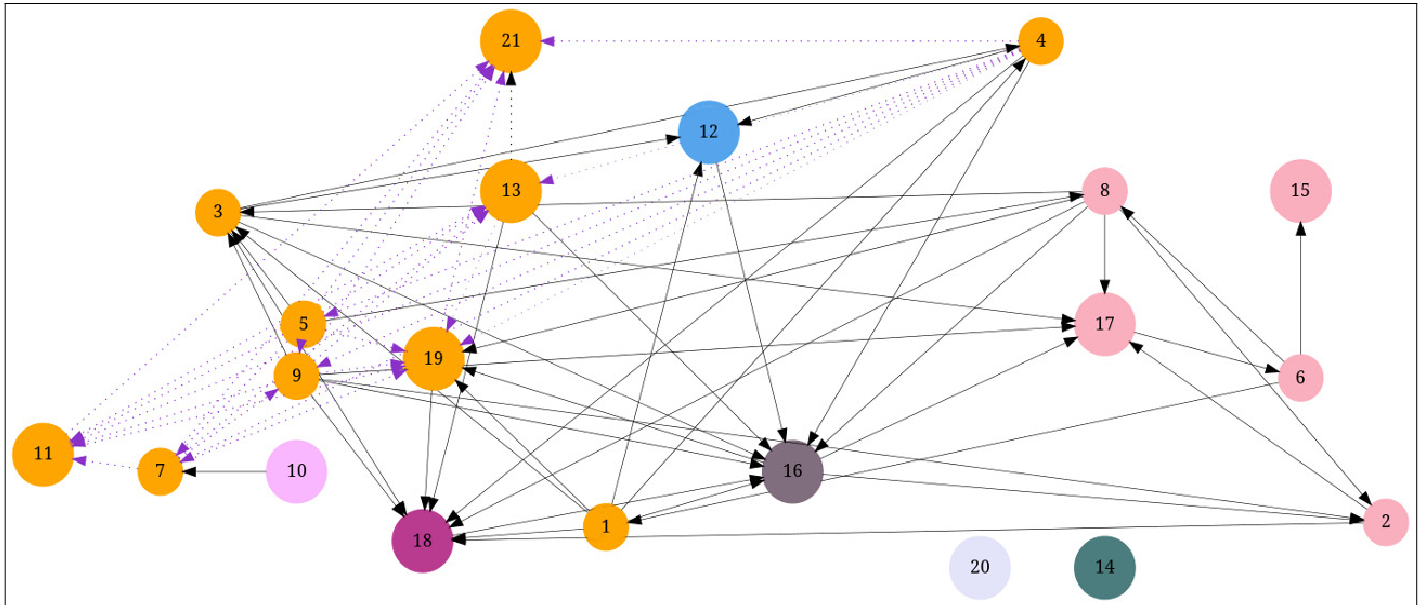 Fig 1. The precise community detection based on the proposed time-based constraints.
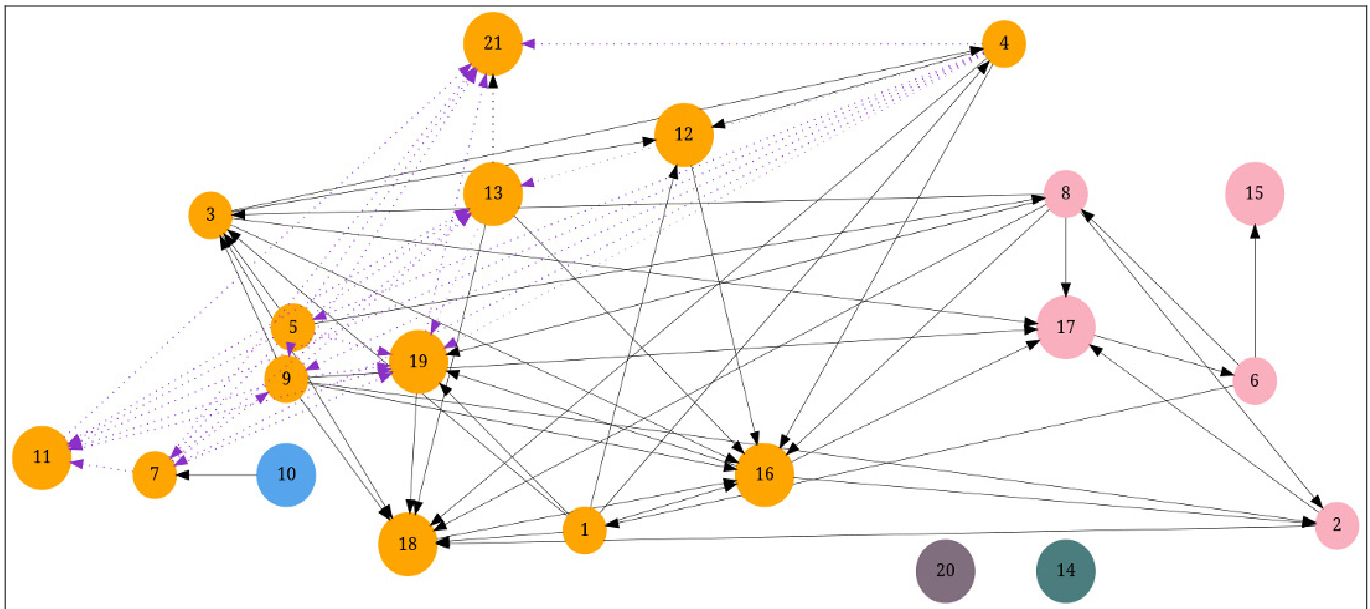 Fig 2. The standard social network approach, showing a more scattered and less relevant connectedness.
Critical Analysis & Conclusion
The true value of this work is the Optimistic Community Detection—the idea that it's better to have high precision in a smaller group than high recall in a massive, irrelevant one. By forcing the algorithm to respect the "period of employment" and "period of study," the system mimics human social patterns more accurately.
Limitations
- Computational Expense: While effective for 20 nodes, the rule-based approach (Algorithm 2) involving synonyms and dynamic attribute traversal may face latency issues in a graph with millions of nodes without an underlying vector database or embedding-based retrieval.
- Data Sparsity: The algorithm relies on users providing mandatory details (like employment dates), which is a hurdle in UX-focused applications.
Future Outlook
This research sets a foundation for Predictive Community Evolution. The next step for this tech is predicting future community memberships based on current trajectories of dynamic attributes—essentially forecasting who you will become friends with before the interaction even happens.