
d-IML: Winning the Marketing War Without Tipping Off Your Rivals
Time-Critical Viral Marketing Strategy with the Competition on Online Social Networks
The paper introduces the d-IML problem (Influence Maximization with unwanted users Limited), a novel task aimed at maximizing information spread within hops while ensuring that information leakage to specific "unwanted" users remains below a safety threshold. It presents a Meta-heuristic (MH) algorithm that balances marginal influence gain against potential leakage risk under the Linear Threshold (LT) model.
TL;DR
Viral marketing is usually about maximum reach, but what if your competitors are part of the network? This paper introduces d-IML, a strategy to maximize influence within a specific timeframe ( hops) while strictly limiting information "leakage" to unwanted users. The authors prove this problem is NP-complete and propose a Meta-heuristic (MH) that significantly outperforms traditional greedy methods by balancing "spread" with "safety."
The "Spy in the Network" Problem
Most social network research assumes that more influence is always better. However, the authors identify a critical real-world scenario: Corporate Competition. If Company A launches a secret promotional campaign on Facebook, they want to reach potential customers quickly, but they don't want their strategy to reach Company B's employees. If Company B sees the campaign too early, they can launch a counter-attack or mirror the strategy.
The challenge is that information spreads uncontrollably. To prevent leakage, you can't just pick the most popular "influencers"—you must pick those whose social circles do not overlap heavily with your rivals.
Methodology: Balancing Gain and Risk
The authors define the d-IML problem under the Linear Threshold (LT) model. In this model, a node becomes "active" when the influence from its neighbors exceeds a specific threshold.
1. Integer Linear Programming (ILP)
For small networks, the authors provide an ILP formulation. While exact, this method is computationally expensive (NP-hard), making it unsuitable for massive social graphs but perfect for creating a "gold standard" to test other algorithms.
2. The Meta-heuristic (MH) Algorithm
The core contribution is a fitness function used to select seeds :
- Numerator: The marginal gain in influence (how many new people we reach).
- Denominator: The leakage level (how close we get to triggering the "unwanted" users).
By prioritizing nodes with high reach but low proximity to opponents, the algorithm effectively "steers" the information flow away from danger zones.
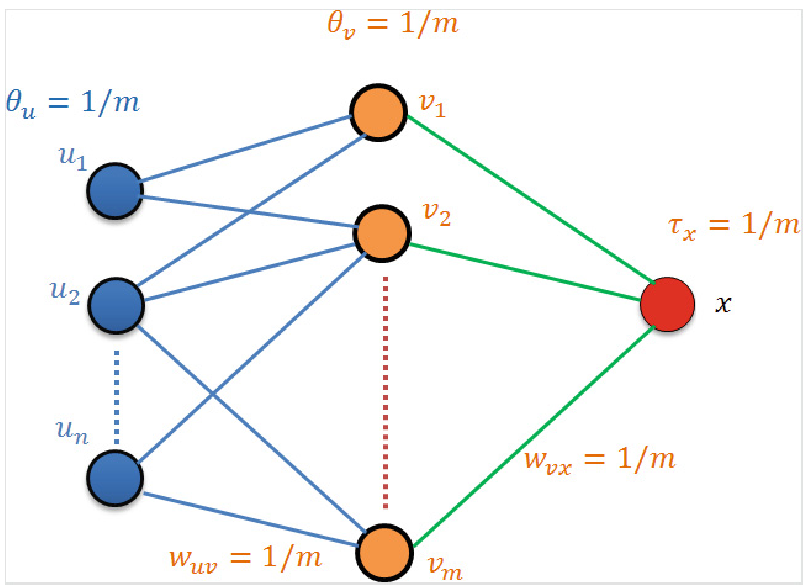 Figure 1: Conceptual visualization of the propagation constraints.
Experimental Battleground
The researchers tested their approach against Random, Max-Degree, and Standard Greedy algorithms across three datasets: BlogCatalog, ArXiv-Collaboration, and Gnutella.
Key Findings:
- Reach vs. Safety: Standard Greedy algorithms often fail because they blindly pick high-influence nodes that inevitably leak information to unwanted targets, hitting the "leakage threshold" too early and halting the seed selection.
- Superiority of MH: On the BlogCatalog network, MH activated significantly more users than Max-Degree (1.7x) and consistently beat the Greedy approach as the seed set grew larger.
- Hop Sensitivity: As the number of hops () increases, the advantage of the MH algorithm becomes more pronounced, proving its effectiveness in long-term strategic diffusion.
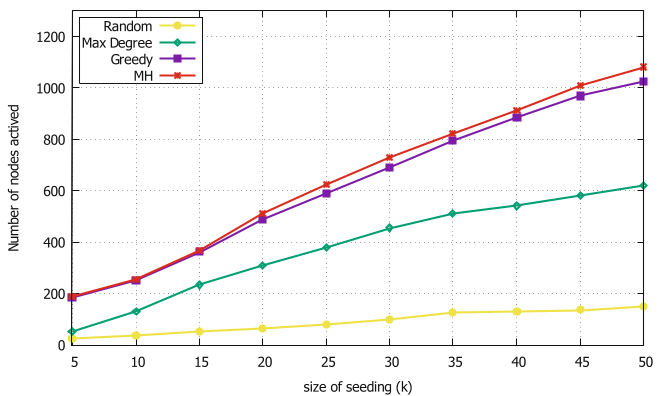 Figure 2: Performance comparison on BlogCatalog (a) and Gnutella (b).
Critical Insight: The "Safe" Influencer
This paper shifts the paradigm of Influence Maximization from a pure "volume" game to a "precision" game. The takeaway for practitioners is clear: The most "connected" person isn't always the best seed. If an influencer bridges the gap between your target audience and your competitor, they are a liability, not an asset.
Limitations: The study assumes the "unwanted" users are known beforehand. In real-world scenarios, identifying competitor-affiliated accounts or "adversarial" nodes remains a significant precursor challenge.
Future Outlook
As Online Social Networks (OSNs) continue to be the primary battlefield for public opinion and market share, the d-IML framework provides a mathematical foundation for Privacy-Aware Marketing. Future work could integrate this with machine learning to predict "adversarial" nodes in real-time.