
TransTL: Redefining POI Recommendation via Spatiotemporal Translations
Time and Location Aware Points of Interest Recommendation in Location-Based Social Networks
The paper introduces TransTL, a translation-based representation learning model for Points of Interest (POI) recommendation. It treats the joint pair of <time, location> as a relationship vector that translates user embeddings to POI embeddings, achieving State-of-the-Art (SOTA) performance on Foursquare and Gowalla datasets.
TL;DR
The recommendation of Points of Interest (POIs) is no longer just about who you are and what you like; it is governed by where you are and when it is. TransTL (Time and Location Aware Translation) shifts the paradigm by treating spatiotemporal context as a bridge (a translation vector) between users and locations. By leveraging Knowledge Graph Embedding techniques, it achieves a significant boost in accuracy and handles the notorious "cold-start" and "data sparsity" problems better than existing graph-based models.
Problem & Motivation: The Semantic Gap in Recommendation
Most existing Point of Interest (POI) recommendation systems treat Users and POIs as interchangeable points in a latent space. This is fundamentally "unnatural"—a user is a person with dynamic intent, while a POI is a static geographical entity.
Furthermore, current methods often fail to capture the joint effect of time and location. For example, a student’s preference for a "School Cafeteria" vs. a "Mall Food Court" at 12:00 PM depends entirely on their current location (On-campus vs. Off-campus). Treating these as independent variables ignores the physical reality of human behavior.
Methodology: The Translation Insight
TransTL adopts the logic of Knowledge Graphs (KG). In a KG, we have triples like (head, relation, tail). The authors map this to:
- Head (): The User.
- Relation (): The specific <Time, Location> pattern.
- Tail (): The visited POI.
1. The Space Projection
Instead of a simple vector addition, TransTL utilizes the TransR approach. It recognizes that users and POIs exist in an entity space, but their interaction changes based on the "relation" (the context). For every spatiotemporal pattern , a projection matrix maps the user and POI into a relation-specific space.
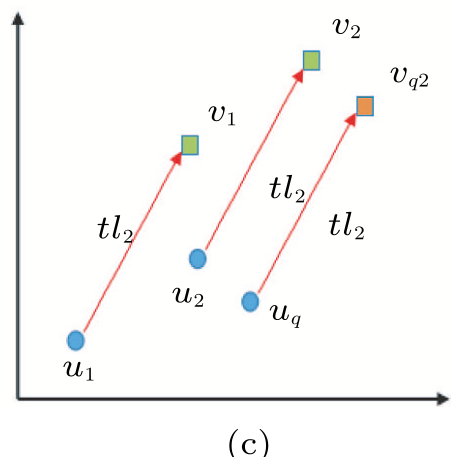 Fig 1: Illustration of the translation mechanism where different <time, location> pairs lead a user to different potential POIs.
2. The Objective Function
The goal is to minimize the score function , ensuring that the embedding of the visited POI is the nearest neighbor to the "translated" user:
Performance: Robustness in the Face of Sparsity
The authors tested TransTL against heavyweights like GE (Graph Embedding) and TransRec.
SOTA Comparison
On the Foursquare dataset, TransTL achieved an Accuracy@1 of 0.307, crushing GE (0.225) and TransRec (0.218). This improvement is attributed to the fact that TransTL maintains semantic consistency—it compares POIs to an "expected POI" vector rather than comparing a user directly to a location.
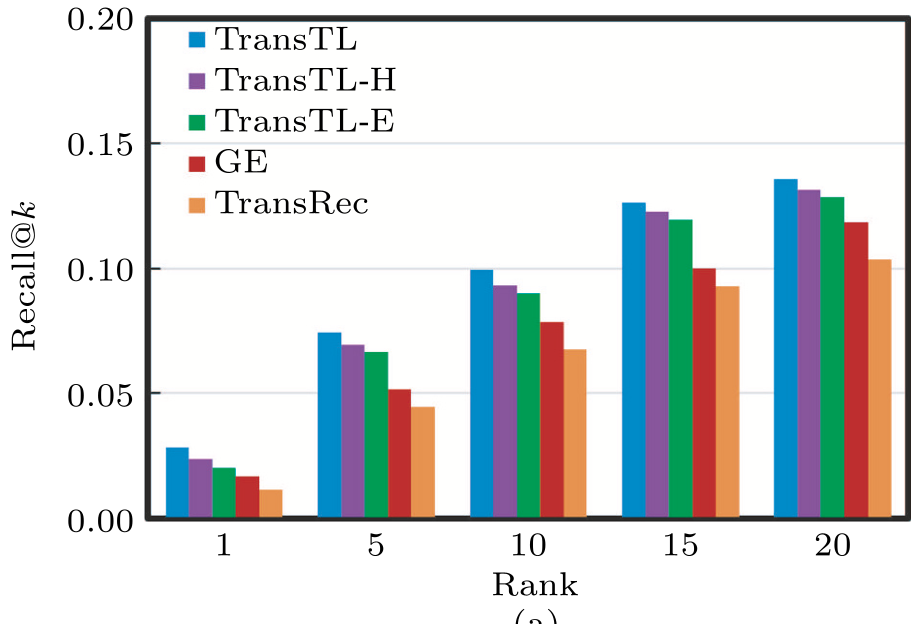 Fig 2: Accuracy comparison on Foursquare and Gowalla datasets.
The Sparsity Test
Most recommendation models break down when data is sparse. When training data was reduced by 20%, TransTL's accuracy dropped by only 19.99%, whereas TransRec plummeted by 53.41%. This robustness stems from the distributed representation of spatiotemporal patterns, which allows the model to "fill in the gaps" for rare user-POI pairs.
Deep Insight: Solving the Cold-Start
The paper also introduces TransTL-C, which addresses "cold-start" POIs (those with no check-in history). By linking new POIs to existing ones via shared tags (word/content) and locations, the translation mechanism can still generate a viable embedding for a place that has never been visited, outperforming graph-based sampling which rarely "hits" new nodes.
Conclusion & Future Outlook
TransTL demonstrates that "Translation" is a powerful primitive for recommendation. By treating context as an active relation rather than a passive feature, we can build systems that understand the intent behind a visit.
The primary limitation identified is the sensitivity to the definition of time slots (hourly vs. daily). Future work could likely involve automated "soft" clustering of time and space to avoid the rigid discretized grids used in this study.