
TinySex and Gender Trouble: The Virtual Laboratory of the Self
10472_Tinysex and gender trouble [Internet world].
Sherry Turkle explores the phenomenon of "gender-swapping" and identity construction in Multi-User Domains (MUDs), using these virtual spaces as "objects-to-think-with." This work establishes the Internet as a laboratory for social experimentation, achieving a seminal understanding of how digital mediation deconstructs traditional gender roles.
TL;DR
In this seminal excerpt from Life on the Screen, MIT Professor Sherry Turkle investigates how the anonymous, text-based worlds of MUDs (Multi-User Domains) allow users to "swap" genders. These virtual spaces act as a psychological laboratory where the social construction of gender is laid bare, revealing that our digital personae are not just masks, but tools for profound self-discovery and social critique.
Background: Decoupling the Body from the Persona
Sherry Turkle occupies a unique position at the intersection of psychoanalysis and technology. Writing in the mid-1990s, she identified the Internet not as a mere tool, but as a "culture of simulation." At the heart of this simulation is the ability to bypass the physical body—the primary site where gender is traditionally enforced.
The Pain of the "Neuter" and the Freedom of the "Other"
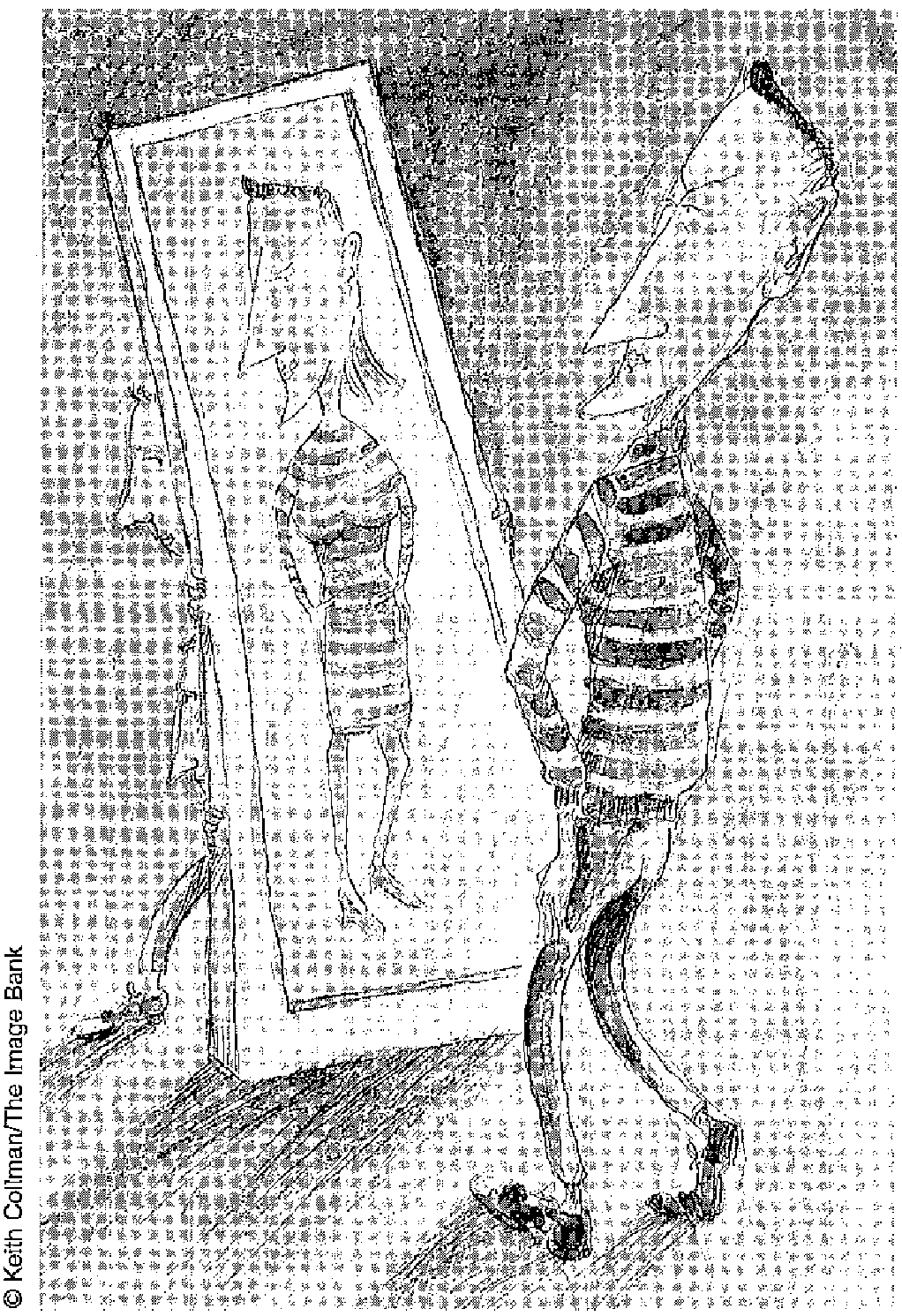
Turkle begins with a visceral personal anecdote: logging onto a MUD and forgetting to assign a gender. This "neuter" state triggered an immediate social crisis. Other players (like the character "Jiffy") demanded to know her "real" gender, highlighting that even in a digital void, humans struggle to interact without a binary gendered framework.
The Intuition of Gender-Swapping:
- The Male Experience: Turkle found that presenting as a male allowed her to "lurk" or be "shy in a manly way" without being labeled a "wallflower" or "prude." This revealed her own internal bias: the perception that men have a natural "birthright" to move freely and decline social advances without being seen as rude.
- The Female Experience for Men: Conversely, men playing female characters discovered the suffocating nature of "chivalry." Characters like Case and Garrett found that as females, their independence was often undermined by unrequested "help" from males—a textual enactment of "benevolent sexism."
Methodology: MUDs as "Objects-to-Think-With"
Turkle utilizes the concept of "Objects-to-think-with" (a term borrowed from Seymour Papert). MUDs provide a tactile way to experiment with abstract sociological concepts.
- Textual Performance: In a MUD, you are what you type. If you describe yourself as a "FabulousHotBabe," the community reacts to that construct, regardless of the person behind the screen.
- Psychological Engagement: This isn't just a game. Turkle notes the story of "Case," a man playing "Mairead," a female lawyer in a dysfunctional virtual relationship. Case uses this experience to test his "psychological repertoire," discovering that behaviors that work for him as a man backfire when performed through a female persona.
Key Results and Insights
The research highlights that virtual cross-dressing is "technically challenging and psychologically complicated."
- Communication Styles: Garrett, a programmer, played "Ribbit" (a female frog) to escape the "territorial and competitive" nature of male communication. He found that the female persona allowed him to be "collaborative and helpful" without social stigma.
- The Persistence of Stereotypes: Even when users change their presentation, the community often filters their actions through gendered lenses. When Garrett switched to a male frog named "Ron," his helpfulness was suddenly viewed with suspicion—as a "seduction ploy"—illustrating how deeply ingrained these social biases are.
Critical Analysis: Beyond Utopias and Apocalypses
Turkle rejects the simple "Utopian" view that the Internet will solve all social ills, as well as the "Apocalyptic" view that it will destroy our sense of self.
The Reality: Technology is a lens. It provides new ways to examine current complexities. The "Gender Trouble" found in MUDs mirror our real-world struggles with identity and governance. Turkle's main contribution is the assertion that virtuality changes the subject. We are no longer unitary selves but distributed identities moving across multiple "windows."
Conclusion
Sherry Turkle's work reminds us that digital spaces are not "secondary" to real life. They are vital arenas for "consciousness-raising." By playing at being the "other," we don't just learn about others; we learn about the rigid structures we have built for ourselves. In the age of the Internet, identity is not something we are, but something we do.