
TMarkov: Solving the Crowdsourcing Privacy Dilemma via Spatio-Temporal Prediction
TMarkov: LBS Trajectory Prediction for Crowdsourcing Recommendation
The paper introduces TMarkov, a time-dependent Markov model designed for trajectory prediction in mobile crowdsourcing. By integrating time partitioning into a spatial transition matrix and using Gibbs sampling for training, it achieves an 81.8% prediction accuracy on the Geolife dataset, enabling task recommendation without exposing real-time user locations.
TL;DR
To participate in mobile crowdsourcing (e.g., DiDi, TaskRabbit), users usually have to "pay" with their location privacy. TMarkov is a new framework that predicts where a user likely will be, using an improved Markov model that accounts for time. By recommending tasks based on these predictions rather than actual GPS pings, the system maintains high efficiency while keeping the user's real-time whereabouts private.
The Conflict: Utility vs. Anonymity
In the world of Location-Based Services (LBS), the platform is "honest but curious." It needs your location to assign tasks efficiently, but this data can reveal sensitive spots like your home, office, or medical clinics.
Current solutions have significant drawbacks:
- Encryption (PIR): Too slow for mobile devices.
- Obfuscation: Adding noise (k-anonymity) makes task matching inaccurate.
- Simple Markov Models: They assume your movement habits at 3 AM are the same as 3 PM, which is physically unrealistic.
Methodology: The TMarkov Architecture
The core innovation is the Time Partitioning mechanism. Instead of a simple spatial transition matrix, the authors propose a state-space defined by , where is a specific time window and is the location grid.
1. Spatio-Temporal Transition
The model recognizes that a transition from Grid A to Grid B has different probabilities depending on whether it's "Rush Hour" or "Lunch Break."
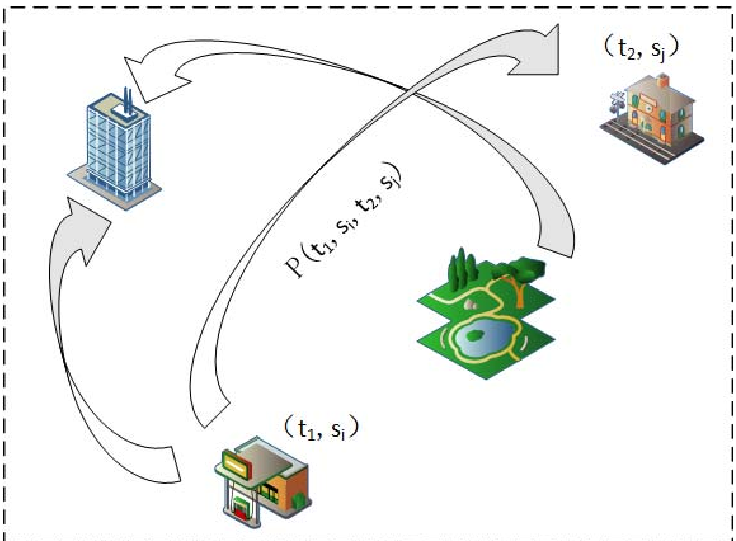 Fig 1: TMarkov improves the standard model by adding time partitions to record when transitions occur.
2. Training with Gibbs Sampling
User trajectory data is notoriously "holey" (sparse). We don't have every minute of a user's life. The authors use Gibbs Sampling (a Markov Chain Monte Carlo method) to estimate the missing links in the historical data, ensuring the resulting transition matrix is robust and reaches a stable state.
3. Maximum Probability Prediction
Once the matrix is trained, TMarkov calculates the steady-state distribution. For every time slot, it identifies the location with the highest probability. The sequence of these locations forms the "Predicted Trajectory."
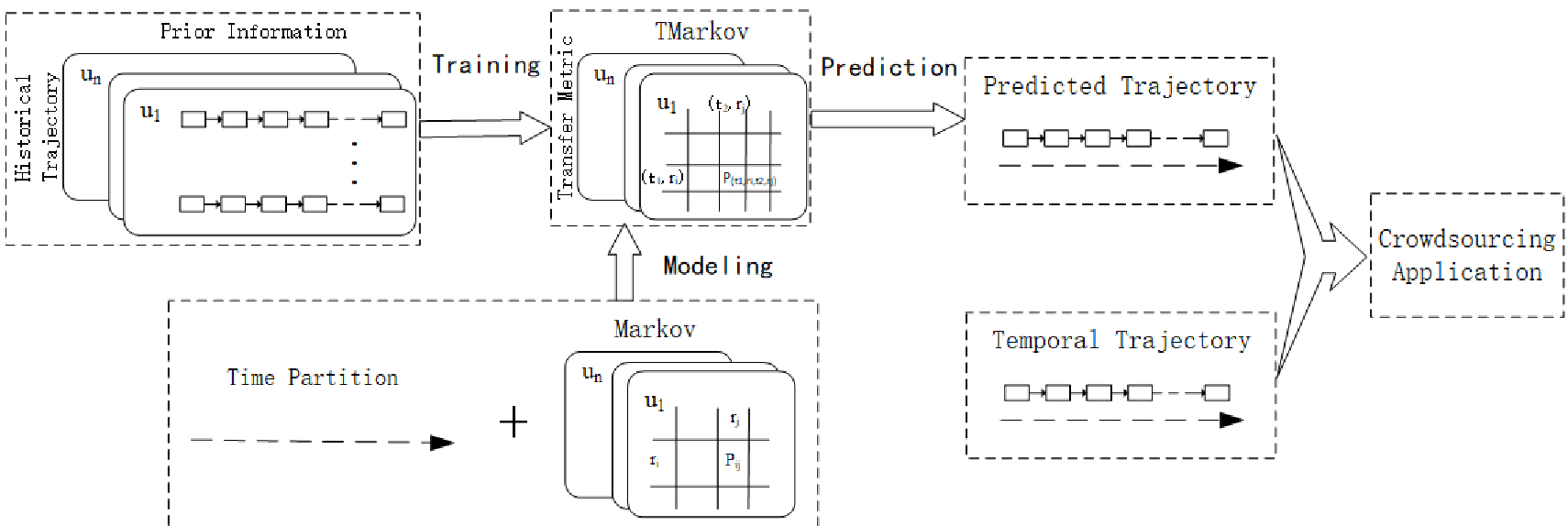 Fig 2: The end-to-end framework from raw historical data to task recommendation.
Experimental Validation
Using the Microsoft Geolife dataset (182 users over 5 years in Beijing), the researchers simulated real-world movement.
- The Setup: They focused on the 3rd Ring Road of Beijing, dividing it into a grid.
- The Results: TMarkov achieved 81.8% accuracy. As shown in the visualization below, the predicted path (black) almost perfectly overlaps with the actual movement pattern (gray), differing only in minor fluctuations.
 Fig 3: Comparison between actual and predicted location sequences over time partitions.
Critical Insight & Conclusion
The beauty of TMarkov lies in its Inductive Bias: human movement is periodic and habitual. By codifying "time" directly into the Markov state, the authors move away from the "short-term memory" limitation of standard chains.
Pros:
- No need to share real-time GPS.
- High accuracy for regular commuters.
- Lower computational cost compared to Deep Learning models.
Cons:
- It struggles with "out-of-routine" behavior (e.g., a spontaneous trip to a new city). However, as the authors suggest, it can be combined with "one-off" manual route settings for those specific cases.
Ultimately, TMarkov provides a mathematically sound bridge between user privacy and platform utility, proving that we don't always need to know where you are if we can accurately guess where you will be.