
Overcoming the Cross-Platform Paradox: Native Performance with Web-Like Agility in LBSN
* Tobias Lange worked on this topic during his internship at SAP Research
This paper introduces a framework for delivering Location-Based Social Networks (LBSN) and geographically relevant services using a specialized XML-based markup language. The method enables cross-platform mobile application development that achieves native performance and look-and-feel while providing the flexibility of web-based deployments.
TL;DR
Delivering Location-Based Social Networks (LBSN) often forces developers to choose between the performance of native apps and the flexibility of the web. This paper presents a framework that uses a specialized markup language to bridge this gap. By interpreting XML-based UI descriptions into native controls, the system provides dynamic, context-aware services for a major Australian transportation provider with the speed of a native app and the deployment ease of a website.
Context: The Geolocation Challenge
In 2009, the mobile landscape was fragmented between various operating systems. For service providers like the Transportation Services Provider (TSP) in Australia, providing ad-hoc social networking and roadside assistance meant dealing with three main friction points:
- Platform Fragmentation: Writing separate code for every device is expensive.
- Hardware Access: Geolocation requires deep GPS integration, which mobile browsers of the era (and even many today) handle poorly.
- Dynamic Provisioning: A "Flood Update" or emergency service needs to be deployed instantly without waiting for an App Store review process.
The Methodology: Interpreted Native Markup
The authors rejected the standard "Web View" approach due to its "laggy" feel. Instead, they designed a system that functions like a browser but speaks a different language.
Architecture Overview
The core innovation lies in the translation approach. The framework acts as a "Native Shell" installed on the device. When a user enters a specific geolocation, the server pushes a customized XML markup to the device.
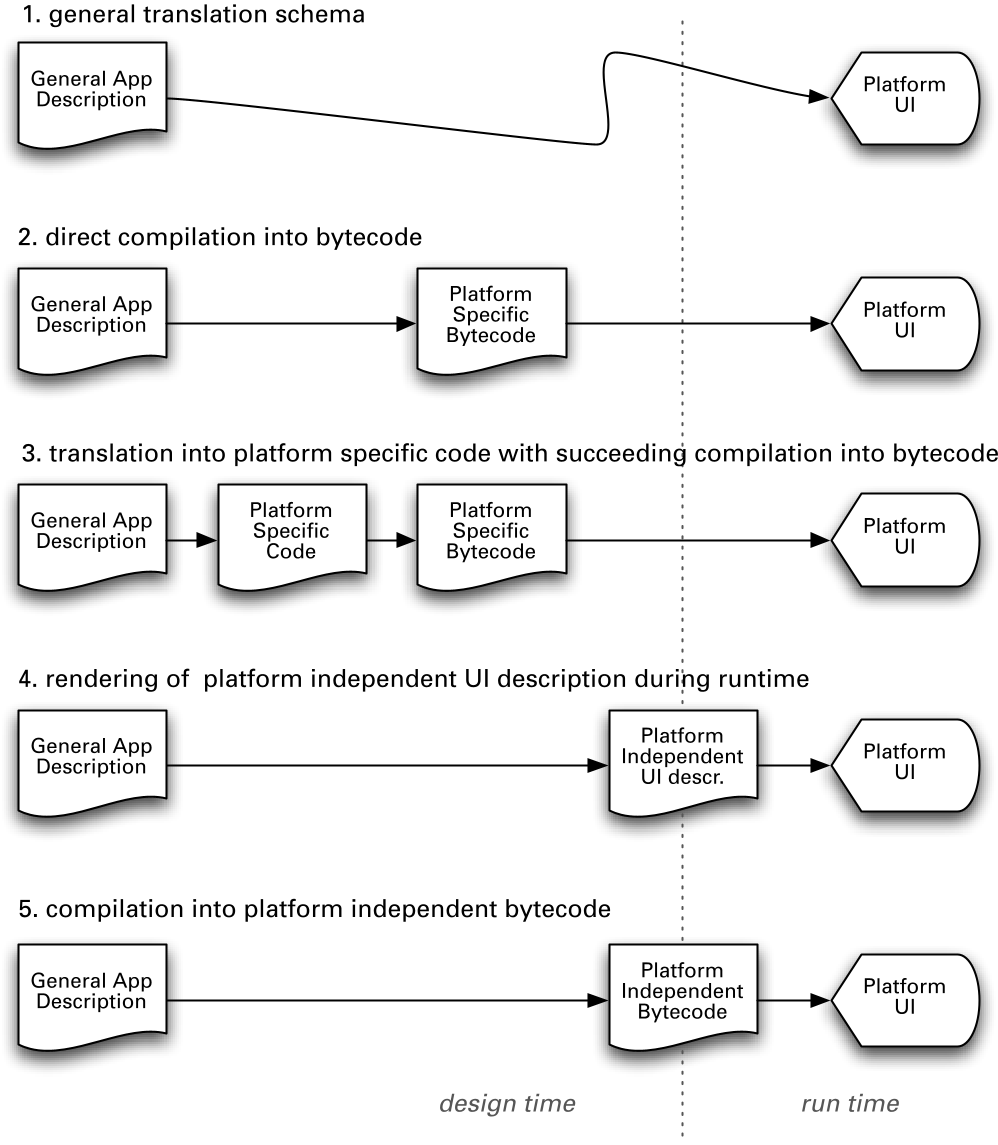
The client framework takes this markup and maps it to concrete UI implementations (native buttons, maps, and lists). This satisfies the requirement for "Native Look and Feel" while allowing the backend to change the application's functionality on the fly.
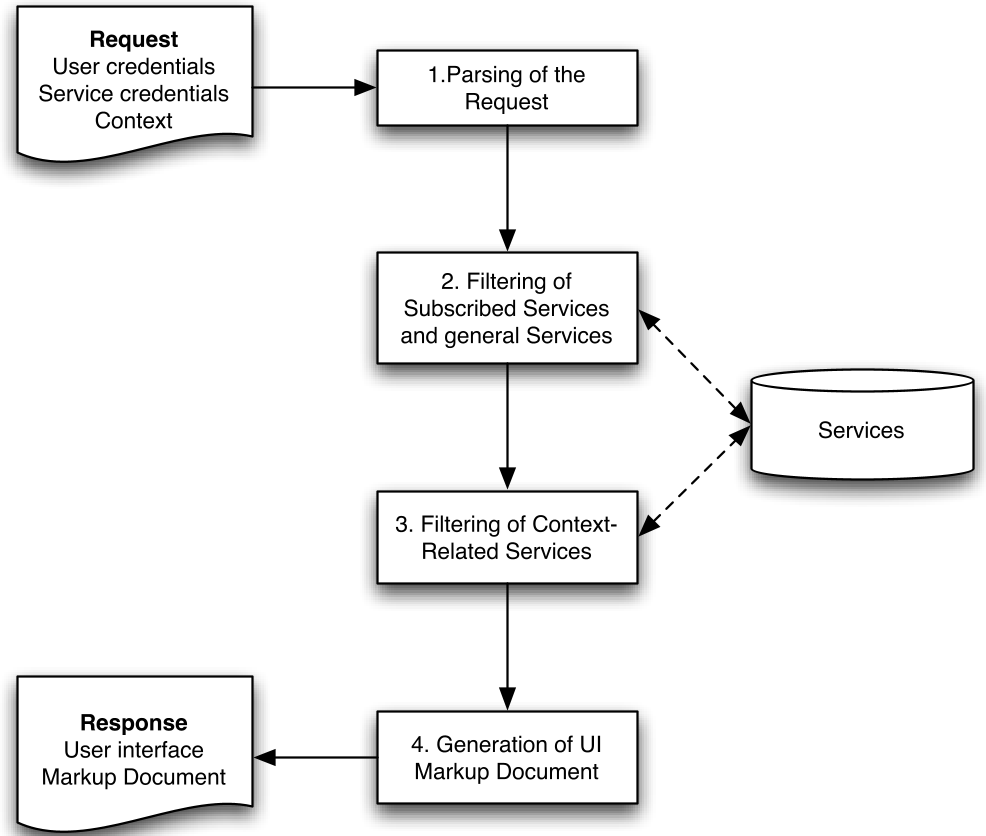
Dynamic Service Generation
The process flow ensures that the user is only presented with what is relevant to their current coordinates.
Performance Validation
The researchers compared their Proposed Approach against Web-based and Traditional Native applications.
The results (tested on iPhone 3G) were conclusive:
- Startup Speed: The proposed method was nearly as fast as native (1.6s) and significantly faster than web (3.3s).
- Runtime UI Performance: In tasks like Map Pan and Zoom, the proposed approach showed "no lag," matching the traditional native experience.
| Metric | Web | Traditional | Proposed |
|---|---|---|---|
| App Startup | ~3.3s | 1.2s | 1.6s |
| Responsiveness | Good | Optimal | Optimal |
| Panning/Zooming | Small lag | No lag | No lag |
Critical Insight: Why This Matters
The genius of this work isn't just in the markup—it's in the separation of concerns. By treating the UI as a data-driven layer (using XForms), the authors anticipated the modern shift toward "Server-Driven UI" used by companies like Airbnb and Spotify today.
Limitations & Future Outlook
While the 2009 context focused on XML, the underlying principle—that the network should dictate the UI based on context (location)—remains a cornerstone of modern mobile architecture. The primary limitation noted was the initial "generation" time of the interface, which, while minimal (0.1s), scales with UI complexity.
Conclusion
This paper serves as a seminal look at how to handle high-stakes mobile service delivery. For industries like logistics or emergency response, the ability to dynamically inject native-performance tools into a user's pocket based on their physical location is not just a technical feat—it's a critical operational capability.