
CartonEd: Demystifying Augmented Reality Through Cardboard and Construction
A Toolkit for Exploring Augmented Reality through Construction with Children
CartonEd is an open-source DIY toolkit designed for children (ages 8-16) to construct their own wearable Augmented Reality (AR) headsets using low-cost materials like cardboard. The toolkit includes blueprints and a unique AR-guided mobile application that leverages the "Pepper’s Ghost" effect to transform the construction process into an interactive learning experience.
TL;DR
While the world remains fixated on high-end AR glasses like Vision Pro or HoloLens, the CartonEd toolkit takes a radical "bottom-up" approach. By providing children with blueprints and an AR-powered guiding app, this project enables them to build their own functional AR headsets from cereal boxes and plastic sheets. The result? A 100% success rate in construction among 57 children and a profound shift in their understanding of how AR works.
Problem & Motivation: Beyond the Screen
Currently, children experience AR as a "black box"—magic filters on TikTok or Pokémon appearing on a lawn. This creates a generation of passive consumers. The barriers to moving beyond the screen are high:
- Cost: Industrial HMDs cost thousands of dollars.
- Complexity: The optics and sensors of AR are difficult to grasp conceptually.
- Fragility: Commercial gear isn't designed for the "play-and-fail" nature of childhood learning.
The authors' insight was to leverage the Maker Movement. By making the headset "constructible," they turn a complex optical device into a tangible puzzle.
Methodology: The "Pepper's Ghost" Architecture
The core of the CartonEd headset is a clever application of a 19th-century illusion technique: Pepper’s Ghost.
1. Hardware Design
The headset uses a smartphone as the engine (screen, battery, and sensors). By placing the phone horizontally at the top of the cardboard frame, its light reflects off a transparent plastic sheet set at a 45-degree angle. This allows the user to see the real world through the plastic while a digital layer is "ghosted" on top.
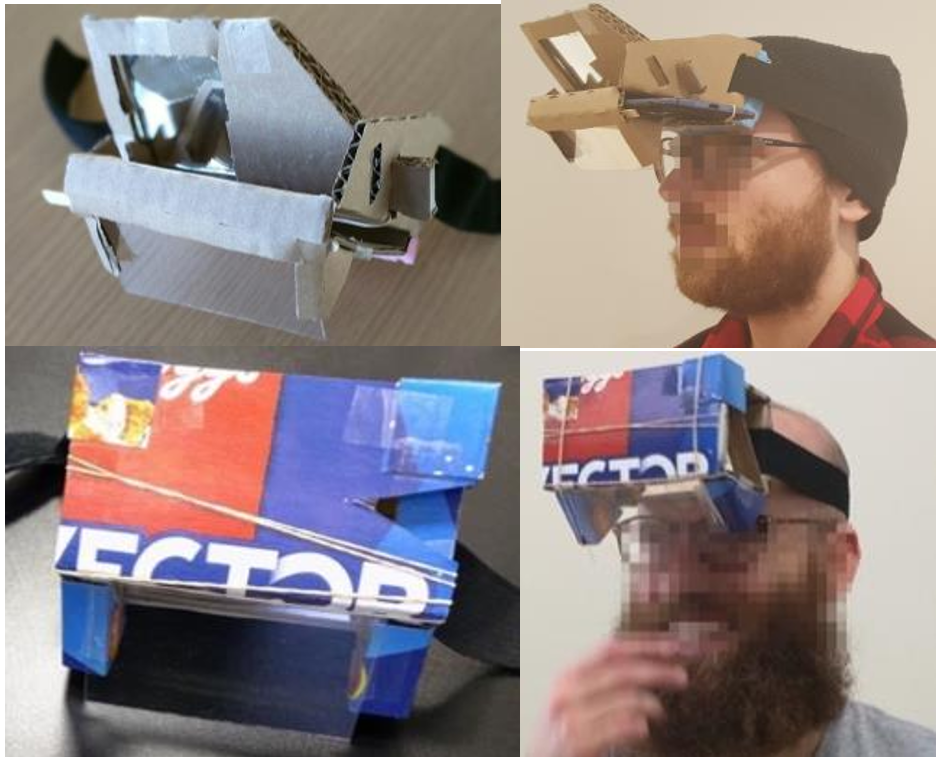 Fig 1: Evolution of the CartonEd headset from an adult-oriented version to a child-safe, modular design.
2. The AR Guiding App
The most innovative part of the toolkit is that AR is used to teach AR. The guiding app (built in Unity3D with Vuforia) provides 3D instructions. Children can point their phone at a QR code on their blueprint to see a virtual 3D model of the part they are supposed to fold, overlaid in real-time.
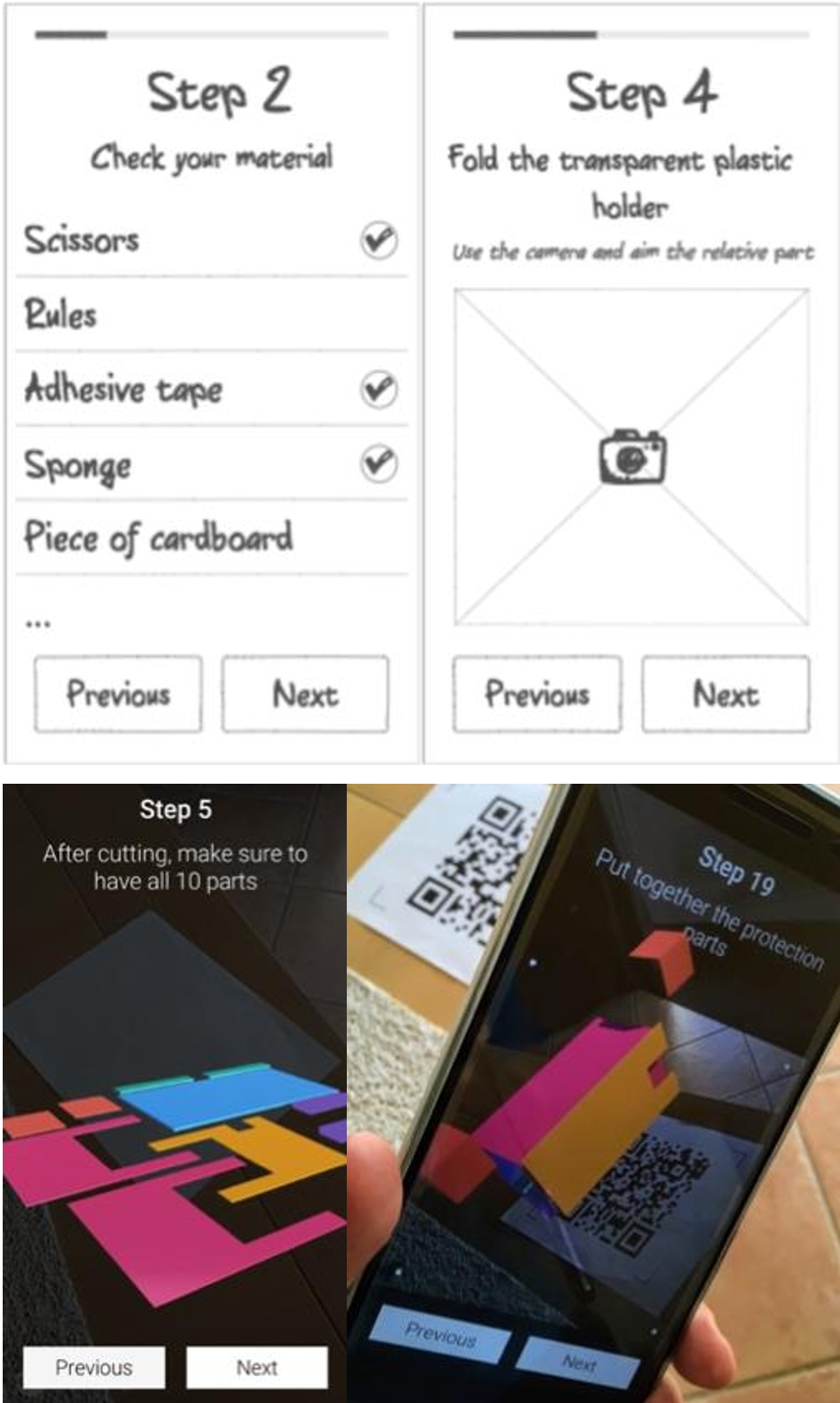 Fig 2: The mobile application guiding the construction process through both standard 3D models and AR overlays.
Experiments & Results: Construction as Learning
The team conducted sessions with 57 participants (ages 8-16). The results were divided into "Constructability" and "Perception."
- Task Performance: Despite the complexity (23 steps), final headsets were all functional. The most time-consuming step was cutting the cardboard shapes (approx. 9.5 minutes), highlighting the manual skill required.
- AR Preference: Interestingly, children were split. 25% preferred the AR-guided view, 25% preferred a standard 3D view, and 50% found both equally useful. This suggests that while AR is "cool," its primary value here is spatial orientation rather than just a gimmick.
- Educational Potential: 84% of children wanted to use similar AR-guided apps for home or classroom learning.
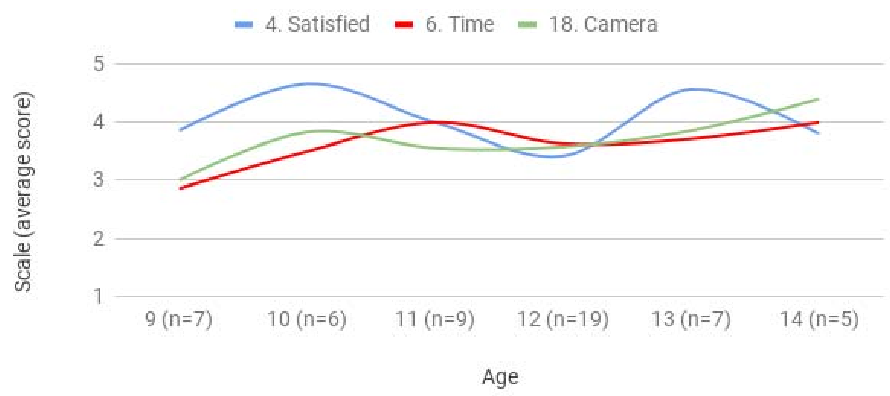 Fig 3: Data shows that as children get older, their perceived ease of construction and satisfaction with AR interactions increases, stabilizing around age 12-14.
Critical Analysis & Conclusion
CartonEd proves that Augmented Reality does not need to be a "high-tech luxury." By stripping the technology down to its optical bones (cardboard, mirrors, and smartphones), the researchers have created a platform where children can learn physics and geometry through play.
Limitations: The study noted that sharing a single phone in a subgroup caused some friction. For an optimal experience, a 1:1 ratio of devices is recommended to allow for individual construction speeds. Furthermore, the reliance on QR codes can sometimes be fidgety for younger children.
Future Outlook: The next step for this project is "authoring." Instead of just building a headset to use existing apps, how can we let children program their own AR experiences (perhaps using a spatial version of Scratch)? CartonEd isn't just a toy; it is an open-source gateway to the "Real-World Metaverse."
The toolkit, including blueprints and source code, is available at mobicarton.github.io.