
Top-k Team Recommendation: Solving Complex Collaborative Tasks in Spatial Crowdsourcing
Top-k Team Recommendation and Its Variants in Spatial Crowdsourcing
The paper introduces the Top-k Team Recommendation (TopkTR) problem and its variant TopkTRL (with leaders) in spatial crowdsourcing. It proposes a two-level framework featuring an exact algorithm with pruning and a greedy approximation algorithm to recommend the k cheapest competent teams for complex tasks.
TL;DR
While platforms like Gigwalk and Uber focus on individual task matching, real-world projects often require diverse teams (e.g., a party needs a DJ, a cook, and a guitarist). This paper formalizes the TopkTR problem—finding the cheapest teams that satisfy skill, range, and capacity constraints without "free riders." The authors provide a two-level framework that balances theoretical rigor (approximation ratios) with practical efficiency.
Background & Motivation: Beyond the Simple Task
Traditional spatial crowdsourcing treats workers as interchangeable units for "trivial" tasks. The authors identify a gap: complex tasks. These require:
- Skill Diversity: A team must cover all task requirements.
- Capacity Limits: Workers have a maximum number of roles they can fulfill simultaneously.
- Spatial Constraints: Workers must be within a specific radius.
- No Free Riders: Every member must be essential to the team's success for that specific task.
The motivation deepens with TopkTRL, where a team leader is required. In this variant, the "friendship" or collaborative cost between the leader and members is prioritized to ensure the team actually functions well in practice.
Methodology: The Two-Level Framework
The core innovation is a hierarchical approach to find results rather than a single global optimum.
1. The Strategy of Exclusion
The framework operates on a simple but powerful intuition: the global Top-2 team is simply the Top-1 team in a sub-universe where one member of the original Top-1 team has been excluded.
2. Top-1 Approximation (Greedy)
Since the problem is NP-hard (reducible from Team Formation), the authors use a greedy strategy:
- Pick workers with the highest benefit-to-cost ratio.
- Refine the team afterward to remove redundant workers (the "Free Rider" check).
3. Top-1 Exact Algorithm (Pruning)
For scenarios where the number of required skills () is small, they use a dynamic programming approach based on Cover States. They track the cheapest worker combinations for every subset of required skills and use the current greedy solution as a bound to prune high-cost paths.
 Figure 1: Conceptual overview of the team recruitment dilemma and spatial constraints.
Experimental Insights
The authors validated their approach using gMission data (11,000+ workers).
- Utility vs. Efficiency: The
TTR-Greedymethod achieved utility scores almost identical to theExactmethod but remained scalable even as the worker pool () grew to 90,000. - Pruning Power: The
TTR-ExactPrunemethod proved that by utilizing the greedy upper bound, one can significantly reduce memory consumption compared to standard exact solvers. - Leader Influence: In TopkTRL experiments, the "Collaborative Cost" budget significantly impacts which teams are viable, emphasizing that cost (price) and social cohesion must be balanced.
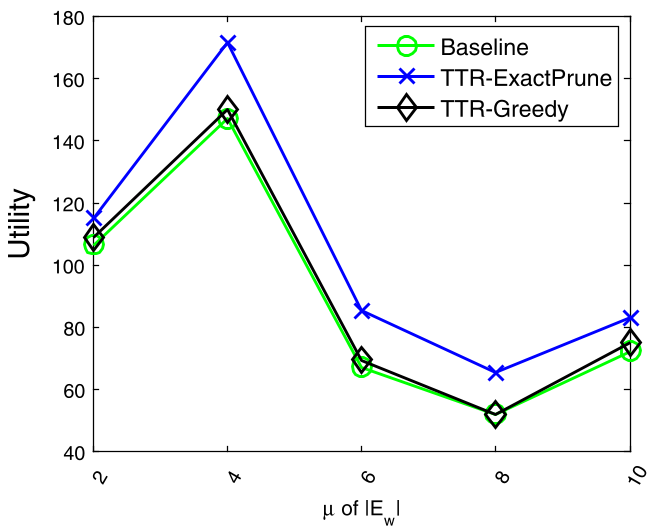 Figure 2: Performance analysis showing the impact of task complexity on running time and utility.
Critical Analysis & Conclusion
Takeaway
The paper successfully bridges the gap between theoretical team formation (usually studied in social networks) and practical spatial crowdsourcing. By introducing the "No Free Rider" and "Capacity" constraints, the model becomes significantly more realistic for O2O (Online to Offline) marketing and service industries.
Limitations
- Static Assumption: The model assumes workers and tasks are stationary. In real-world scenarios, workers move, and their availability changes dynamically.
- Leader Uniqueness: The TopkTRL problem assumes the leader contributes to the collaborative cost linearly. Complex group dynamics (e.g., sub-groups within a team) are not yet modeled.
Future Outlook
This work lays the foundation for "Task-as-a-Service" where users can request complex operations (like a small construction project or event management) and receive a vetted, cost-effective team recommendation instantly.