
Probabilistic Preference Propagation: Scaling Social Recommendations with Privacy
On top-N recommendation using implicit user preference propagation over social networks
This paper introduces a social recommendation algorithm for Top-N tasks using only implicit user preference data. It models item consumption via Bayesian Networks (BN) and employs an efficient Expectation Propagation (EP) message-passing mechanism to infer selection probabilities, achieving superior recall on the Epinions dataset compared to TrustWalker and PureTrust.
TL;DR
This research tackles the dual challenge of cold-start users and data privacy in recommender systems. By modeling social networks as Bayesian Networks and utilizing a novel Expectation Propagation (EP) message-passing algorithm, the authors enable high-quality Top-N recommendations using only implicit data (clicked vs. not clicked). The result? A 21% boost in recall for cold-start users without needing to expose sensitive user ratings to a central server.
Background & Motivation: The Privacy-Utility Tradeoff
Modern recommender systems are caught in a pincer movement: users demand better "Top-N" lists (the N items they are most likely to enjoy), yet they are increasingly unwilling to share explicit ratings due to privacy risks. Furthermore, "cold-start" users—those with little history—remain the Achilles' heel of collaborative filtering.
While social networks provide a "trust graph" to bridge these gaps, previous attempts like TrustWalker (random walk) or Matrix Factorization are either computationally bloated or fail to protect user anonymity. The authors identify a key insight: Preference is a probability, not a binary vote. Instead of treating a non-consumed item as a '0', we should treat it as a hidden variable influenced by the user's social circle.
Methodology: Bayesian Networks and EP
The core of the proposed method is a D-layer Bayesian Network (BN). In this structure, the probability of an active user selecting an item is conditioned on the preferences of their most trusted friends.
1. The Probabilistic Model
The probability that user selects item () is defined by the weighted sum of their neighbors' preferences: The weights are calculated based on historical co-consumption, ensuring that "trust" is rooted in similar tastes.
2. From BP to EP (Expectation Propagation)
Standard Belief Propagation (BP) is exponentially complex relative to neighborhood size . By leveraging the linearity of the conditional probability, the authors simplify this into Expectation Propagation (EP), reducing complexity to a linear .
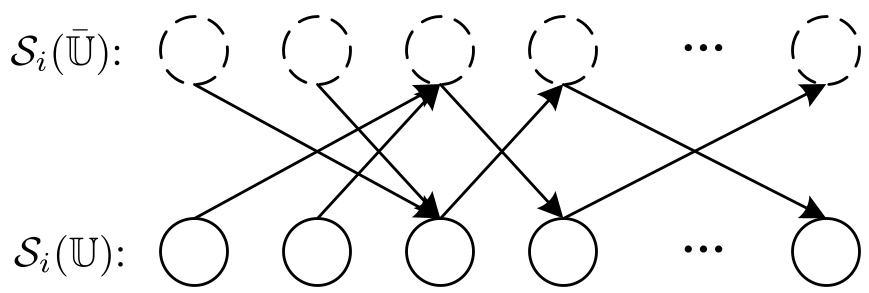 Figure 1: Iterative EP in a unified bipartite graph, allowing simultaneous inference for all users.
Distributed Implementation & Privacy
A standout feature of this work is its adaptability to a distributed environment.
- Users only exchange probabilistic messages with immediate friends.
- Since each node "mixes" messages from its neighbors before passing them on, it becomes mathematically difficult for any party to reverse-engineer the original raw data of a friend-of-a-friend.
- No central authority ever sees the entire user-item matrix.
Experimental Analysis
The authors tested their approach on the Epinions dataset (49k users, 139k items).
Key Findings:
- Superior Recall: EP significantly outperformed the voting-based "PureTrust" and random-walk "TrustWalker."
- Cold-Start Efficiency: The most impressive gains were seen in users with fewer than 5 ratings, where the recall for top-500 recommendations jumped by over 20%.
- Depth Constraints: The study of parameter (depth) showed that while looking deeper into the social network helps, going beyond leads to "noise" as information propagates from socially distant (and potentially irrelevant) users.
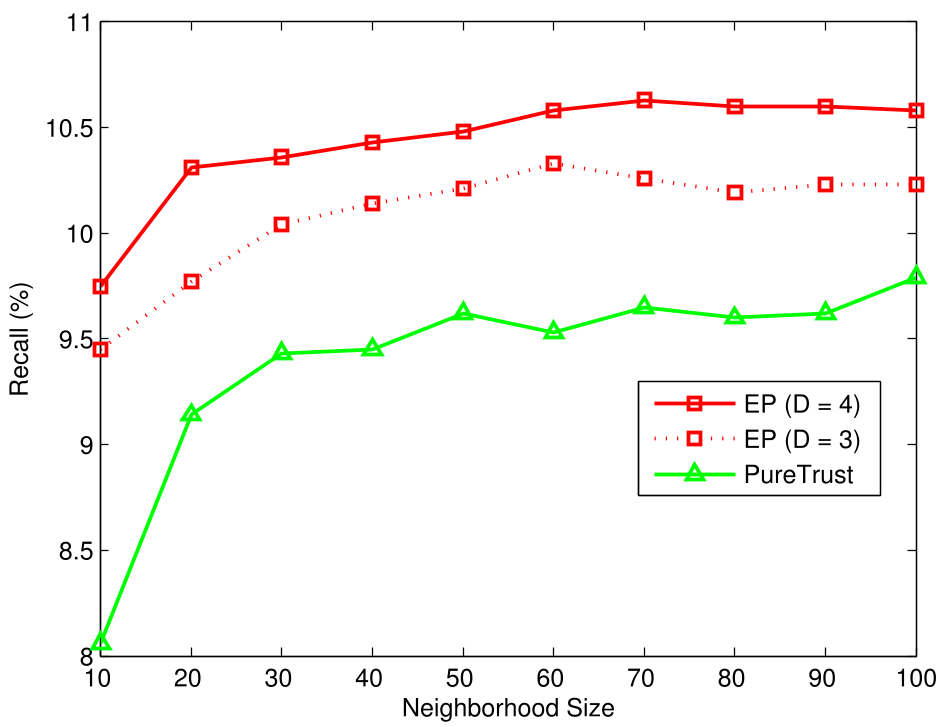 Figure 2: Performance comparison showing EP consistently leading in various N-item scenarios.
Critical Insight & Conclusion
The true value of this paper lies in its Iterative EP scheme. By representing the entire system as a bipartite graph between real users and "virtual images," the authors bypass the need to construct a separate BN for every single user-item pair.
Takeaway: Effective social recommendation doesn't require "big brother" surveillance. By using probabilistic message-passing, we can achieve SOTA performance while respecting the boundaries of user privacy.
Limitations: The model assumes trust is static; however, in real-world OSNs, trust is dynamic and context-dependent. Future work could likely integrate these EP layers with temporal dynamics to capture evolving user tastes.